


Reduce Eel Rice Bowl Prep Time With Batch Assembly
Why does an unadon that tastes perfect at home turn into a slow, soggy ticket on a busy line? Usually the cause is sequence, not skill. Every eel rice bowl that waits for sauce, rice and eel to arrive together stalls the pass. This guide shows how to split the work into four stations so bowls leave the line hot, glossy and fast.
What You Will Build and Where You Start
The goal is a repeatable line procedure for unadon using prepared, frozen kabayaki eel. At the end you will have a station layout, a timed order of operations, and a checklist your cooks can use during the first service week.
The starting state is a kitchen that already has, or plans to add, unagi kabayaki product to the menu. It does not matter if you serve 30 bowls or 300. What matters is that the eel is already roasted and sauced, so your line only reheats and finishes. It does not cook from raw.
Readiness Checklist Before the First Ticket
Some prerequisites block progress. Others can wait until after your test run. Sort them first.
| Item | Why it matters | Blocks rollout? |
|---|---|---|
| Eel portion format (whole fillet, cut pieces, sushi slices) | Sets reheating time and plating speed | Yes. Decide before ordering. |
| Rice holding equipment with a lid | Prevents a dry crust or wet, gummy grains | Yes |
| Reheating method (steam, oven, or covered pan) | Determines how many portions per cycle | Yes |
| Squeeze bottle for warm tare | Controls sauce amount and speed | Yes |
| Garnish list (sansho, nori, pickles) | Affects the final station only | No. Settle during testing. |
| Reheating standard in your food safety plan | Defines the core temperature your cooks must verify | Yes. Check it against your own HACCP plan. |
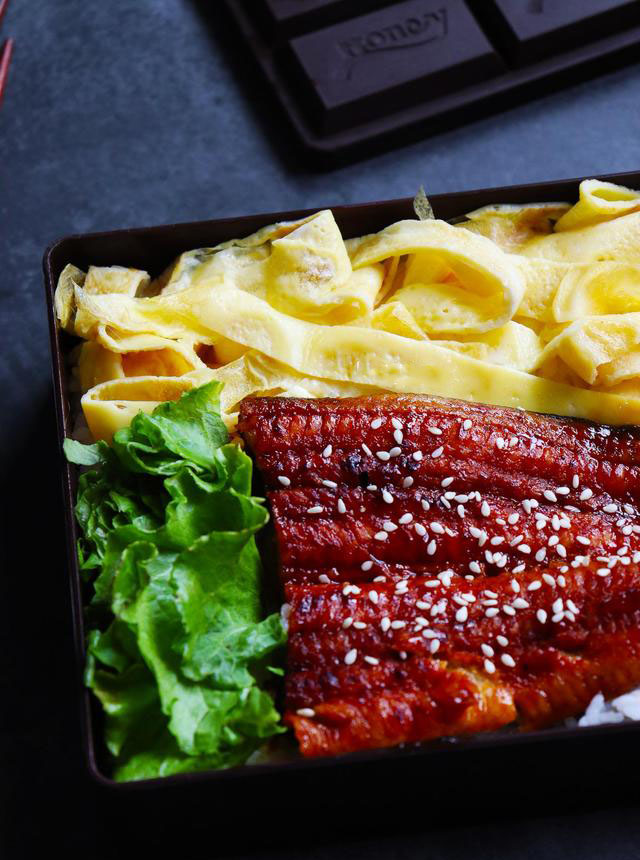
One practical note. Our kabayaki is produced with a 4-layer soy-sauce coating and standardized color grades. Your line should not re-roast it hard or add a heavy second glaze. Treat the eel as finished product that only needs heat.
Service Workflow: Separate Rice Holding, Eel Reheating, Sauce Application and Final Assembly
This is the core of batch assembly. Instead of one cook building each bowl start to finish, you run four parallel stations. Each station has one job, one checkpoint and one failure to watch for.
| Station | Job | Checkpoint | What goes wrong |
|---|---|---|---|
| 1. Rice holding | Keep cooked rice warm in a lidded, shallow container, refilled in small batches | Grains separate easily and feel warm, not steaming wet | Deep holding or no lid. Bottom rice compresses into paste. |
| 2. Eel reheating | Heat thawed kabayaki portions in covered trays, in batches matched to the next few tickets | Eel is hot through the center per your reheating standard, surface glossy, not dried out | Open, high, dry heat. Edges harden and the glaze scorches. |
| 3. Sauce application | Brush or squeeze warm tare onto the eel, not into the rice | Thin, even sheen. No puddle forming at the bowl edge. | Saucing the rice first. Moisture soaks in before the bowl reaches the guest. |
| 4. Final assembly | Pre-warmed bowl, rice, eel, garnish, out the pass | Rice surface still firm, eel centered | Assembling too early. Steam from the eel softens the top layer of rice. |
Why this cuts ticket time without softening the rice
Rice goes soft when it sits under hot, wet eel or sauce for too long. Separating the stations means the rice only meets the eel at the last step, seconds before service. Meanwhile, reheating and saucing happen in parallel rather than in series. A cook at the pass only places and garnishes. That is the saving.
When this does not apply: if your volume is only a few bowls per hour, a single cook assembling to order is simpler and the four-station split adds labor you do not need.
The Batch Sequence, Step by Step
- Thaw ahead of service. Move frozen portions to the cooler the day before, following the packaging instructions. Never thaw on the counter. Check: portions are flexible with no frozen core.
- Cook and hold the rice. Season lightly. Transfer to shallow lidded pans, not one deep pot. Check: top and bottom layers have the same texture when you turn a scoop.
- Pre-warm the bowls. A cold bowl pulls heat out of the rice within seconds.
- Stage the sauce. Warm the tare and fill squeeze bottles. A thin, warm sauce spreads evenly. A cold, thick one clumps and pools.
- Reheat eel in rolling batches. Load the next batch when the current one is half-called, so eel is always ready but never waiting long. Cover the tray to keep moisture in.
- Apply sauce to the eel only. A light brushing is enough because the kabayaki already carries its glaze.
- Assemble at the pass. Rice first, then eel, then garnish. Send it immediately.
Worked example (illustrative): picture a lunch rush with a steady run of unadon tickets. One cook handles rice and bowls, one runs the eel tray and sauce, and one garnishes and plates at the pass. If the eel tray falls behind, you see it at once: the pass cook is waiting. If rice falls behind, bowls are cold. The bottleneck is visible, which is exactly what a one-cook-per-bowl line hides.
Common Mistakes and How to Recover
- Sauce on the rice before the eel arrives. Result: wet, dark rice at the bottom of the bowl. Fix: move saucing to station 3 and apply only to the eel.
- Over-reheating the eel. Result: tough, dry edges. Fix: cover the tray and shorten the cycle. Verify core temperature against your own standard rather than adding time by guesswork.
- One big pot of rice for the whole service. Result: compressed bottom layer. Fix: shallow pans, refilled in smaller batches.
- Assembling bowls in advance and holding them. Result: steam softens the surface rice. Fix: assemble only on call.
- Uneven portion sizes. Result: inconsistent reheating and plating. Fix: specify a consistent cut format with your supplier.
Pitfall worth knowing: a glossy bowl is not always a good bowl. If the shine comes from pooled sauce rather than a thin, even coat, the rice underneath is already absorbing it.
Completion Check and Supply Considerations
You have the procedure working when all of these are true:
- Rice from the first and the last bowl of a rush has the same texture.
- No sauce puddle sits at the bowl edge at the pass.
- Eel is hot through the center, per your documented standard, and the surface is not dried.
- Any station delay is obvious at the pass, not hidden inside a single cook's workflow.
If rice fails, revisit station 1 and the saucing step. If eel fails, revisit the reheating method and cycle size.
Supply consistency affects this workflow as much as the line layout. Eelpro Co., LTD produces unagi kabayaki manufacturer output under ISO 22000:2018 and HACCP systems, with HALAL certification, an in-house laboratory and metal detectors at critical control points. We offer boneless eel and custom cuts, including strip-cutting, chunk-cutting, 3-section cut and sushi slices, plus ready-to-heat packaging, which reduces back-of-house trimming. We have supplied kabayaki to Japanese restaurant chains over the long term, and we also export unagi kabayaki and eel sauce to US importers. Regular delivery is about 30 days from order confirmation to shipment, negotiable by specification and quantity.
Variations That Change the Procedure, and Your Next Step
- Sliced eel for bowls with toppings: smaller pieces reheat faster, so shorten the batch cycle and check sooner. See eel rice bowl toppings: 7 better donburi ideas for garnish options.
- Bulk sauce prep: if you finish with a house tare, test it against our eel sauce product page specification so flavor stays consistent across locations.
- Different reheating equipment: a steamer, oven or covered pan changes tray size and timing. Re-run the checklist above after any change. For reheating basics, see how to cook eel: easy methods and tips.
Test the workflow with one service before committing to a menu launch. If you want product to run that trial, request a sample and a spec sheet for your preferred cut and packaging format, and tell us your volume so we can discuss MOQ. What is your biggest bottleneck at the pass? Share it in the comments.