





This smoked eel recipe shows you how to turn fresh unagi fillets into a silky, gently smoky dish with a simple brine, a proper drying step, and either hot or cold smoke. Hot smoking cooks the fish and leaves it tender and flaky. Cold smoking creates a firmer texture with a cleaner smoke note, but it requires extra attention because smoke alone does not cook the eel.
Unagi has a rich, distinctive flavor and a firm, oily texture that takes well to smoke. Fresh, evenly cut fillets are easiest to handle and cook more consistently. Serve smoked eel with steamed rice, pickled cucumber, soba noodles, crusty bread, or a crisp salad. A light brush of sweet soy-based sauce is delicious, though the eel itself should remain the star.
The quantities below make about four servings from two cleaned eel fillets. Buy eel that has been professionally cleaned and filleted from a reliable fish supplier. Freshwater eel should not be casually prepared from a live fish, as cleaning and handling it safely require experience.
Use a smoker, a kettle grill with a lid, or another appliance made for food smoking. A digital probe thermometer is especially useful. Ideally, monitor both the smoker chamber and the thickest part of the fillet.
Stir the salt and sugar into the water until fully dissolved. Add the bay leaf, peppercorns, and any optional aromatics. Chill the brine before adding the eel. Put the fillets in a non-reactive container, cover with the cold brine, then cover the container and refrigerate for 30–45 minutes.
This brief brine seasons the fish and helps it retain moisture in the smoker. Thick fillets may need up to 60 minutes, but soaking too long can leave the surface overly salty. Keep the fish refrigerated throughout the brining process.
Take the fillets from the brine and rinse them briefly under cold water. Pat dry with paper towels. Set the eel skin-side down on a wire rack over a tray, then refrigerate uncovered for 2–8 hours.
The surface should feel slightly tacky rather than damp. This layer, called the pellicle, helps smoke cling evenly to the fish. It also prevents the eel from steaming in the smoker. If the fillets still look glossy or wet, leave them uncovered a little longer.
For most home cooks, hot smoked eel is the more straightforward option because the fish cooks as it takes on smoke. Aim for a smoker temperature of about 90–110°C. Keep the heat steady and go easy on the wood. Too much smoke can overpower unagi’s delicate richness and leave a bitter finish.
Once it reaches 63°C, the flesh should be opaque and separate into moist flakes. Exact cooking time depends on the thickness of the fillets, their starting temperature, smoker airflow, and the weather outside. Let the thermometer guide you rather than the clock alone.
For a Japanese-style finish, brush the eel with a thin layer of eel sauce during the final 5–10 minutes. Adding sauce too early can cause its sugar to darken or burn. Two light coats usually look and taste better than one heavy layer.
Cold smoked unagi is not simply raw fish exposed to smoke. For home preparation, the safer method is to cook the eel completely first, chill it quickly, then use cool smoke as a final flavoring step. Keep the smoking chamber below 30°C, ideally between 20 and 27°C.
Cold smoking demands more control than hot smoking. Fish held too long in the wrong temperature range can support bacterial growth. Do not treat cold smoke as a replacement for cooking. Unless you are following a validated commercial process, cold-smoked eel should also be avoided by people who are pregnant, elderly, immunocompromised, or very young.
The finished eel should be dense and smooth, with slightly translucent edges. Alder and apple wood give a mild, clean aroma. Oak can work too, but use it sparingly because it can easily dominate the fish.
Fillets that vary greatly in thickness will cook unevenly. If one end is much thinner, fold it under or shield it with foil during the first stage of cooking. This keeps the thin section from drying out before the thicker part reaches a safe temperature.
Look for clean, light smoke rather than thick white clouds. If it smells sharp or acrid, reduce the amount of wood or improve airflow. A little applewood or alder is enough for two fillets. Whenever possible, place the eel skin-side down; the skin helps protect the flesh from direct heat.
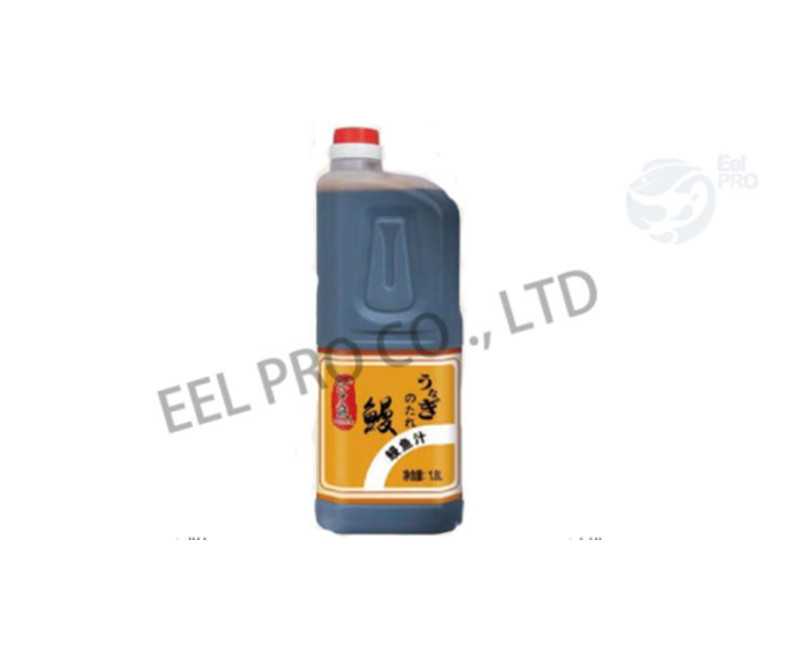
Unagi tare often contains sugar, mirin, or other sweet ingredients that can scorch during a long smoking session. Brush on a thin coat once the eel is nearly cooked, then return it to the smoker for several minutes. For extra shine, add another light coat after slicing.
Our guide to kabayaki sauce explains how sauce changes the flavor and finish of grilled eel. For a lighter plate, skip the sauce and pair the smoked fish with grated daikon, lemon, or cucumber dressed with rice vinegar.
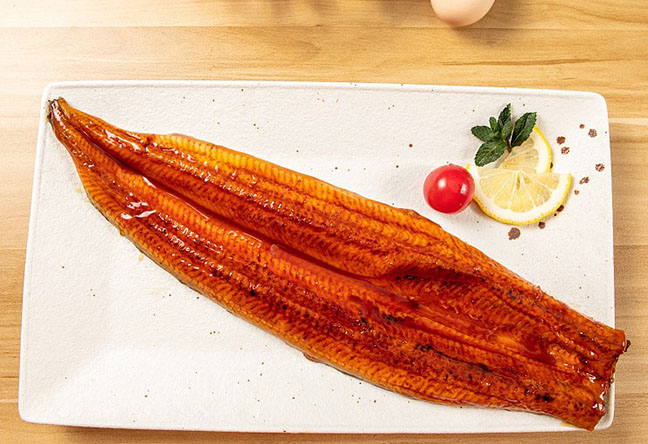
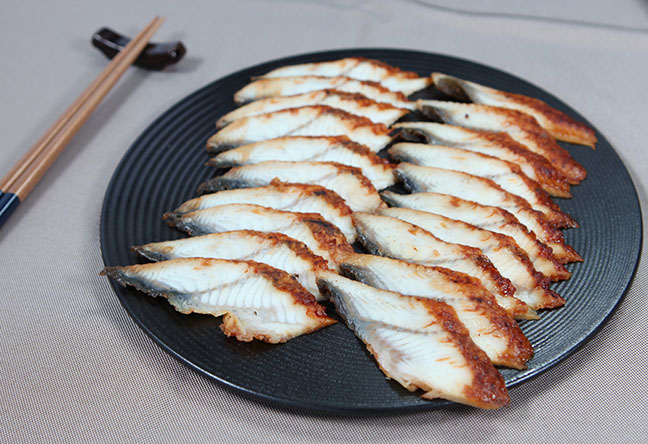
Let hot-smoked eel rest for a few minutes, then cut it into pieces about 2–3 cm wide. It is excellent over steamed Japanese rice with shredded nori and a small drizzle of sauce. You can also place slices over sushi rice, fold them into an omelet, or add them to a noodle bowl.
For another serving idea, see our eel recipes guide. Add the smoked fillets at the end so they keep their delicate texture.
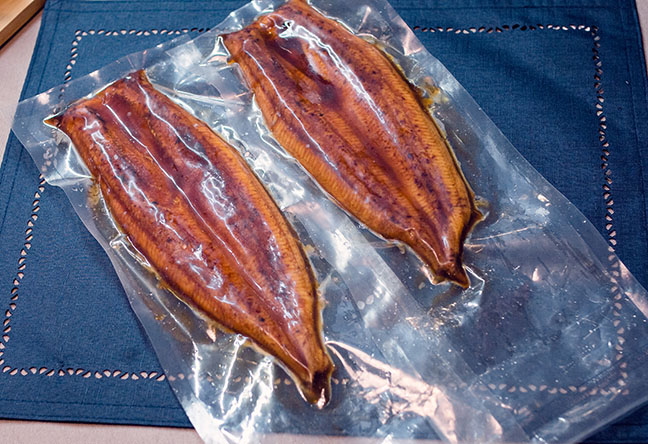
Smoking fresh eel at home gives you full control over the brine, wood choice, and level of smoke. It also takes time and careful temperature management. For restaurants, caterers, and foodservice kitchens, fully prepared unagi kabayaki can be a more consistent starting point. The fillets are already cooked and coated, so your team only needs to reheat and portion them.
When fresh eel is unavailable, frozen products can simplify menu planning. Thaw seafood under refrigeration, maintain the cold chain, and follow the instructions provided by your exporter or distributor. Do not refreeze thawed eel unless the product guidance specifically permits it.
Refrigerate cooked or smoked eel within two hours, or within one hour if the surrounding temperature is above 32°C. Store it in a covered container at 4°C or below. For the best quality, use hot-smoked eel within 3–4 days. Cold-smoked eel should be eaten sooner, preferably within 1–2 days.
Wash hands, cutting boards, knives, and racks after handling raw eel. Keep raw fish away from cooked food, do not taste or reuse the brine, and discard any eel that smells sour, feels unusually slimy, or has been kept at an unsafe temperature.
Use a covered kettle grill with indirect heat, a drip tray, a small amount of hardwood, and a thermometer. Keep the eel away from the coals and maintain about 90–110°C for hot smoking. A stovetop smoking setup can create substantial indoor smoke, so use it only with proper ventilation and equipment designed for that purpose.
A short brine followed by hot smoking is the simplest method. Brine cleaned fillets for 30–45 minutes, dry them until tacky, then smoke at 90–110°C until the thickest section reaches at least 63°C. Add tare near the end. In one process, the eel cooks through and develops a tender, flaky texture.
Hot smoking usually takes 45–90 minutes, though fillet thickness and smoker temperature matter more than the clock. Cold smoking takes about 1–3 hours after the eel has been cooked and chilled. During hot cooking, always confirm the internal temperature.
Cold smoke does not reliably destroy parasites or harmful bacteria. For home preparation, cook the eel to at least 63°C first, cool it promptly, and use cold smoke only as a brief flavoring step. Commercial cold-smoked fish is made under controlled processing and testing procedures that are difficult to duplicate in a home kitchen.
Alder and apple are good starting choices because they provide mild smoke. Beech also works well. Use stronger woods such as oak in small amounts, and avoid resinous softwoods such as pine. The smoke should complement the eel’s natural richness, not hide it.
A home smoked eel recipe is a rewarding way to explore the flavor and texture of unagi. For regular restaurant service or wholesale supply, Eelpro Co., LTD provides frozen unagi kabayaki, eel sauce, freshwater eels, and other frozen seafood for overseas buyers. Contact our team to discuss product specifications, packing, and shipment options for your market.
[xss_clean] { "@context": "https://schema.org", "@type": "Recipe", "name": "Smoked Eel Recipe: How to Smoke Unagi at Home", "description": "A home guide to brining, drying, hot smoking, and safely cold smoking unagi fillets.", "recipeCategory": "Recipe", "recipeCuisine": "Japanese-inspired", "keywords": "smoked eel recipe, smoked unagi, hot smoked eel, cold smoked unagi", "recipeYield": "4 servings", "totalTime": "PT10H", "recipeIngredient": [ "2 fresh unagi fillets, about 500–700 g total", "1 liter cold water", "60 g non-iodized salt", "30 g brown sugar", "1 bay leaf", "1 teaspoon black peppercorns", "Hardwood smoking chips" ], "recipeInstructions": [ { "@type": "HowToStep", "text": "Prepare a cold brine with water, salt, sugar, bay leaf, and peppercorns." }, { "@type": "HowToStep", "text": "Brine the eel fillets under refrigeration for 30–45 minutes, then rinse and pat dry." }, { "@type": "HowToStep", "text": "Dry the fillets uncovered on a rack in the refrigerator for 2–8 hours." }, { "@type": "HowToStep", "text": "Hot smoke at 90–110°C until the thickest part reaches at least 63°C, usually 45–90 minutes." }, { "@type": "HowToStep", "text": "Rest, slice, and serve with rice, vegetables, noodles, or eel sauce." } ] } [xss_clean]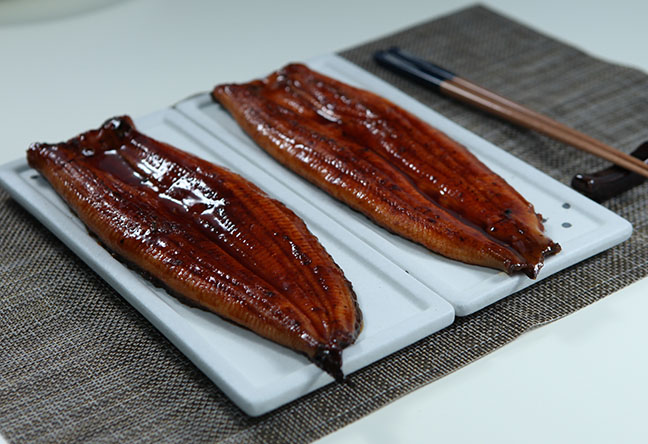
 WhatsApp
 sales@chinaeels.com
 +8619937922411