


Three Structural Factors Decide Whether a Sushi Eel Roll Holds Its Shape
Your sushi eel roll looked fine on the cutting board. Then you sliced it — and the rice squeezed out one side while the eel slid out the other. This is not a knife problem. It's a ratio problem, and it happens at the filling, the rice, or the glaze. Fix the right one and the roll stops falling apart.
Why Some Eel Rolls Collapse Before They Reach the Plate
A roll that holds together does three things at once: the rice grips itself through starch, the nori wraps under even tension, and the filling doesn't push back against the compression. Soft, glaze-heavy kabayaki eel is the most common culprit because it behaves differently from firm fillings like cucumber or crab stick. It flexes under the rolling mat instead of staying rigid, so the whole structure shifts when you apply pressure.
Most home cooks blame the rolling technique first. In practice, the filling-to-rice ratio and the thickness of the eel slice are usually the real issue — and both are measurable, not guesswork.
The Boundary — Filling-to-Rice Ratio and Slice Thickness Limits
There is a working range where glazed eel behaves structurally, and a point past which it doesn't. Push beyond either limit and the roll compresses flat on one side or splits open along the seam when sliced.
| Parameter | Safe Range | What Happens Outside It |
|---|---|---|
| Filling-to-rice ratio (by weight) | 1:3 to 1:4 | Below 1:4, rice overwhelms the roll and eel slides to one side. Above 1:3, excess glaze weight presses out through the nori seam. |
| Eel slice thickness | 4–6 mm | Under 3 mm, slices fold and shred instead of holding a straight line. Over 8 mm, the slice resists bending and forces the roll to split when cut. |
| Glaze coating (per slice) | Thin, tacky film | A thick, wet glaze layer adds lubrication between rice and eel — the roll looks fine until the knife cuts through, then it slumps. |
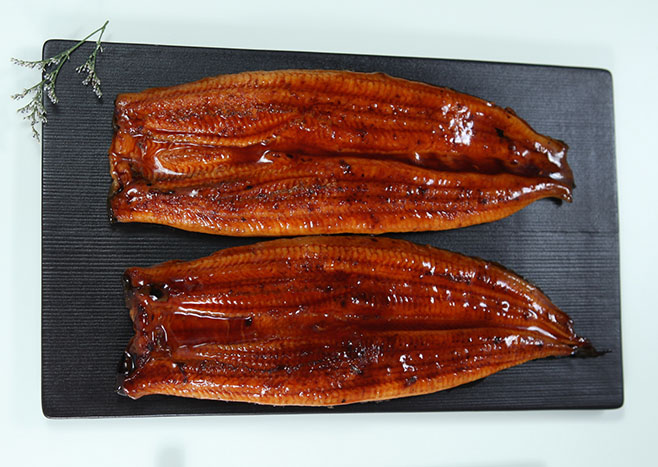
This is why factory-cut kabayaki is scored and portioned before freezing — a 5 mm slice straight off the fillet behaves predictably in a roll, while a hand-cut piece from a whole fillet varies in thickness and glaze pickup along its length. If you're portioning from a whole unagi kabayaki eel fillet, check thickness with a ruler on the first two cuts — don't eyeball it.
Rice Texture and Moisture Control
Sushi rice that's too wet acts like glue on the outside and mush on the inside — it won't hold a shape once you remove the mat. The target is cooked short-grain rice seasoned while still warm, at roughly a 1:1 rice-to-water cooking ratio, then cooled to body temperature before shaping. Rice that's still hot when rolled traps steam, which softens the structure from within as it cools — this is part of why rolled rice firms up through starch retrogradation as it sits, not while it's warm.
If your rice falls apart on the cutting board but the filling isn't the issue, the fix is almost always moisture, not more rice. Adding more rice to compensate for a wet batch just makes a denser, harder-to-cut roll.
Glaze Temperature and Why Soft Glaze Breaks Structure
Kabayaki eel is roasted and coated in multiple passes of soy-based glaze — a process that typically layers the eel sauce (unagi tare) four times with controlled heat between coats. Done correctly, the surface sets into a tacky, semi-firm film. Done poorly — or if the eel sits out and the glaze turns soft and wet — the slice loses grip against the rice and acts like a lubricated layer inside the roll.
Cold knowledge: warming kabayaki eel to around 50–55°C before slicing firms the glaze just enough to hold a clean edge, without cooking the flesh further. Straight-from-the-fridge eel is too stiff and cracks; fully room-temperature eel with soft glaze smears under the knife. Many kitchens skip this step entirely and blame the rice.
For more on why glaze consistency matters this much, see this breakdown of kabayaki sauce behavior.
Step-by-Step Rolling Procedure That Prevents Splitting
- Lay nori shiny-side down on the mat, rough side up for grip.
- Spread rice in an even 7–8 mm layer, leaving a 2 cm border at the top edge.
- Lay eel slices (4–6 mm thick) end to end in a single line, not overlapped — overlap doubles the soft-glaze layer and is the single most common cause of mid-roll splitting.
- Roll under light, even pressure in one continuous motion — stopping halfway lets the rice shift before the second half compresses.
- Rest the rolled cylinder seam-side down for 60–90 seconds before slicing — this lets the nori seal rather than spring open.
- Slice with a wet, sharp blade in one pull per cut, not a sawing motion, which drags soft glaze across the rice and smears the structure.
Common Mistakes That Make Eel Rolls Fall Apart
- Overfilling to "make it look generous" — pushes the ratio past 1:3 and the roll bulges, then splits when cut.
- Using unevenly thawed eel — cold centers with warm, soft edges create inconsistent glaze texture across one slice.
- Skipping the rest period after rolling — cutting immediately locks in an unsealed seam.
- Sawing through the roll instead of pulling the blade — this is the most overlooked cause of a "fine-looking roll, messy slice."
- Stacking two thin eel slices to fake thickness — doubles the glaze layer instead of adding structure, which is worse than one correctly sized slice.
Buyer's Checklist for Sourcing Roll-Ready Kabayaki Eel
If you're buying frozen kabayaki for a sushi program rather than cutting from whole fillets, these are the specs worth confirming before ordering:
- Pre-cut slice thickness specified at 4–6 mm, not "standard" or unspecified.
- Glaze applied and set through a controlled multi-layer process, not a single flash coat.
- Fat content trimmed for roll use — overly fatty cuts soften faster once thawed and glazed.
- Traceability back to a certified farming source, relevant for import documentation in the EU, US, and Japan.
- Consistent portion weight across the case, so filling-to-rice ratio doesn't vary roll to roll.
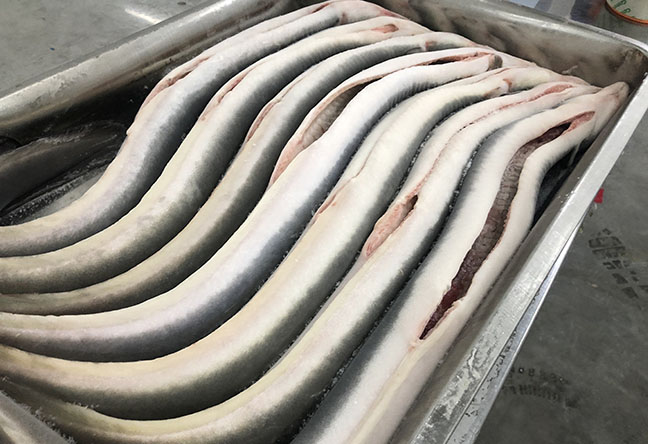
These are the same parameters we control for in our processing — our two production lines handle frozen roasted eel and deep-processed aquatic products under a patented low-fat roasting process, specifically to keep slices firm enough for foodservice rolling without extra prep on your end.
A Worked Example — Fixing a Roll That Keeps Splitting
A kitchen reported rolls splitting on nearly every third cut. The rice was properly seasoned and cooled. The problem traced back to two things: eel slices cut at roughly 9 mm from a whole fillet, and a glaze that had gone soft after sitting uncovered for 20 minutes. Re-cutting to 5 mm and warming the eel briefly before assembly brought the split rate down to near zero across the next batch. Nothing about the rice or rolling technique changed — only the two boundary parameters did.
If you're building out a full eel menu rather than troubleshooting one roll, the unagi rolls recipe guide and the unakyu maki recipe both work from this same ratio logic, adapted for cucumber-filled variations.
Have a kabayaki source you're not sure about, or need a spec sheet matched to your rolling process? Reach out for a sample batch or request the slicing specifications for our frozen unagi kabayaki line.