

Can You Eat Eel Bones Safely? A Clear FAQ Guide
You take a bite of grilled unagi and feel a tiny crunch. Panic sets in for half a second — did I just swallow a bone? This is one of the most common questions home cooks and sushi diners ask, and the short answer is: yes, you can eat eel bones safely, but only certain ones. Not every bone in an eel is meant for your mouth. Below, we break down exactly which bones are food-safe, which ones are choking hazards, and how to tell the difference before you take another bite.
Why Some Eel Bones Are Edible and Others Aren't
Eel skeletons are not uniform. The body is full of tiny, fine bones that soften dramatically during slow roasting or deep-frying. The head and facial area, on the other hand, contain thicker, sharper structures that never fully soften, no matter how long you cook them.
This difference comes down to bone density and collagen content. Body bones in freshwater eel are thin, flexible, and collagen-rich — they turn brittle and crisp under heat, similar to how small fish bones in sardines soften when canned. Head bones are structural and load-bearing, built to protect the skull and support the jaw. They stay rigid even after an hour of cooking.
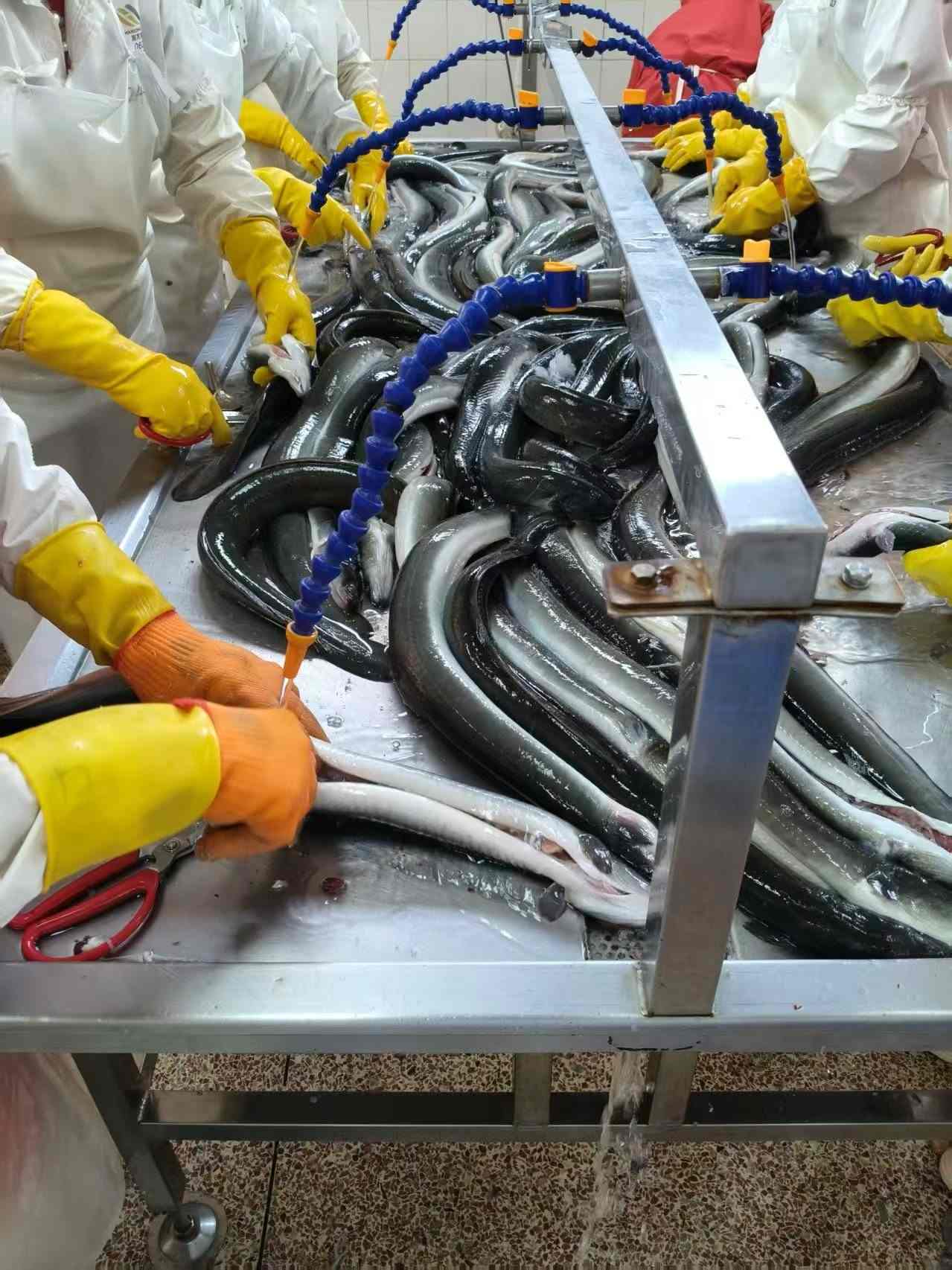
That's why professional kabayaki processing in Japan and China almost always removes the head, backbone spine, and facial bones before the fillet ever reaches a skewer. What's left — the fine rib-like bones running through the fillet — is what gets roasted into that signature crisp texture.
Boundary: Soft Cooked Bones vs. Sharp Head and Facial Bones
This is the part most people get wrong, so let's make it simple. Not all "eel bones" are the same category of risk. Here's the practical boundary:
| Bone Type | Location | Texture After Cooking | Safe to Eat? |
|---|---|---|---|
| Fine rib bones | Along the fillet body | Soft, crisp, brittle | Yes — commonly eaten in kabayaki |
| Tail bones | Lower tail section | Small, thin, softened | Yes, in most prepared products |
| Backbone/spine (main) | Center of the body | Firm, sometimes removed before cooking | Depends — often removed in deboned products |
| Skull and facial bones | Head | Hard, sharp, never softens | No — should be discarded |
| Jaw and gill bones | Head/throat area | Sharp, irregular shape | No — choking and injury risk |
The rule of thumb: if it bends slightly and crumbles between your teeth, it's fine. If it feels rigid, pointed, or resists gentle pressure, spit it out. Facial bones and skull fragments can scratch the throat or lodge in soft tissue, and no amount of chewing makes them safe.
Common Mistakes People Make When Eating Eel Bones
- Assuming all whole eel dishes are fully deboned. Some regional preparations leave fine rib bones intentionally for texture — this is normal, not a defect.
- Confusing crunch with danger. A light crunch from softened rib bones is expected in properly roasted kabayaki. A hard, sharp fragment is not.
- Feeding whole grilled eel to young children without checking. Children have smaller airways, so even soft bones carry more risk for them than for adults.
- Reheating frozen unagi kabayaki at too low a temperature. Under-heating can leave bones firmer than intended, increasing the chance of an unexpected hard piece.
- Buying whole, unprocessed eel expecting restaurant-style softness. Raw eel bones need controlled roasting and layered sauce coating to reach the right texture — a home stovetop sear won't replicate this.
How Commercial Kabayaki Processing Handles This
In export-grade eel processing, this bone distinction isn't left to guesswork. Facilities like ours follow a standardized cutting and roasting sequence:
- Head and facial bone removal — done manually or mechanically before the fillet moves to roasting.
- Backbone extraction — for boneless or deboned SKUs aimed at foodservice, the spine is removed entirely to cut back-of-house prep time.
- Four-layer soy sauce roasting — each pass at controlled temperature softens the remaining fine bones further while building the kabayaki color and glaze.
- Metal detection at critical control points — screens for any hard fragments before packaging, an added layer beyond visual inspection.
- Custom cutting — shredding, dicing, strip-cutting, or sushi-slice formats are chosen based on how the end dish will be served, which also affects bone presence.
This is different from a home cook grilling a whole eel purchased fresh. Without commercial-grade roasting and layered sauce application, softening the fine bones evenly is harder to control, and the head/facial bones still need manual removal regardless.
A Quick Scenario: Sushi Counter vs. Home-Cooked Unagi Don
Say you order unagi nigiri at a sushi counter. The fillet has already gone through deboning and roasting at a processing facility — you're extremely unlikely to encounter anything beyond the expected soft rib-bone crunch. This matches the standard used in unagi kabayaki products prepared for retail and restaurant supply.
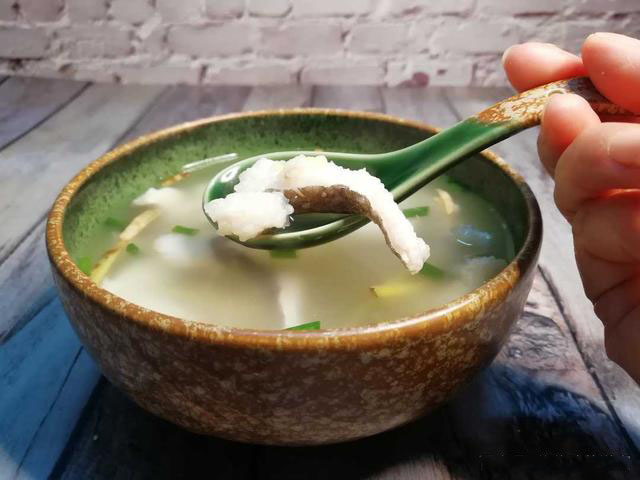
Now say you're making eel noodle soup at home using a whole eel from a wet market. Here, you're responsible for checking and removing the head, spine, and any stray facial fragments yourself before serving — especially if children are eating. This is where following a proper cleaning, skinning and deboning guide matters more than in the sushi-counter scenario.
Buyer's Checklist Before Serving Eel at Home or on a Menu
- Confirm whether the product is labeled boneless/deboned or bone-in fillet.
- Check the cut type — sushi slices and dicing formats generally carry less bone risk than whole-body cuts.
- Reheat frozen kabayaki to the temperature stated on the packaging, not lower — under-heating leaves bones firmer.
- For foodservice, ask suppliers about metal detection and quality control steps used during processing.
- If serving whole eel dishes to children or elderly diners, manually inspect for head or facial bone fragments first.
Frequently Asked Questions
Is it normal to feel a slight crunch in grilled eel?
Yes. That's usually the fine rib bones, which soften during roasting and are meant to be eaten along with the fillet.
What if I bite into something hard and sharp?
Stop and remove it. That's likely a fragment from the head, jaw, or facial bone area that wasn't fully trimmed — it should not be swallowed.
Are eel bones a choking hazard for children?
Facial and head bones, yes. Even softened rib bones carry more risk for young children than adults due to smaller airways, so extra caution is reasonable.
Does freezing affect bone safety?
Freezing itself doesn't change bone hardness. What matters is the roasting and deboning process before freezing, and proper reheating afterward.
Do all frozen unagi kabayaki products have the head and spine removed?
In export-grade processing, yes — head, facial bones, and often the backbone are removed before the fillet is roasted and packaged, though this can vary by product spec and supplier.
Sourcing Note for Buyers and Foodservice Operators
For importers and restaurant buyers, bone safety isn't just a dining question — it's a liability and quality-control issue. Working with a supplier that documents its deboning process, applies metal detection at critical control points, and follows ISO 22000:2018 and HACCP standards reduces the guesswork. Our farming bases, processing lines, and in-house lab are built around that traceability, from the certified eel farms through final packaging.
Pairing bone-safety awareness with the right sauce also matters for flavor consistency — see how kabayaki sauce ties into the roasting process, or check eel sauce options if you're building a menu around unagi dishes.
If you're sourcing frozen unagi kabayaki or eel sauce for retail or foodservice, request a spec sheet or sample batch so your team can verify bone processing and cut format before committing to a full order.