

Can You Eat Eel Bones Safely, and Does the Cooking Method Actually Matter
Someone at the table just crunched into an eel skewer and stopped mid-bite: "Wait — was that a bone?" It happens more than you'd think. So here's the direct answer: can you eat eel bones? Sometimes yes, sometimes absolutely not, and the difference usually comes down to how the eel was cooked and how it was cut before it hit the pan or grill.
Eel bones are thin and flexible compared to bones in something like salmon or cod. That's why in some traditional preparations, especially deep-fried whole small eels, the bones soften enough to eat without much notice. But a whole grilled fillet with the main spine still in place is a different story — those bones stay firm, and biting down wrong can genuinely hurt.
Why Eel Bone Texture Varies So Much Between Dishes
Eel skeletons are mostly small, pin-like bones running along the fillet, plus a central spine. Unlike thicker fish bones, they contain less dense mineral structure, which is part of why heat and moisture affect them so strongly. Three factors decide whether a bone stays dangerous or turns soft enough to chew:
- Cooking temperature and duration — longer, moist heat breaks down collagen and softens bone structure
- Cut size — small pieces or fillets have shorter, thinner bones that cook through faster than a whole eel
- Pre-processing — whether the eel was deboned, butterflied, or scored before cooking
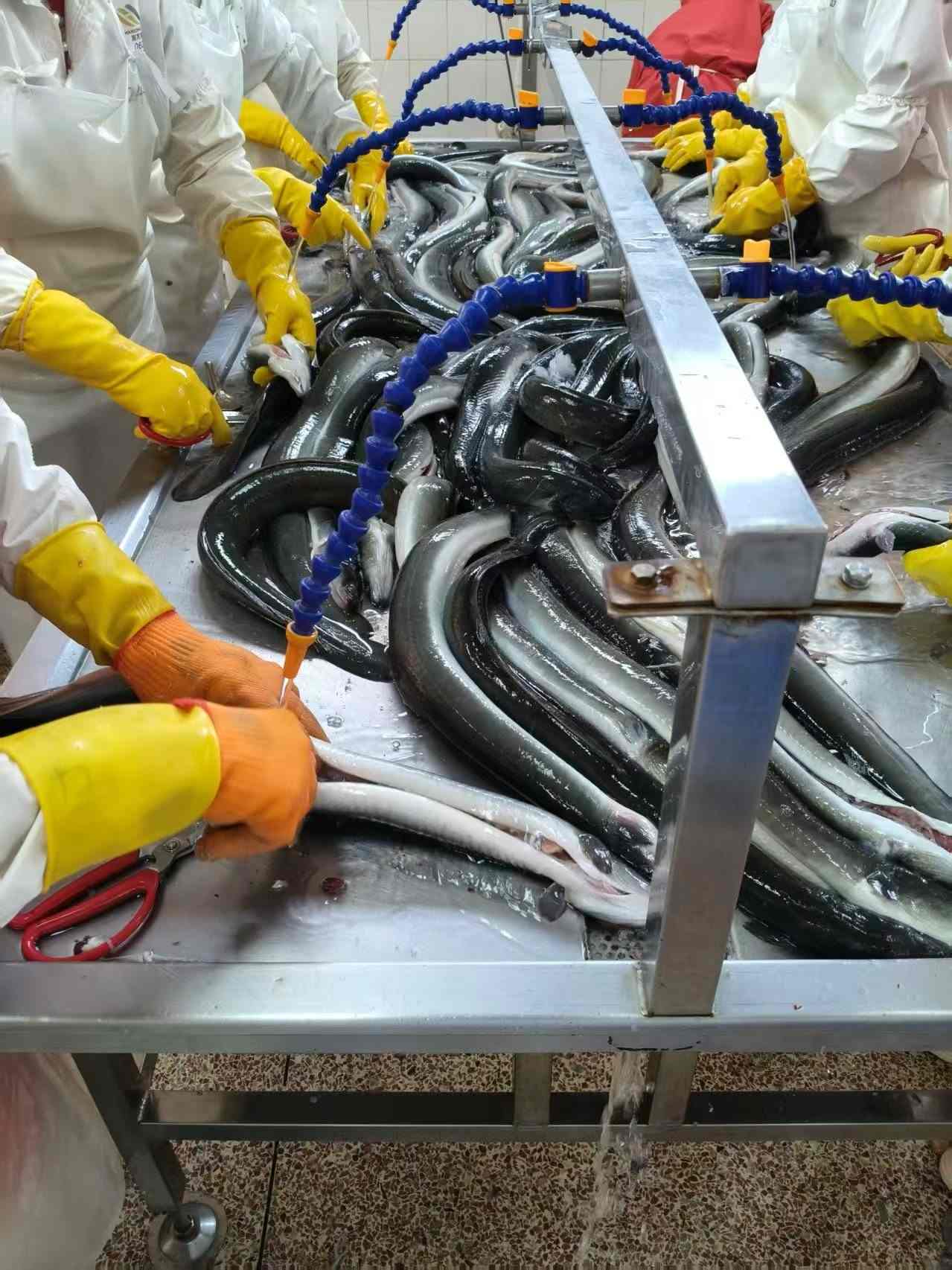
This is exactly why commercial kabayaki producers standardize their cutting specs. A properly deboned unagi kabayaki eel removes the main spine and rib structure before roasting, so the finished product doesn't rely on cooking time alone to make bones safe.
How Frying, Grilling, Smoking, and Braising Change Bone Safety
This is the part most home cooks get wrong — they assume any "well-cooked" eel is bone-safe. It isn't. Each method changes texture differently, and some methods barely touch the bone at all.
| Cooking Method | Effect on Bone Texture | Still Need Deboning? |
|---|---|---|
| Deep frying (whole small eel, high heat, short time) | Outer bones can turn crisp and brittle, sometimes edible in very small fish | Recommended for larger eel; optional only for very small, whole-fried specimens |
| Grilling / kabayaki style (direct heat, basted with sauce) | Surface caramelizes but internal spine and rib bones stay firm | Yes — always debone before or during prep |
| Smoking (low, slow, indirect heat over hours) | Long exposure softens smaller bones somewhat, but main spine remains rigid | Yes — main spine and larger bones must be removed |
| Braising (simmered in liquid, low heat, extended time) | Moist heat over 1+ hours can soften small pin bones considerably | Often still recommended for the main spine; small pin bones may soften |
Here's the reasoning: dry, fast heat (grilling, standard frying) doesn't have enough time or moisture to break down bone collagen. Moist, slow heat (braising, long smoking) does more work on softening structure — but even then, the main spine rarely gets soft enough to safely swallow. That's why professional processors debone before cooking rather than relying on the cooking method to solve it.
Scenario example: A restaurant buyer sourcing whole grilled eel for a donburi menu assumes the kabayaki glaze process will "cook out" the bones. It won't — the spine stays intact through grilling regardless of sauce layers or roasting time. This is a common and costly misunderstanding for kitchens new to eel prep.
Common Mistakes Buyers and Home Cooks Make
- Assuming sauce-heavy dishes cook bones soft — the kabayaki glaze affects flavor, not bone structure
- Confusing small pin bones with the main spine — pin bones may soften with long cooking, the spine almost never does
- Buying whole eel for foodservice without checking deboning specs — this increases prep labor and choking-hazard liability
- Overcooking to "melt" bones — this dries out the fillet before bones become genuinely safe to eat
- Skipping a bone check before plating — even deboned product can have occasional missed pin bones
Step-by-Step: How to Check and Handle Eel Bones Before Serving
- Identify the cut — whole eel, butterflied fillet, or pre-cut kabayaki pieces each carry different bone risk.
- Run fingers along the fillet against the grain to feel for raised pin bones before cooking.
- Remove the main spine with a thin filleting knife if working with whole eel — this is the highest-risk bone structure.
- Choose your cooking method based on final use — grilling and frying for texture and presentation, braising if you want softer results for soups or stews.
- Cook to the method's standard time — for kabayaki-style grilling, this typically involves basting in multiple soy-sauce layers over controlled heat, not extended raw cooking to "soften" bone.
- Do a final bone check before plating, especially for foodservice batches — a quick visual and touch pass catches missed pieces.
- For skewers or small-cut pieces, cut against the bone line so any remaining fragments are easier to spot and remove.
Common failure point: skipping step 3. Cooks who leave the spine in and rely on grilling alone end up with a fillet that looks fully cooked but still has a rigid bone core running through it.
Deboned vs. Bone-In Eel — Which Should You Buy
For foodservice buyers, this decision affects labor cost, plate safety, and consistency across batches.
| Factor | Bone-In Whole Eel | Deboned / Pre-Cut Eel |
|---|---|---|
| Prep labor | High — requires trained deboning per piece | Low — ready to heat and portion |
| Choking-hazard risk | Higher if not deboned properly | Lower, standardized cutting reduces risk |
| Best use case | Traditional whole-grilled presentations | Donburi, sushi, meal-prep, high-volume kitchens |
| Consistency across orders | Varies by kitchen skill | Consistent thanks to standardized cutting specs (shredding, dicing, strip-cutting, 3-section cut) |
This is where standardized processing earns its keep. Boneless, deboned eel with controlled cutting specs — shredding, dicing, strip-cutting, chunk-cutting, 3-section cut, or sushi slices — removes the guesswork for back-of-house teams. It also cuts prep time significantly compared to handling whole bone-in eel from scratch.
A Quick Buyer's Checklist Before Placing an Order
- Confirm whether the product is fully deboned or bone-in
- Ask for the exact cutting spec (dicing, strip-cutting, sushi slices, etc.)
- Check if the supplier applies export-grade inspection standards for microbiological and residue safety
- Request documentation on metal-detection and quality-control checkpoints
- Clarify packaging format — skin-packaging or gift box — based on your service style
Suppliers working under an ISO 22000 food safety framework typically build these checks into every batch, not just spot samples. That matters more than most buyers realize until a shipment fails inspection.
Where This Fits Into Broader Eel Prep Decisions
Bone safety is only one piece of getting eel right in the kitchen. If you're also working through skin removal or portioning at home, our guide on cleaning, skinning, and deboning eel walks through the full process step-by-step. And if you're deciding how to finish the dish, the glaze matters as much as the cut — see why the right kabayaki sauce changes the final result.
For foodservice buyers sourcing at scale, the safest path is starting with product that's already deboned to spec, produced under traceable, export-compliant conditions. That's the difference between a menu item customers trust and one that generates complaints.

If you're sourcing eel for a restaurant menu or retail line and want deboned, cutting-spec options that match your kitchen's needs, reach out for a quote or sample batch to see the texture and prep time difference firsthand.