

Can You Eat Eel Bones Safely, and When Should You Spit Them Out
You're halfway through a plate of grilled unagi and your fork hits something firm. A tiny bone. Do you chew it, swallow it, or stop and start picking through the rest of the fillet? That hesitation is exactly why so many buyers and home cooks ask can you eat eel bones before they even finish the meal.
Short answer: it depends on the species, the cut, and how long the eel was cooked. Some eel bones soften enough during slow braising or deep-frying that they're genuinely edible. Others — especially the thicker spine sections in larger freshwater eels — stay hard and pose a real choking risk. Let's break down the differences so you know what's on your plate before you bite down.
Are Eel Bones Safe to Eat? It Depends on Size and Species
Freshwater eel (Anguilla japonica, the species most commonly used for unagi kabayaki) has a thin, flexible skeleton compared to bigger fish like tuna or cod. That's good news. The pin bones running along the fillet are small enough that, once properly grilled or steamed, many become soft enough to eat without much notice.
But "small" doesn't mean "always safe." Here's what actually determines eel bone safety:
- Bone thickness — Pin bones under 1mm in diameter typically soften with heat and moisture. The central spine, which can be 2-4mm thick depending on the eel's size, rarely softens fully even after long cooking.
- Cooking method — Grilling (kabayaki style) with repeated basting in tare sauce softens surface bones but not the spine. Pressure-cooking or canning breaks down bone structure much more thoroughly.
- Eel size and age — Larger, older eels have denser, harder bones. Smaller eels used for kabayaki are generally a safer bet than a large wild-caught eel prepared whole.
- Fillet vs. whole preparation — A deboned fillet removes the risk almost entirely. A whole grilled eel served bone-in requires more caution, especially for children or elderly diners.
If you're sourcing for a restaurant menu or retail freezer case, this is the exact reasoning behind choosing pre-deboned unagi kabayaki over whole-eel product. It removes the guesswork for your kitchen staff and your customers.
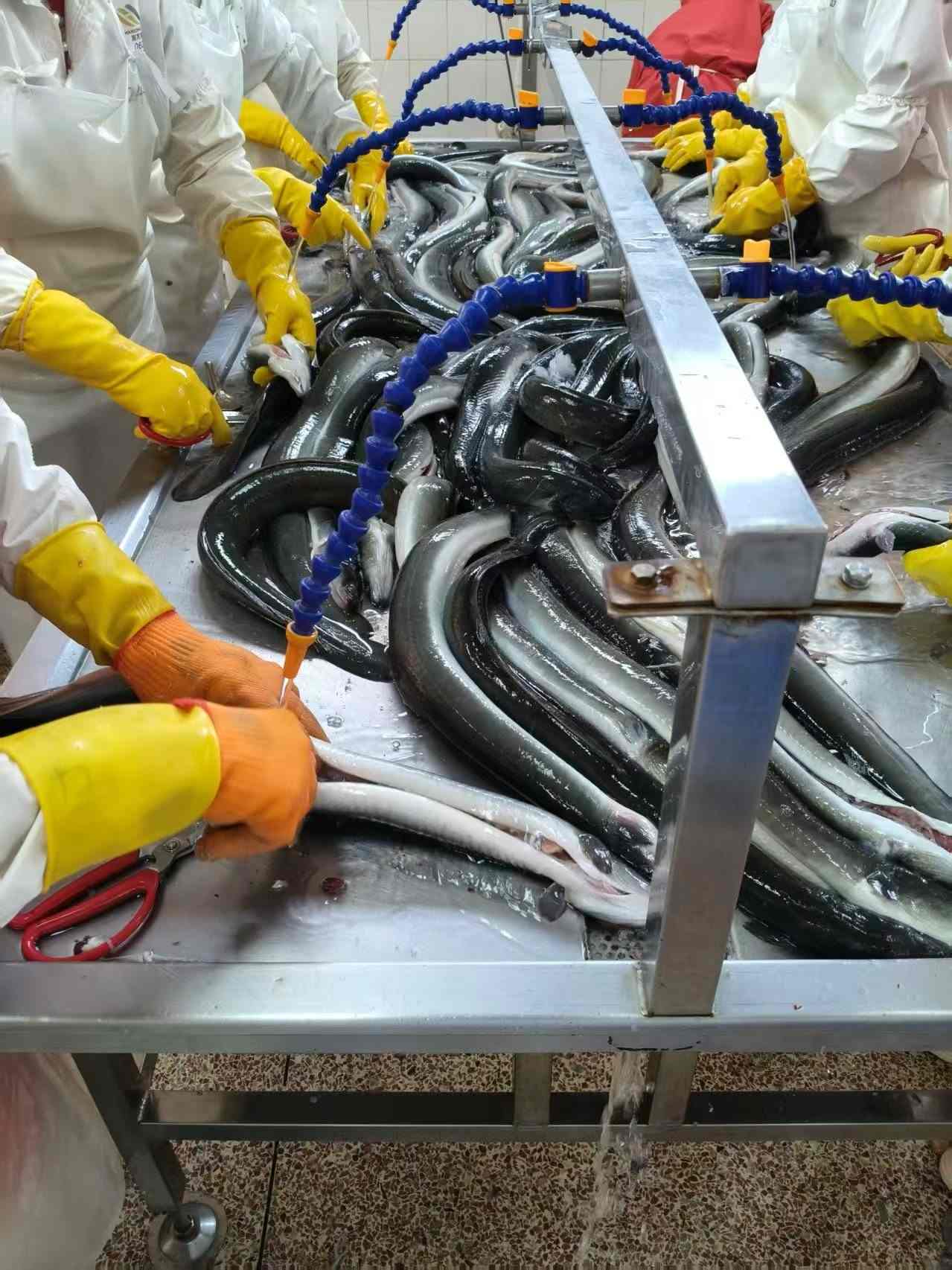
How Are Eel Bones Removed During Processing
Commercial deboning isn't a single step — it's a sequence, and skipping any part of it increases the odds of a bone slipping through into the final pack.
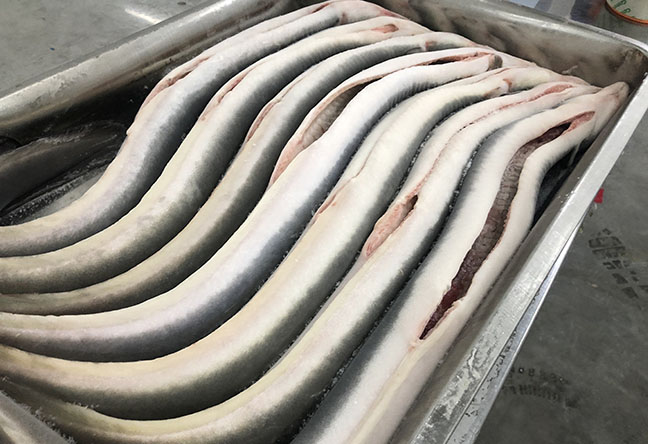
- Butterfly cutting — The eel is split open along the belly or back, exposing the spine directly instead of leaving it buried in the flesh.
- Spine removal — The main backbone is lifted out in one motion using a fillet knife or mechanical deboning blade, run close to the bone to avoid tearing flesh.
- Pin bone extraction — Remaining rib bones and pin bones are pulled with tweezers or specialized pin-bone pliers, checked row by row under lighting.
- Manual palpation check — Workers run fingers along the fillet surface to feel for any missed bone tips before the product moves to grilling or freezing.
- Post-cook visual inspection — After kabayaki grilling, a second check catches any bone that shifted position during cooking.
This is standard practice in facilities producing frozen kabayaki for export, since a single customer complaint about a bone can cost far more than the extra 30 seconds per fillet spent on inspection. For background on eel biology and skeletal structure, the Wikipedia entry on eels gives a useful overview of species anatomy.
Bone Softening in Cooking: What the Numbers Actually Mean
This is the part most home cooks get wrong. They assume "cooked long enough" automatically means "bones are gone." It doesn't work that way — and getting it wrong is exactly how a bone ends up lodged in someone's throat.
| Parameter | What It Actually Affects | What Happens If You Get It Wrong |
|---|---|---|
| Cooking temperature | Collagen breakdown in bone cartilage; higher heat (above 90°C sustained) speeds softening | Under 80°C for short periods leaves bones firm and sharp — a real choking hazard |
| Cooking duration | How deep the heat penetrates into thicker spine sections | Short grilling (5-8 minutes) softens surface pin bones only, spine stays hard |
| Pressure vs. atmospheric cooking | Pressure cooking (canned eel processing) breaks bone structure at a cellular level | Standard grilling never reaches the same softening effect, no matter how long you cook it |
| Bone diameter | Thin pin bones soften faster than the thick central spine | Assuming "the fillet is done, so all bones are edible" is the most common mistake |
| Product format | Deboned fillet vs. bone-in vs. canned each carry different residual bone content | Serving bone-in product to children or elderly diners without warning is a liability risk |
Practical takeaway: canned eel and slow-pressure-cooked eel bones soften enough to eat safely in most cases. Grilled kabayaki bones, even after basting, often do not — particularly the spine. If a bone still resists light pressure between your fingers after cooking, don't chew it.
Common Mistakes Buyers and Home Cooks Make
- Assuming all eel products are pre-deboned — Not all suppliers debone consistently. Always confirm with your supplier whether the product is fully deboned or bone-in.
- Skipping the texture check before serving — A quick fork-press test on the thickest part of the fillet takes two seconds and catches most missed bones.
- Serving whole grilled eel to children without warning — Kids are far more likely to swallow without chewing thoroughly.
- Confusing "soft-boned" with "boneless" — Canned eel with softened bones is edible but not identical to a fully boneless fillet; some texture remains.
- Over-trusting long cooking time alone — Duration matters less than temperature and method, as shown in the table above.
Edible Fish Bones: How Eel Compares to Other Species
Eel isn't the only fish where bone edibility comes up. Sardines and canned salmon are classic examples of edible fish bones made soft through pressure canning. Eel sits somewhere in the middle — softer-boned than tuna or cod, but not naturally as bone-free as a well-filleted flatfish.
| Species / Format | Typical Bone Status | Edibility After Cooking |
|---|---|---|
| Canned salmon/sardines | Pressure-processed, very soft | Generally edible, minimal risk |
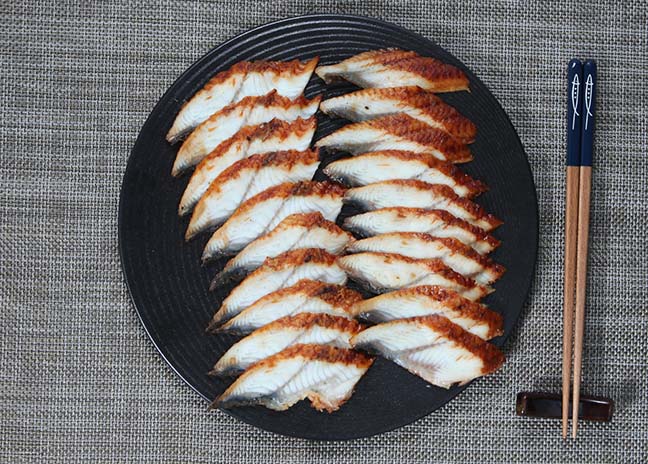
| Grilled unagi kabayaki (deboned) | Spine and major bones removed pre-cook | Safe, no bone concern |
| Whole grilled freshwater eel | Spine intact, pin bones softened | Pin bones sometimes edible; spine should be avoided |
| Fresh eel fillet, home-cooked | Depends on home deboning skill | Variable — risk of missed pin bones |
A Practical Buyer's Checklist Before You Order or Serve
- Confirm with your supplier whether the product is fully deboned, partially deboned, or bone-in.
- Ask about the deboning method used — manual, mechanical, or both.
- Request a sample batch and run your own fork-press texture check before committing to a bulk order.
- For retail or restaurant use, label bone-in products clearly for staff and customers.
- If serving children, elderly diners, or anyone with swallowing difficulty, choose fully deboned frozen eel supplier product rather than whole-cut eel.
For those cooking at home and wanting a step-by-step approach to safe bone removal before grilling, this guide on cleaning, skinning and deboning walks through the same manual process used in commercial kitchens, just scaled down.
Can Cooked Eel Bones Soften Enough to Eat
Yes, but only under specific conditions. Pressure-canned eel, common in some regional preparations, softens bones thoroughly enough that most people eat them without noticing. Slow-braised eel dishes, cooked for over an hour at low simmer, can soften pin bones too. Standard kabayaki grilling — the method behind most frozen unagi kabayaki products — softens surface pin bones somewhat but does not reliably soften the spine.
Practical rule: if the bone bends under light pressure from a fork, it's likely safe to eat. If it resists and feels rigid, remove it before serving.
When pairing eel with sauce for a home meal or menu item, the bone question often comes up alongside flavor questions too — our article on kabayaki sauce quality covers how sauce composition affects both taste and how the fillet holds together during grilling.
If you're evaluating eel suppliers for import or foodservice use, ask for deboning specifications in writing, and request a sample before placing a full container order. We're happy to send product samples and spec sheets for buyers who want to verify bone content and texture firsthand — just reach out with your target product format and order volume.