

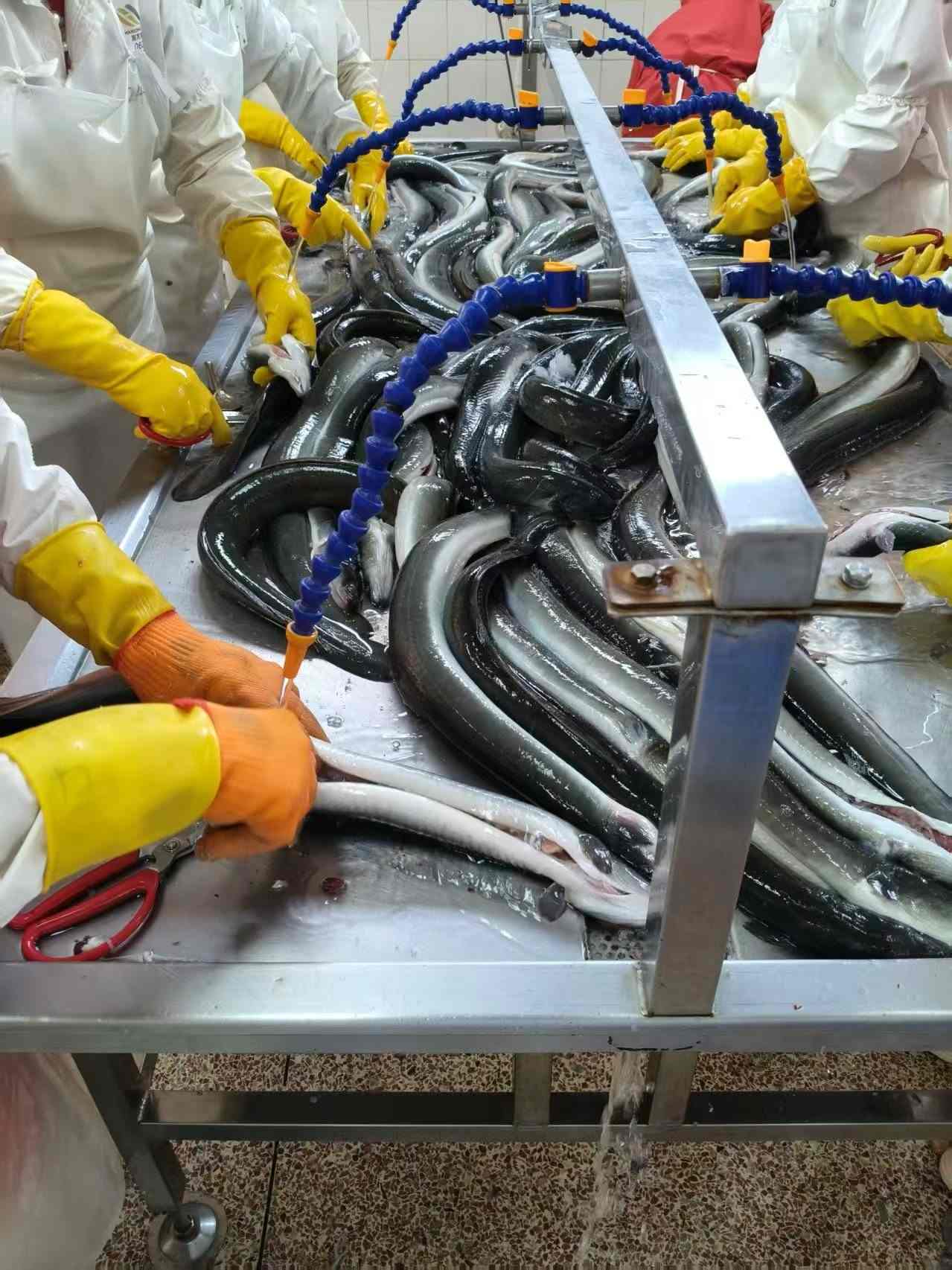
How to Define Unagi Correctly by Separating Species Names From Cooking Style Terms
A buyer emails asking for "kabayaki eel," then follows up asking if it's the same as "unagi." It isn't quite the same question, and the confusion costs time on both sides of the deal. If your catalog or RFQ mixes up species, category, and preparation terms, you risk ordering the wrong product — or worse, mislabeling it on a menu. To define unagi properly, you need to separate three different things: the species, the category, and the cooking method. This article breaks down each layer so purchasing teams and foodservice buyers can read a product spec sheet without guessing.
Why the Term "Unagi" Gets Misread on Spec Sheets
Unagi is a Japanese word for freshwater eel, most commonly referring to the species Anguilla japonica. But in trade documents, "unagi" often appears attached to a preparation style — "unagi kabayaki," "unagi don," "unagi sushi" — which makes buyers assume the word itself describes a dish rather than an animal.
Here's the practical issue: a supplier catalog might list "frozen unagi" and "unagi kabayaki" as two separate SKUs. If your team doesn't know the difference, you could order raw frozen eel meant for further processing when you actually need a ready-to-heat glazed product for the line.
- Unagi = the species/category term (freshwater eel)
- Kabayaki = a cooking and glazing method (butterflied, grilled, basted in sauce)
- Unagi tare = the sauce used in that glazing process, sold separately as a condiment
Species Names, Eel Categories, and Preparation Terms Explained
This is the core confusion point for foodservice buyers, so let's separate it clearly with a comparison table.
| Term | What It Actually Describes | Common Mistake |
|---|---|---|
| Anguilla japonica | Biological species name, the freshwater eel most used for kabayaki in East Asian markets | Assuming all "eel" products use this species without checking the spec sheet |
| Unagi | General Japanese term for freshwater eel (a category, not a dish) | Treating "unagi" as if it means "grilled eel" specifically |
| Kabayaki | A preparation method: butterflied, boned, skewered, and grilled with soy-based basting sauce | Ordering "kabayaki" expecting raw eel, or vice versa |
| Shirayaki (white-roasted) | Grilled eel without sauce, often used before final glazing or for lighter dishes | Confusing it with kabayaki, which always carries the soy glaze |
| Unagi tare / eel sauce | The soy-based basting sauce itself, sold as a standalone condiment | Assuming tare is only for eel — it's also used on other grilled proteins |
| Freshwater eel (general) | Broad category covering multiple species, not limited to Anguilla japonica | Using "freshwater eel" and "unagi" interchangeably in specs meant for Japanese-market buyers |
A useful rule for reading any eel product listing: species tells you what animal, category tells you what group it belongs to, and preparation term tells you what's been done to it. A spec that only names one of the three is incomplete — ask your supplier to fill in the gaps before confirming an order.

Common Product Description Mistakes Buyers Make
We've seen these mix-ups repeat across import inquiries. Here's a short list worth checking against your own RFQs:
- Assuming "kabayaki" always means fully cooked and ready-to-eat. Some kabayaki products are frozen after grilling and require reheating; others are semi-finished and need full cooking. Always confirm the cook state in the spec, not just the name.
- Ordering by species name alone without cut specification. A supplier offering "eel fillet" might mean whole butterflied fillets, cut pieces, or sushi slices — very different for portion costing.
- Confusing eel sauce (tare) with the glaze already on frozen kabayaki. Some buyers order tare separately assuming their frozen kabayaki arrives unsauced, and end up double-glazing by mistake.
- Skipping HALAL or food safety certification checks because the product name sounds standard. Certification status doesn't travel with the product name — it has to be verified per batch and per supplier.
A Practical Checklist Before You Place an Eel Order
Use this checklist when reviewing a supplier's product sheet or drafting your own RFQ:
- Confirm the species name (e.g., Anguilla japonica) if the end market requires it labeled.
- Confirm the preparation term — kabayaki, shirayaki, or raw/unprocessed.
- Check the cut specification — whole fillet, cut pieces, diced, shredded, or sushi slices.
- Verify cook state — ready-to-heat, semi-cooked, or raw frozen.
- Ask whether sauce is included or sold separately as a condiment.
- Request certification documents relevant to your import market (food safety, HALAL, veterinary residue testing).
- Confirm cold-chain and storage conditions match your logistics capability.
A Worked Example: Reading a Supplier Spec Sheet
Say a spec sheet lists: "Frozen Unagi Kabayaki, Anguilla japonica, 4-layer soy glaze, boneless, ready-to-heat, cut pieces available." Here's how to read it line by line:
- "Frozen Unagi Kabayaki" tells you the category (unagi/eel) and preparation (kabayaki, grilled with sauce).
- "Anguilla japonica" confirms the exact species, useful if your end market label requires species disclosure.
- "4-layer soy glaze" describes the roasting process — in our production, this refers to a temperature-controlled multi-step soy sauce coating applied during roasting, distinct from a single dip-and-grill method.
- "Boneless, ready-to-heat" tells you back-of-house prep time will be low — good for chains needing standardized reheating rather than full kitchen prep.
- "Cut pieces available" means you can request diced, shredded, strip-cut, chunk-cut, 3-section cut, or sushi slice formats depending on your menu use.
This is the level of detail worth demanding from any supplier before confirming an order — vague listings like "frozen eel product" without these details should be a flag to ask more questions.
Where This Matters Most for Foodservice Buyers
Correctly reading these terms matters most in three scenarios:
- Menu labeling compliance. Some export markets (Japan, US, EU) require species disclosure or accurate cooking method description on packaging. Getting "unagi" and "kabayaki" mixed up on a label can trigger compliance issues at customs or retail audit.
- Back-of-house costing. Boneless, cut-ready kabayaki reduces kitchen prep labor compared to raw whole eel needing skinning and deboning — a real cost difference for chains scaling across locations.
- Recipe and portion planning. Chunk-cut eel suits noodle soup applications, while sushi slices suit roll-based menu items — ordering the wrong cut spec means reworking the product in-house, adding labor you didn't budget for.
Where this checklist does NOT help: it won't resolve disputes over freshness grading or fat content, which require lab testing rather than label reading. For that, ask your supplier for a certificate of analysis rather than relying on the product name alone.
Certifications and Traceability Behind the Terminology
Terminology accuracy is only half the picture — the product behind the label needs to hold up under import inspection. Our facility operates under ISO 22000:2018 and HACCP certification, holds HALAL certification, and is registered under SC Food Production License No. SC11135062401122 covering quick-frozen prepared and seasoned aquatic products. Raw material traceability runs through roughly 20 customs-registered eel farming bases covering over 2,150 mu, with process verification and targeted sampling at each stage. This matters because a correctly labeled "kabayaki" product is only as trustworthy as the farm and processing chain behind it — label accuracy and supply chain traceability need to be checked together, not separately.
Buyers working with strict import standards for Japan, US, or EU markets should ask for veterinary drug residue and microbiological test results alongside any species or preparation claims on the spec sheet.
Get the Right Spec Before You Order
If you're unsure how a specific eel product should be labeled or cut for your menu, send us your target market and use case — we can walk through species, preparation, and cut specification together before you commit to an order, or share a sample spec sheet for reference.