


Do Eels Have Backbones? Yes, and That Is How You Tell Them From Hagfish
You saw a post claiming eels have no spine. Then a slimy, eel-shaped video went viral and the claim seemed to hold up.
So, do eels have backbones? Yes. True eels are bony fish with a full vertebral column. The animal in that video was almost certainly a hagfish, which has a skull but no vertebrae. Below we sort out which animals are which, and what it means when a supplier sells "boneless" eel.
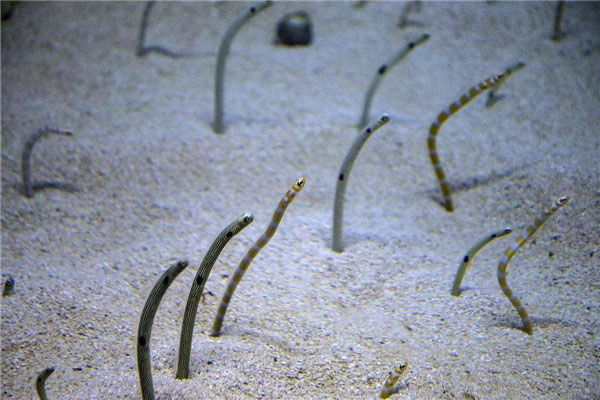
Are eels and hagfish the same kind of animal?
No. They are only distant relatives, and the backbone is the clearest dividing line.
A true eel, such as the freshwater eel behind unagi kabayaki eel, belongs to the bony fish. It has jaws, a skull and a vertebral column running from head to tail. The hagfish is a jawless animal. It has a cartilage skull but no vertebral column.
The two look alike for a simple reason. A long, tube-shaped body works well in mud, crevices and deep sediment, so unrelated animals ended up with a similar shape. Similar shape does not mean similar skeleton.
Why eel-shaped animals look alike, but only true eels have a vertebral column
This is the boundary that online claims blur. "Eel-shaped" describes a body outline. "True eel" describes a biological group. The table separates them.
| Animal | Group | Skull | Vertebral column | Jaws | Key point |
|---|---|---|---|---|---|
| Freshwater eel (Anguilla) | True eel, bony fish | Yes, bony | Yes | Yes | The species used for kabayaki |
| Moray eel | True eel, bony fish | Yes, bony | Yes | Yes, plus a second set in the throat | Reef predator, not farmed for kabayaki |
| Hagfish | Jawless animal | Yes, cartilage | No | No | Produces large amounts of slime when stressed |
| Lamprey | Jawless animal | Yes, cartilage | No bony vertebrae; cartilage structures only | No, sucker mouth | Often confused with hagfish |
| Electric eel | South American knifefish | Yes, bony | Yes | Yes | Not a true eel despite the name |
| Swamp eel | Separate bony-fish order | Yes, bony | Yes | Yes | Eel-like, but not a true eel |
Look at the electric eel row. It has a backbone, yet it is not a true eel. The name misleads, and so does the body shape. Having a backbone does not make an animal a true eel, but every true eel has one.
How can you check at a glance?
You rarely have a skeleton on the table, so use features you can see.
- Check the mouth. A hagfish has a round, jawless mouth with tentacle-like barbels. A true eel has a normal jaw with teeth.
- Check the sides. True eels have gill openings and small pectoral fins near the head in most species. Hagfish have no paired fins.
- Check the skin. A stressed hagfish releases thick slime. Eels are slippery too, but they do not turn water into gel.
- Check the cross-section. A cut eel shows a bony spine with surrounding rib bones. A hagfish shows a rod-like notochord instead.
Quick tip: if the animal is sold on a menu or a spec sheet as "eel", look for the Latin name. Freshwater eels are listed as Anguilla.
If eels have a spine, why do suppliers sell "boneless" eel?
"Boneless" describes processing, not anatomy. The eel still grew with a full backbone. It was removed, along with the rib bones, before cooking and packing.
For foodservice buyers this matters. Deboned eel saves back-of-house labor, because a kitchen does not need to fillet a slippery fish. Our unagi kabayaki product is supplied boneless or deboned, with standardized cutting and ready-to-heat packaging. We also offer custom cuts: shredding, dicing, strip-cutting, chunk-cutting, 3-section cut and sushi slices.
Limit to remember: "boneless" does not guarantee zero fine bones in every piece. Ask the supplier how deboning is checked and what the contract says about bone content. For home cooks, our how to cook eel: cleaning guide shows what the bones look like when you do it yourself.
Common mistakes when reading eel claims online
- Treating a hagfish video as eel footage. Slime plus a slender body does not make it an eel. Check the mouth.
- Trusting common names. "Electric eel" and "swamp eel" are not true eels.
- Reading "boneless" as "spineless". The first is a processing spec, the second is a biology claim.
- Assuming all eel-shaped seafood is interchangeable. Species affects texture, fat content, taste and regulations.
- Skipping the species name on a spec sheet. A buyer should always see the Latin name and origin.
Cold fact: moray eels have a second set of jaws inside the throat that shoots forward to pull prey down. It is a true-eel feature, and it needs a skull and bony framework to work.
What should an importer verify before buying eels?
This question is different from the biology, but it follows from it. A buyer who knows eels are bony fish also knows the product should come with proper species documentation and a traceable supply chain.
| Checklist item | Why it matters | What we can confirm |
|---|---|---|
| Species and origin | Confirms the product is a true freshwater eel | About 20 customs-registered eel farming bases covering over 2,150 mu; see our unagi eel farm for Eelpro Co. |
| Traceability | Lets a problem be traced to its source | Full-chain control from farming registration to process verification, sampling and traceability tracking |
| Residue and microbiological testing | Reduces trade risk in strict markets | Products meet Japan, US and EU inspection standards; in-house testing at our eel lab of Eelpro Co. |
| Food safety system | Shows how production is controlled | ISO 22000:2018, HACCP, HALAL, export food producer registration and SC license |
| Foreign-matter control | Protects the final user | Metal detectors at critical control points |
We have shipped kabayaki to Japanese restaurant chains, and unagi kabayaki and eel sauce to US food importers. We have also supplied importers and distributors in Germany and Poland, and importers in Indonesia. Cases are not guarantees for every order, so confirm specifications, packaging format and MOQ for your own market. Lead time is normally around 30 days from order confirmation to shipment, and it can be negotiated depending on spec and quantity.
Still unsure? Where to go next
Here is what we cannot answer from a general article: whether a specific spec will suit your menu, how fine-bone tolerance should be written into your contract, or what packaging format works for your channel. Those depend on your cut, pack size and destination market.
If you have a question about the eel-versus-hagfish mix-up, drop it in the comments. If you want to see a real product, ask us for a spec sheet for our frozen eel line from this frozen eel supplier. And if you are curious how deboned eel ends up on the plate, our how to cook eel: easy methods and tips is a good next read.