

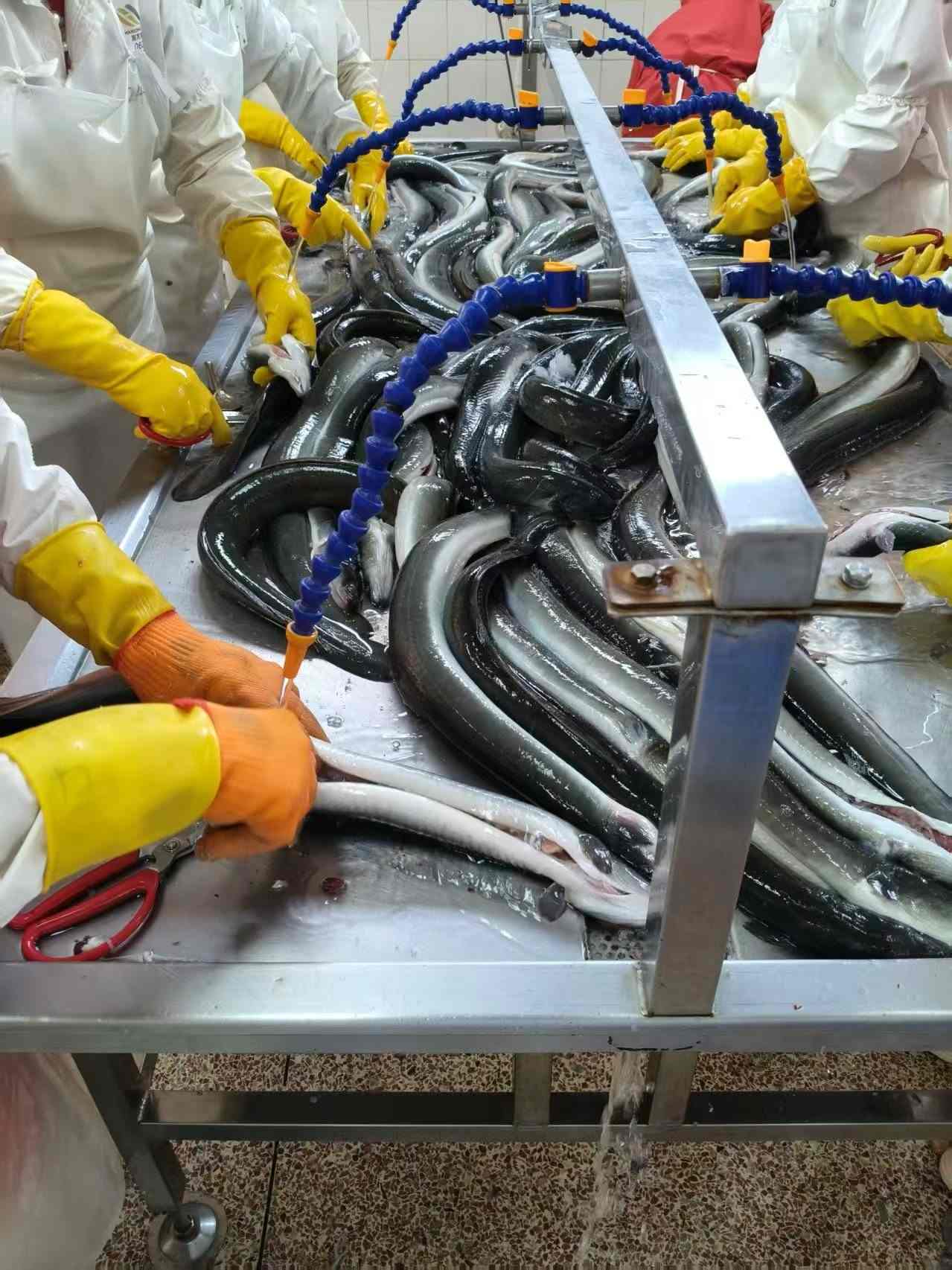
Eel Fish vs Eel-Like Fish How to Tell Them Apart Before You Buy
Picture this: a container of "eel" arrives at your warehouse, but the fillets look wrong. Too thin. Wrong color. No real oil content. Your customer notices before you do — and now you're issuing refunds. This happens more often than buyers admit, because eel fish and eel-like fish get mixed up constantly in trade paperwork, menus, and even wholesale listings.
As a supplier working daily with freshwater eel species and their processed products, we see this confusion from both sides — buyers who got burned by mislabeled stock, and new importers who genuinely don't know what separates a true eel from something that just looks like one. This article breaks down the real biological differences, so you can read a product spec sheet and know exactly what you're getting.
What Makes a Fish a "True Eel" Scientifically
True eels belong to the order Anguilliformes, which includes over 800 species worldwide — but only a small number are commercially farmed for food, primarily in the genus Anguilla. This is the group that produces the freshwater eel used in unagi kabayaki and most eel sauce recipes.
True eel species share a specific set of biological traits:
- No pelvic fins — true eels lack pelvic fins entirely, which is one of the fastest visual checks
- Continuous dorsal, caudal, and anal fins that form one unbroken fin running around the tail
- Scaleless or embedded-scale skin — the skin feels smooth and slightly slimy, not rough
- Leptocephalus larval stage — true eels hatch as flat, transparent larvae, unlike most other fish
- Catadromous lifecycle — they live in freshwater but migrate to the ocean to spawn, the reverse of salmon
If a species checks all five boxes, it's a true eel under standard eel taxonomy. Miss even one — especially the pelvic fin test — and you're likely looking at an eel-like fish instead.
Eel Fish vs Eel-Like Fish A Side-by-Side Comparison
This is the section most buyers actually need. Below is a direct comparison between true eel species and the marine look-alikes most commonly confused with them in the seafood trade.
| Trait | True Eel Fish (Anguilla species) | Eel-Like Fish (e.g., Wolffish, Lamprey, Moray) |
|---|---|---|
| Pelvic fins | Absent | Present in some, absent in others (case-by-case) |
| Jaw structure | Small, aligned jaws with fine teeth | Often larger jaws; lampreys have a round sucking disc, no true jaw |
| Skin texture | Smooth, scaleless to the touch | Varies — moray eels are also scaleless, but lampreys are cartilaginous |
| Habitat cycle | Catadromous — freshwater to saltwater spawning | Mostly marine or anadromous, no shared migration pattern |
| Fat content (for cooking) | High, ideal for grilling and kabayaki-style glazing | Lower and inconsistent, less suited for kabayaki texture |
| Common trade name confusion | Labeled correctly as "unagi" or "freshwater eel" | Sometimes marketed loosely as "eel" or "conger" without species ID |
This table matters most when you're reading a supplier's spec sheet. If a listing says simply "eel fillet" with no species name, ask for the Latin name. A legitimate exporter should give you Anguilla japonica, Anguilla anguilla, or a similarly specific designation — not just "eel."
What Fish Are Commonly Mistaken for Eels
Buyers new to the category often assume anything long and slippery is an eel. It's not. Here are the usual suspects that get mislabeled or confused:
- Moray eels — technically true eels, but a different family (Muraenidae) not used in kabayaki production
- Lampreys — not eels at all; they're jawless fish with a completely different skeletal structure
- Wolffish — sometimes marketed as "ocean eel" due to elongated body shape, but unrelated taxonomically
- Sand eels (sand lance) — small, silvery, and not part of Anguilliformes despite the name
- Swamp eels (Synbranchidae) — air-breathing, gill-less fish that look eel-shaped but belong to an entirely separate order
Common mistake to avoid: assuming "eel" on a label guarantees true eel meat. In our own sourcing work, we've seen import documents where "conger eel" was substituted for freshwater unagi in budget kabayaki products — same shape, very different taste and fat profile once cooked.
How Can You Identify a True Eel Fish in 5 Quick Checks
For buyers inspecting frozen shipments or raw stock, here's a practical field checklist:
- Check for pelvic fins — none present means it passes the first true-eel test
- Look at the fin line — dorsal, tail, and anal fins should merge into one continuous ribbon
- Feel the skin — smooth and scaleless, never rough or plate-like
- Ask for the Latin species name — reputable suppliers list it on the certificate of origin
- Assess fat marbling — true freshwater eel has visible fat layers under the skin, which is why it holds up so well under a kabayaki glaze
If a supplier can't answer these five points, that's a warning sign. We walk new buyers through this exact process before finalizing any order of our unagi kabayaki product line, because species accuracy affects both flavor and compliance documentation.
Why This Distinction Matters for Sourcing and Menu Accuracy
Getting the species right isn't just academic. It affects three real business outcomes:
- Regulatory labeling — many import markets require accurate species names on customs declarations; mislabeling can trigger holds or fines
- Cooking performance — true eel's fat content is what makes it caramelize properly when glazed with eel sauce; eel-like substitutes often dry out or turn rubbery
- Customer trust — a restaurant serving "unagi" that's actually conger eel risks complaints once diners taste the difference
We source and process true freshwater eel through our own eel farm operations and verify species consistency through our eel lab testing process before any batch moves to kabayaki production. That verification step is what lets us guarantee the species listed on our spec sheets matches what's actually in the box.
Buyer's Decision Checklist Before Placing an Order
| Question to Ask Supplier | Why It Matters |
|---|---|
| What is the Latin species name? | Confirms true eel vs eel-like substitute |
| Is this freshwater or marine sourced? | True eels are catadromous; marine-only stock is a red flag |
| Can you provide a fat content range? | True eel typically shows higher, more consistent marbling |
| Is species testing done in-house or third-party? | In-house lab verification speeds up quality assurance |
| Does the sauce pairing match the eel type? | Kabayaki glaze is formulated for true eel fat content |
Buyers who work through this checklist rarely get surprised by a shipment. It takes maybe ten minutes of email exchange, but it prevents the kind of mismatch that damages a menu launch or an import audit.
Cooking Notes Once You've Confirmed True Eel
Once species is confirmed, preparation gets simpler. For readers building out a menu or home kitchen routine, we've published detailed guides on how to cook eel: easy methods and tips and a full breakdown on how to cook eel: cleaning, skinning & deboning guide, both written around true freshwater eel behavior under heat.
The short version: true eel's fat renders slowly, which is why low, steady grilling with repeated sauce basting — the classic kabayaki method — works so well. Eel-like fish with less fat tend to scorch faster and dry out before the glaze sets properly.
Frequently Asked Questions
How can you identify a true eel fish?
Check for the absence of pelvic fins, a continuous dorsal-tail-anal fin line, smooth scaleless skin, and a catadromous lifecycle. If a supplier can confirm the Latin genus name, that's the fastest confirmation.
What fish are commonly mistaken for eels?
Lampreys, wolffish, sand eels, and swamp eels are the most frequent mix-ups. Moray eels are technically true eels but belong to a different family than the freshwater species used in kabayaki.
How are eels different from eel-like fish?
True eels share a specific skeletal and lifecycle pattern — no pelvic fins, continuous fin structure, and ocean-spawning migration. Eel-like fish may share the elongated body shape but often differ in jaw structure, habitat, and fat composition, which changes both flavor and cooking behavior.
Species confusion is avoidable once you know what to look for. If you're sourcing eel fish for wholesale, restaurant menus, or retail packaging, ask for documentation, not just a product name. And if you want more comparison guides like this one, browse our other articles on frozen seafood sourcing — we cover the same kind of practical identification issues across other species too. Drop a comment below if you've run into a mislabeled eel shipment; we'd like to hear how you caught it.