


Why Eel Rolls Sushi Deserves a Premium Spot on Your Foodservice Menu
Here's the question most sushi menu planners never ask: why does eel rolls sushi sell for $14 at one restaurant and $22 at another, three blocks away, with nearly identical ingredients? The answer isn't magic. It's a handful of sourcing and portioning decisions made before the roll ever touches a cutting board. Get those decisions wrong, and you leave margin on the table — or worse, serve an inconsistent product that quietly erodes repeat visits.
This piece breaks down how restaurants, caterers, and distributors can position eel rolls sushi as a high-margin menu anchor, not just another roll on the list. We'll cover menu language, portioning math, ingredient parameters that actually matter, and the sourcing checkpoints that separate a reliable supplier from a risky one.
Why Eel Rolls Sushi Commands Premium Pricing
Unagi carries a reputation problem that works in your favor: diners already believe it's expensive and labor-intensive to prepare. That perception lets operators charge a premium without resistance — as long as the roll delivers on texture and sauce balance. Compare that to a California roll, where guests have a strong internal price anchor around $8-10.
A well-written menu description does real work here. "Grilled eel, cucumber, avocado, house unagi sauce" reads generic. "Charcoal-style kabayaki eel glazed in four-layer soy reduction, rolled with cucumber and avocado" signals craft — and justifies a $4-6 upcharge. This isn't exaggeration; it's simply naming the process that's already happening in the kitchen.
| Cost Element | Typical Range (per roll, 8 pieces) | Notes |
|---|---|---|
| Frozen unagi kabayaki portion | $1.80 - $2.60 | Depends on cut spec and supplier contract volume |
| Eel sauce (unagi tare) | $0.20 - $0.35 | Pre-made sauce reduces kitchen prep time versus reducing stock in-house |
| Rice, nori, vegetables | $0.90 - $1.30 | Varies by region and rice quality grade |
| Total food cost | $2.90 - $4.25 | Target food cost ratio: 28-33% of menu price |
| Suggested menu price | $12 - $16 | Adjust for market and service style |
If your food cost ratio on eel rolls sushi climbs above 35%, something in the chain is off — usually oversized portions or a sauce that's too dilute, requiring more volume to taste right.
What Determines Eel Roll Quality — Unagi Roll Ingredients Parameters Explained
Most menu planners treat "eel" as one ingredient. It isn't. Several parameters inside the unagi roll ingredients chain each affect a different part of the finished product — and getting any one wrong shows up immediately in texture, color, or shelf behavior.
| Parameter | What It Actually Affects | Risk If Ignored |
|---|---|---|
| Fat content of the eel | Mouthfeel and how the fish holds up under reheating | Too lean = dry, rubbery roll; too fatty = greasy, inconsistent char |
| Soy-sauce coating layers | Depth of color and balance between sweet and savory | Single-layer glazing tastes flat and browns unevenly on the grill |
| Cold-chain storage temperature | Texture retention and food safety margin before service | Temperature swings cause ice crystal damage, turning flesh mushy |
| Cut specification (strip, chunk, 3-section) | Roll diameter consistency and back-of-house prep speed | Mismatched cuts mean uneven rolls and slower line throughput |
| Sauce viscosity | How well it clings to rice without soaking through nori | Thin sauce leaks and makes rolls soggy within 10-15 minutes |
In practice, the soy-sauce layering step is the one most kitchens underestimate. A product built on a four-layer coating process — applied with temperature-controlled steps — produces the deep mahogany color guests associate with "real" kabayaki. A single dip-and-grill shortcut looks pale by comparison, even if the eel itself is the same species and size. If you're comparing suppliers, ask directly how many coating passes their unagi kabayaki goes through before freezing.
Portion Planning and Sushi Menu Planning for Consistent Food Cost
Portion drift is the silent margin killer. One line cook uses 35 grams of eel per roll, another uses 48 grams — and nobody notices until the monthly food cost report lands. Here's a straightforward procedure to lock it down:
- Weigh the raw kabayaki portion once per roll type — standardize at 40-45 grams for a standard 8-piece eel maki roll.
- Pre-cut and batch the eel into service-ready strips during prep shift, not à la minute, to remove cook-to-cook variation.
- Measure sauce with a squeeze-bottle portion guide — roughly 8-10 grams per roll keeps flavor consistent without soaking the rice.
- Log actual usage weekly against theoretical usage to catch drift before it compounds into a cost problem.
- Retrain staff when variance exceeds 10% between theoretical and actual portion weight.
| Roll Format | Eel Portion | Best Fit |
|---|---|---|
| Standard unagi sushi rolls (8pc) | 40-45g | Dine-in, à la carte menus |
| Hand roll / temaki | 25-30g | Fast-casual, counter service |
| Combo platter inclusion | 55-65g | Catering trays, banquet sets |
This kind of sushi menu planning also simplifies ordering. Once you know your weekly portion count, you can forecast kabayaki volume against supplier MOQ terms instead of guessing and over-ordering frozen stock that ties up freezer space.
Sourcing Unagi Kabayaki and Eel Sauce — A Buyer's Decision Checklist
As someone who has spent years auditing food safety systems for eel exporters, I've seen how much variance exists between suppliers who look identical on a spec sheet. Before signing a contract, check these points:
- Traceability — can the supplier trace a batch back to a specific farming base? Full-chain tracking from farm registration through shipment matters most when a buyer market requires veterinary drug residue documentation.
- Certification scope — confirm ISO 22000 and HACCP certification covers the specific product line you're buying, not just the company in general.
- Cold storage capacity — ask whether the supplier holds enough cold storage to buffer your order against seasonal demand spikes.
- Cut consistency — request sample pieces across a few different cut specs (strip, chunk, sushi slice) and compare thickness uniformity.
- Lab testing practices — does the supplier run in-house microbiological and metal-detection checks, or outsource testing entirely?
Common mistakes buyers make at this stage:
- Choosing the lowest price per kilo without checking fat content grading — leads to inconsistent grill results.
- Skipping a sample order before committing to full-container volume.
- Assuming all "kabayaki-style" products use the same soy-sauce layering process.
- Overlooking sauce sourcing — pairing a quality eel with a thin, under-reduced eel sauce undercuts the whole dish.
Buyers sourcing for Japan, the US, or EU markets face an added layer: inspection standards for veterinary drug residues and microbiological indicators differ by region. A supplier whose production already meets those three markets' inspection requirements reduces clearance delays significantly compared to one certified for domestic sale only.
Building a Menu Description and Pairing Strategy That Sells
Once sourcing and portioning are locked, the menu copy and plating do the selling. A few patterns that consistently perform in foodservice settings:
- Name the preparation method ("charcoal-grilled," "soy-glazed") rather than just the ingredient.
- Pair unagi sushi rolls with a contrasting texture — pickled daikon or crisp cucumber cuts the richness of the glaze.
- Offer a tasting-size version (4 pieces) alongside the full roll to capture guests hesitant about price.
- Rotate a seasonal variation — a spicy mayo drizzle or a citrus-soy dip — to keep the item from feeling static on a menu that hasn't changed in two years.
For teams wanting hands-on technique before scaling into production, the step-by-step breakdown in this eel sushi roll recipe is a useful reference for nailing roll tension and glaze timing before training kitchen staff on volume service. Caterers working with frozen stock in bulk should also review handling guidance on the frozen seafood storage page to avoid temperature abuse during thaw cycles.
One point worth flagging as a "watch for this" item: glazing quality is easiest to verify by color gradient, not just taste. Authentic multi-layer kabayaki shows a visible gradient from amber edges to a darker mahogany core — a flat, uniform brown across the whole piece usually signals a single-dip shortcut rather than the layered process described on Eelpro's unagi kabayaki manufacturer page.
Quality Control Behind the Scenes — Why It Matters to the Buyer, Not Just the Factory
Foodservice buyers rarely tour the production facility, but the controls there directly affect what lands on the plate. Products tested through an in-house lab and metal detectors at critical control points reduce the odds of a recall-triggering defect reaching a dining room — a risk no restaurant wants tied to its name. Farming bases registered with customs, supplying traceable raw material, give buyers a documentation trail if a regulatory inspector ever asks for it. These aren't abstract certifications; they're the difference between a supplier who can answer an audit question in a day versus one who can't answer it at all.
For teams building out a broader Japanese or pan-Asian menu section, eel maki rolls pair naturally with other items on the line — consider reviewing chinese dimsum offerings or exploring flavor pairing ideas to round out a shared-plates concept.
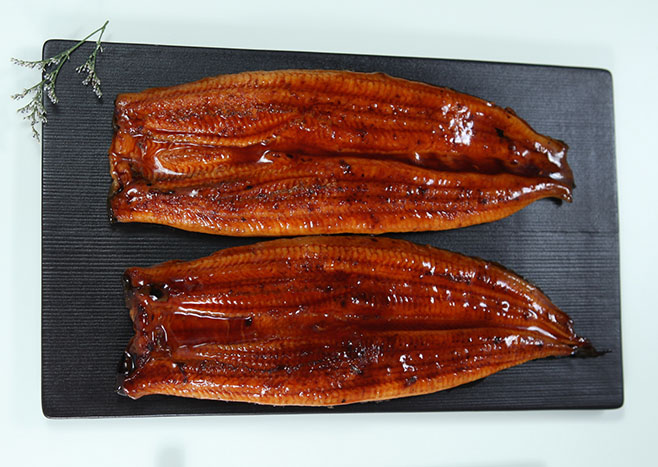
Umami, the savory taste that makes kabayaki sauce so addictive on rice, comes largely from amino acids like glutamate naturally concentrated in reduced soy-based glazes — a reason thinner, less-reduced sauces taste noticeably flatter even at the same sweetness level.
Getting Started
If you're reworking a sushi program around eel rolls sushi, start small: request a sample case of kabayaki portions and a batch of eel sauce, run a side-by-side taste test against your current supplier, and check portion yield before committing to a volume order. Reach out for a spec sheet or sample request to compare cut specifications and sauce viscosity before your next menu print run.