


Why Is It Called Eel Sauce If There's No Eel In The Bottle
You pour it over a California roll. It tastes sweet, salty, faintly smoky. Then someone asks: does this actually have eel in it? Most of the time, no. So why is it called eel sauce at all? The answer sits in a grill, not a blender — and it goes back centuries to how Japanese cooks glazed roasted eel over charcoal.
What Unagi Sauce Actually Means in Japanese Cooking
In Japan, this syrup isn't called "eel sauce." It's called unagi tare (鰻のたれ) — "tare" meaning a simmered sauce, and "unagi" meaning freshwater eel. The unagi sauce meaning is really "the sauce eel is cooked in," not "sauce made from eel." That distinction gets lost in English, where "eel sauce" sounds like an ingredient list rather than a cooking method.
Traditional tare is built from soy sauce, mirin, sugar, and sake, reduced slowly until it thickens into a glaze. Some shops add eel bones or trimmings during the simmer for extra depth — that's the closest the recipe gets to containing actual eel. Most commercial and restaurant versions skip that step entirely and rely on caramelized soy and sugar for the color and body.
The Eel Sauce Origin — How Kabayaki Created the Glaze
The real origin story starts with kabayaki, the method of splitting, grilling, and basting eel in a soy-based glaze. Edo-period eel vendors in 18th-century Japan needed a way to keep grilled eel moist over repeated basting passes on an open flame. They built a reduction sauce specifically for that job — thick enough to cling to the skin, sweet enough to caramelize without burning.
Over generations, that basting liquid became its own product. Shops started selling bottled versions for home cooks who wanted the same glaze without owning a grill station. The name stuck because the sauce was invented for eel, used almost exclusively on eel, and sold next to eel in every market stall. That's why is it called eel sauce in plain terms — it's named for its original job, not its ingredient list.
Common Misconception: "No Eel" Doesn't Mean "Fake"
A lot of buyers assume a sauce without eel extract is an imitation. That's not accurate. Authentic eel sauce has never required eel as an ingredient — the name describes its use case, similar to how "steak sauce" rarely contains beef.
What Each Part of the Kabayaki Glazing Process Actually Affects
For buyers sourcing frozen unagi kabayaki at volume, the glazing method matters more than the sauce bottle label. Here's what each production parameter actually controls, and what goes wrong if a supplier skips it.
| Parameter | What It Actually Affects | Risk If Done Wrong |
|---|---|---|
| Number of soy-sauce coating layers (we use 4) | Color depth, glaze adhesion, and caramelization during reheating | Pale, uneven color; glaze flakes off during shipping or reheating |
| Temperature control between coats | Prevents the glaze from scorching before the next layer sets | Bitter burnt notes, inconsistent batch-to-batch flavor |
| White-roasted stage before sauce application | Locks moisture into the flesh before caramelizing | Dry, tough texture after the final roast |
| Deodorizing step (patented equipment) | Removes the muddy, fishy aftertaste common in farmed eel | Off-flavors that customers blame on "bad eel" rather than process |
| Fat-rendering control (low-fat roasting patent) | Keeps oil content even across fillets for grill or microwave reheating | Greasy pooling on the plate, inconsistent menu presentation |
Buyers who only ask "is it kabayaki eel?" without asking about these steps often end up with product that looks right in photos but performs poorly after thawing. If your kitchen reheats by steaming or torch-searing, ask specifically about the white-roasted and deodorizing steps — those two decide whether the fish tastes clean or muddy on the plate.
From Grill Glaze to Rice Bowl Standard — How the Use Expanded
Once bottled tare became common in Japanese grocery stores, cooks started reaching for it outside the eel aisle. It showed up on grilled chicken (unadon-style donburi), drizzled over sushi rolls, and stirred into stir-fry glazes. Sushi bars in the US adopted it heavily in the 1980s-90s because it paired well with the same thick, glossy presentation customers expected from teriyaki.
That's the second half of the Japanese eel sauce story — the name froze in place even as the usage spread far beyond the fish it was named for. Today it's standard on:
- Eel and salmon sushi rolls, as a finishing drizzle
- Unagi don and unadon rice bowls
- Grilled vegetable and tofu glazes in fusion menus
- Noodle dishes that call for a sweet-savory soy base, similar to the approach in eel noodle soup recipes
Common Mistakes Buyers Make When Sourcing Eel Sauce
- Assuming all bottled sauces use the same reduction ratio. Sugar-to-soy ratios vary widely; a sauce built for basting needs more body than a finishing drizzle.
- Ignoring viscosity specs on spec sheets. Too thin, and it won't cling to kabayaki during reheating. Too thick, and it clumps on sushi rice.
- Confusing kabayaki sauce with teriyaki sauce. Teriyaki typically includes ginger or garlic aromatics; traditional tare does not.
- Not checking shelf life after opening. Reduced soy-sugar sauces can crystallize at the rim if stored above recommended temperatures.
- Overlooking food safety documentation — for export orders, ask whether the sauce and the eel it's paired with carry matching certification, since mismatched sourcing creates compliance gaps at customs.
For a deeper breakdown of flavor balancing, see why kabayaki sauce works as a flavor base, and for do-it-yourself ratios, the kabayaki sauce recipe guide covers common fixes for broken or overly thin batches.
A Buyer's Checklist Before Placing a Kabayaki or Eel Sauce Order
- Confirm whether the sauce is paired with pre-roasted kabayaki or sold separately as a condiment.
- Request the coating-layer count and roasting standard — ask specifically about white-roasted color and soy-sauce coating stage benchmarks.
- Check cold-chain handling. Product shipped without stable -18°C storage risks glaze separation.
- Verify certification — ISO 22000:2018, HACCP, and HALAL status should be on the spec sheet, not just the sales page.
- Ask for traceability records back to the farming base, especially for markets with strict veterinary drug residue checks like the EU and US.
- Clarify cutting specification needs upfront — strip-cut, chunk-cut, or sushi slice all require different line setups, and switching mid-order adds lead time.
On lead time: standard orders typically run around 30 days from confirmation to shipment, though this shifts with cutting spec and packaging format (skin-packaging versus gift box), so confirm timing before committing to a promotional launch date.
Why the Name Still Matters for Sourcing Decisions
Understanding the eel sauce origin isn't just trivia for a menu description. It tells a buyer what to expect functionally — a glaze built for grilling and basting, not a dipping sauce built from scratch. When sourcing for foodservice, matching the sauce's intended use (basting versus finishing) avoids kitchen complaints about texture or stickiness later.
Eel itself carries its own sourcing considerations — farming conditions, feed quality, and fat content all show up in the final roast. Full traceability from certified farming bases through lab testing, including umami-driving amino acid content, is what keeps a roasted eel batch consistent order after order. Products checked through an in-house laboratory and metal detectors at critical control points give buyers a documented trail from pond to pallet, which matters more in strict markets than the sauce bottle's label copy.
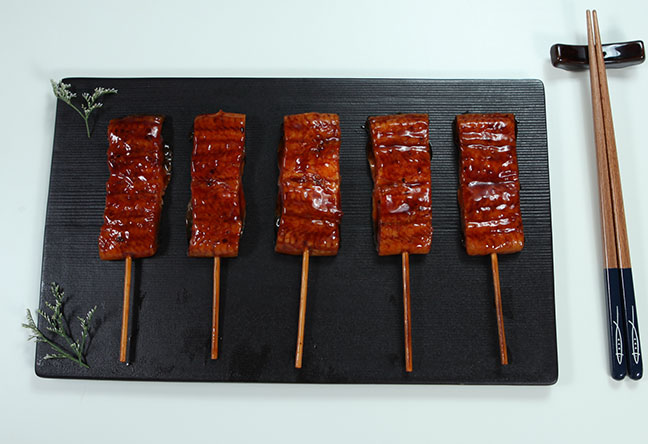
If your team is comparing suppliers for frozen unagi kabayaki or bottled unagi tare, request a spec sheet covering coating layers, cold-chain handling, and certification — it's a faster way to compare options than relying on label claims alone.