

How to Read the Skeleton of an Eel From Skull to Tail
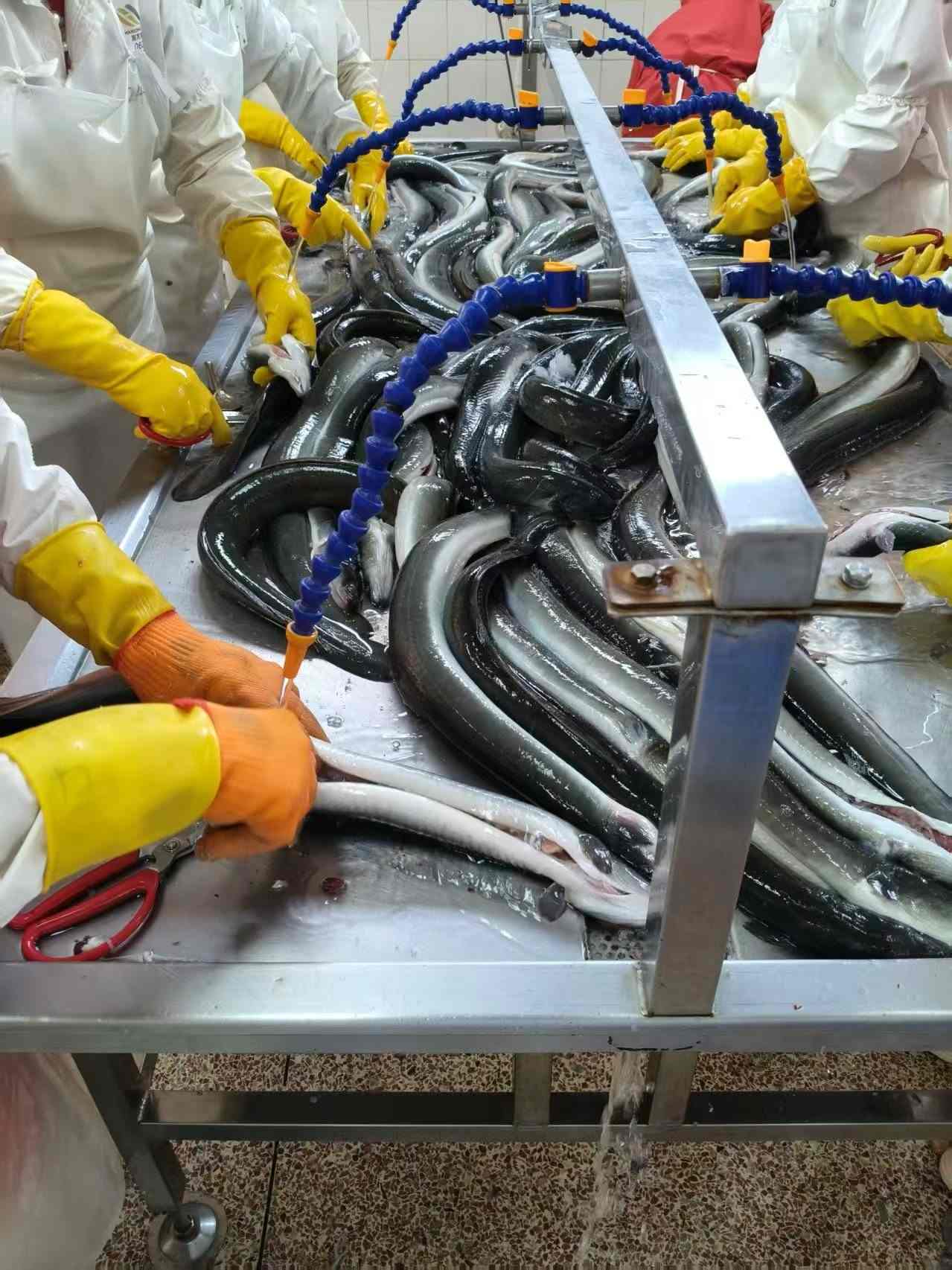
As a quality specialist with over a decade in seafood export, I've learned that understanding an eel's internal structure is not just an academic exercise. It's fundamental to quality control, processing efficiency, and delivering a product that meets exacting international standards. Many of our partners, from Japanese restaurant chains to US food importers, value consistency. That consistency starts with a deep knowledge of the raw material, right down to the bone. Examining the skeleton of an eel reveals critical information about its health, development, and how it will perform during processing.
Unlike more familiar fish, an eel's anatomy is specialized. Its elongated body and unique fin structure present challenges and opportunities in deboning and preparation. A well-processed, boneless fillet is the goal, and achieving it efficiently requires a clear understanding of the skeletal framework we work with every day in our ISO 22000:2018 certified facility.
Anatomical Map: Linking Bones to the Eel's Body
To properly interpret an eel's skeletal structure, you need a map. The a href="https://en.wikipedia.org/wiki/Anguilliformes">Anguilliform body plan is simpler in some ways than other fish but has unique components. The following table links the primary skeletal parts to their location and explains their significance in a food processing context, like the kind we perform on our two modern production lines.
| Anatomical Part | Location on Specimen | Key Identifiers & Notes | Significance for Processing |
|---|---|---|---|
| Skull Complex | The anterior (front) end of the skeleton. | A fused set of bones including the jaw (mandible/maxilla), opercular bones (gill covers), and neurocranium (braincase). Relatively solid. | This is the first major separation point in heading and gutting. A clean cut here is essential to maximize yield and avoid bone fragments in the collar meat. |
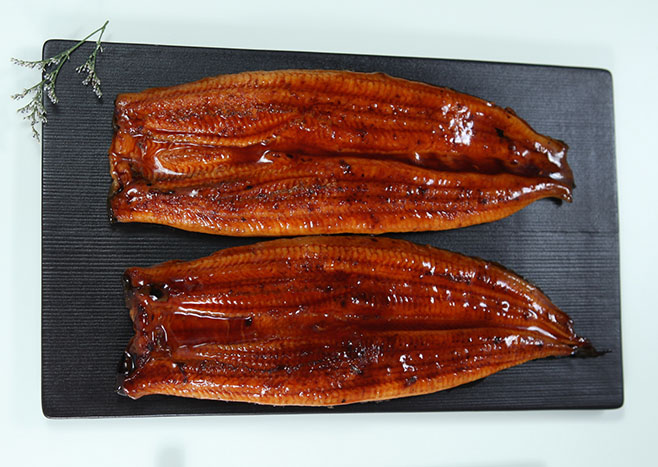
| Vertebral Column | Runs the entire length of the body from the base of the skull to the tip of the tail. | Composed of 100+ individual vertebrae. Each vertebra has a central body (centrum) and various spines. It's the primary structural element. | This is the main structure from which fillets are removed. Our deboning process follows this column precisely to ensure a boneless final product for our unagi kabayaki. |
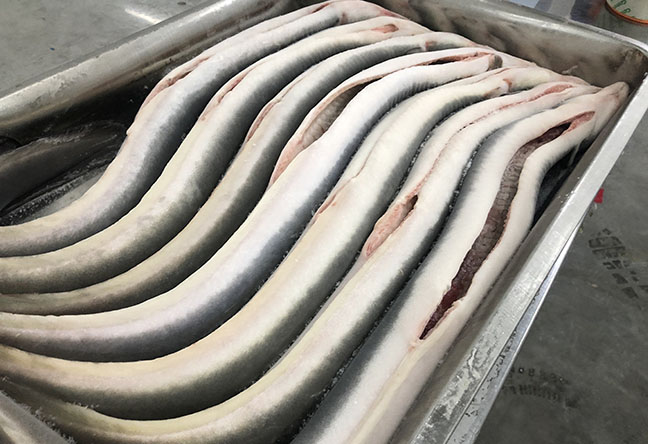
| Pterygiophores (Fin Supports) | Thin, needle-like bones extending dorsally (up) and ventrally (down) from the vertebral column. | These are not ribs. They anchor the soft rays of the long dorsal and anal fins. They are numerous and fine. | These are the most challenging "bones" to manage. Incomplete removal results in a poor eating experience. Our patented processing technology helps ensure these fine bones are fully addressed. |
| Reduced Ribs | Short, fine bones attached to the vertebrae in the abdominal cavity (precaudal region). | Eels have very small, poorly developed ribs that do not form a full "cage." They are often mistaken for pterygiophores. | During gutting and filleting, these bones must be removed along with the viscera. Our quality control specialists, backed by our in-house eel lab, verify their complete removal. |
Decoding the Vertebral Column: More Than Just a Backbone
The vertebral column is the most informative part of the skeleton of an eel. It's segmented into two main regions: the precaudal (abdominal) vertebrae, which have ribs, and the caudal (tail) vertebrae, which do not. An experienced processor can assess the quality of the raw material by observing the column's integrity.
Here is a step-by-step procedure for examining an eel’s vertebrae for quality assessment, a process similar to what our 25 technical and quality-control personnel follow:
- Initial Visual Inspection: Lay the skeleton flat. Look for overall straightness. Significant curvature or kinks can indicate past injuries or developmental issues, which might affect fillet texture.
- Vertebral Count (Optional): While not always necessary for processing, counting vertebrae can help in species verification. The number of vertebrae is relatively consistent within a species. This is more of a scientific or traceability checkpoint.
- Examine Individual Centra: Look at the body of each vertebra. They should be uniform in shape and size for their position along the column. Irregularities, compressions, or fused vertebrae are red flags for potential quality issues.
- Check Neural and Haemal Spines: These are the bony projections extending upwards and downwards from the vertebrae. Check for fractures or breaks. A broken spine can create a bone fragment that is difficult to detect and remove, posing a risk to the end consumer. Our critical control points include metal detectors, but preventing fragments is the first line of defense.
- Assess Articulation: The joints between each vertebra should be clean and distinct. Signs of calcification or fusion (spondylosis) can suggest an older or stressed animal, potentially impacting meat tenderness.
This systematic examination ensures that only high-quality raw materials from our 19 certified farming bases move forward for processing into our premium frozen eel products. Full-chain traceability, from farm to shipment, allows us to maintain this standard consistently.
Common Mistakes in Skeletal Analysis and Their Impact on Food Processing
For buyers and processors who are less familiar with eel anatomy, a few common misinterpretations can lead to processing errors or incorrect quality assessments. Understanding these pitfalls helps buyers appreciate the value of working with a specialized, experienced supplier.
Here is a list of common mistakes and why they matter:
-
Mistake 1: Confusing Pterygiophores with Ribs. As noted earlier, the long, needle-like bones supporting the dorsal and anal fins are pterygiophores, not ribs.
- Why it matters: A processor trying to "de-rib" an eel using methods for other fish will fail. The removal of pterygiophores requires a different technique and angle of cut. This is a primary reason why manual deboning of eel is so skill-intensive and why our standardized cutting specifications are so valuable for foodservice clients.
-
Mistake 2: Overlooking Healed Fractures. A slight bump or thickening on the vertebral column might be a healed injury.
- Why it matters: While the eel survived, the tissue around the injury can be tougher or have a different texture. Our skilled technicians are trained to identify these areas and handle them appropriately to ensure the final fillet has a uniform consistency. This is covered in our detailed deboning guide principles.
-
Mistake 3: Ignoring the Urostyle. The urostyle is the final, fused vertebral segment at the very tip of the tail.
- Why it matters: This small, plate-like bone can easily break off during processing if not handled carefully. It can become a hard contaminant in products like minced eel or cut pieces. Proper tail trimming technique is essential to remove it cleanly.
-
Mistake 4: Assuming All Skeletons are Identical. There is natural variation. Size, age, and even the conditions at the eel farm can cause minor differences in bone density and structure.
- Why it matters: A rigid, one-size-fits-all processing line can lead to inefficiencies and lower yields. Our 160+ employees and flexible production lines allow for adjustments based on the specific batch of raw materials, ensuring we maximize quality and value. We apply our export quality standards to all products, whether for domestic or international clients in Germany, Poland, or Australia.
By avoiding these common errors, a processor can improve yield, enhance product safety, and deliver a consistently superior boneless eel product. Our entire quality management system, from HACCP to ISO 22000:2018, is built around this deep anatomical knowledge.
For B2B buyers looking for a reliable supply of expertly processed frozen unagi kabayaki that meets strict Japan, US, and EU food inspection standards, understanding our approach to the skeleton of an eel is understanding the foundation of our quality promise. Please contact us to request a full product specification sheet or to discuss your import requirements.