

Teriyaki Eel and Kabayaki Are Not the Same Dish, and the Difference Matters for Your Menu
You've seen it on sushi bar menus from Los Angeles to Warsaw: teriyaki eel. Sweet, glossy, grilled. But ask a Japanese chef and you'll get a different answer. What most Western menus call teriyaki eel is usually kabayaki — a specific grilled-eel technique with its own glaze recipe, cutting method, and roasting sequence. Mixing up the two on a menu, or worse, in a purchase order, can mean the wrong sauce, the wrong texture, and a customer complaint you never saw coming.
This confusion isn't harmless. Foodservice buyers who order "teriyaki eel" expecting kabayaki-grade product sometimes receive something closer to a generic glazed fillet — thinner sauce, no caramelized layering, inconsistent color. Let's separate fact from menu marketing.
What Kabayaki Actually Is
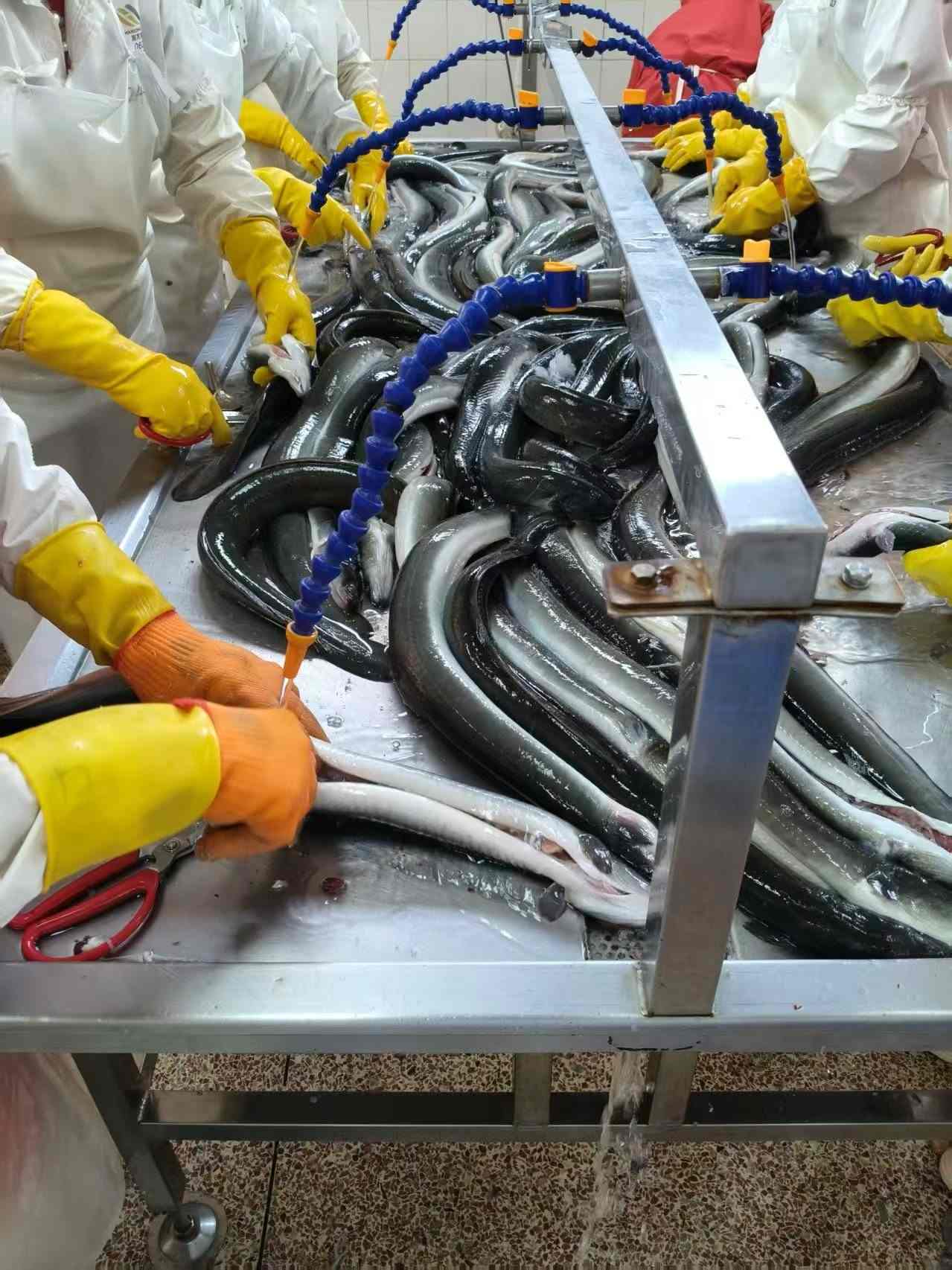
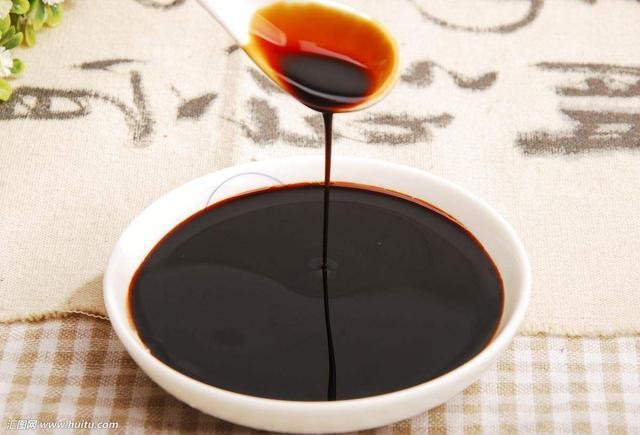
Kabayaki is the traditional Japanese method for preparing freshwater eel. The fish is butterflied, deboned, skewered, and grilled while being repeatedly dipped in a soy-based glaze called tare (unagi sauce). Each dip is followed by another pass over heat, building thin caramelized layers rather than one thick coating.
In our export-grade process, this means 4 precise layers of soy-sauce coating, each applied at a controlled temperature step. We track color at every stage against internal reference standards — what we call "white-roasted color" before sauce, then "1st-through-4th soy-sauce coating color" as layers build. This is what gives finished unagi kabayaki its dark, glossy, slightly lacquered finish and deep umami flavor, rather than a flat, syrupy glaze.
Where "Teriyaki Eel" Comes From
Teriyaki is a cooking technique, not a dish name — it simply means grilling with a glaze of soy sauce, sugar, and mirin. Restaurants outside Japan applied that familiar word to eel because kabayaki was harder for Western diners to pronounce or picture. So "teriyaki eel" became menu shorthand, especially in the US, Australia, and parts of Europe.
The catch: teriyaki glaze recipes vary restaurant to restaurant, and most are thinner, sweeter, and applied in fewer passes than a true kabayaki tare. It's a Western menu label more than a formal Japanese classification for eel.

Teriyaki-Style Eel vs Traditional Kabayaki — Glaze, Grilling Method, and Menu Labeling
Here's a direct comparison buyers and foodservice teams can use when writing specs or reading a supplier's catalog.
| Factor | Traditional Kabayaki | Teriyaki-Style Eel (menu term) |
|---|---|---|
| Glaze ingredients | Soy sauce, mirin, sugar, sometimes eel bone stock — applied as unagi tare | Soy sauce, sugar, mirin or rice vinegar, occasionally thickened with starch |
| Grilling method | Skewered, grilled and dipped repeatedly, 4-layer coating with color-controlled steps | Grilled or pan-seared, glaze brushed on once or twice near the end |
| Menu labeling | Labeled "unagi kabayaki" or "grilled eel, Japanese style" in Japan and specialty importers | Labeled "teriyaki eel" on Western casual-dining and fusion menus |
| Typical texture | Firm, caramelized surface, layered glaze that doesn't run | Softer glaze coating, can be glossier but thinner |
Is "teriyaki eel" a traditional Japanese term?
No. It's a menu convention used mostly outside Japan. In Japan, grilled eel is almost always called kabayaki or unagi, regardless of glaze style.
Does the glaze recipe actually differ in practice?
Often yes, but not always. Some Western kitchens use an actual unagi tare and simply call it "teriyaki eel" for familiarity. Others use a generic teriyaki sauce recipe that's noticeably sweeter and thinner. Ask your supplier for the sauce ingredient list before assuming.
Can I label frozen kabayaki as "teriyaki eel" on my menu?
Commercially, yes — many US and Australian restaurants do this because customers recognize the word "teriyaki" faster. Just confirm your local labeling rules don't require the actual recipe name if teriyaki is a registered menu category in your market.
Where does this comparison break down?
Regional kitchens vary. Some Southeast Asian and European fusion restaurants blend both styles — a kabayaki-grilled eel finished with a lighter teriyaki glaze for local taste. Treat the table above as a general guide, not a rigid rule.
Common Mistakes Buyers Make When Sourcing "Teriyaki Eel" for Foodservice
- Assuming the name guarantees the recipe. "Teriyaki eel" on a catalog doesn't tell you glaze thickness or number of grilling passes — ask for the spec sheet.
- Skipping cutting-spec confirmation. Fillets, cut pieces, sushi slices, and diced formats behave differently once thawed and reheated; confirm the cut matches your kitchen line.
- Ignoring residue and microbiological testing standards. Products destined for Japan, the US, or the EU must meet each market's veterinary drug residue and microbiological limits — not all suppliers test to the same threshold.
- Overlooking cold-chain continuity. A break in frozen storage between factory and warehouse changes texture even if the glaze recipe is correct.
- Forgetting to ask about fat content and roasting method. Low-fat roasted eel behaves differently on a grill top than standard kabayaki — useful for calorie-labeled menus.
A Step-by-Step Checklist for Choosing Between Kabayaki and Teriyaki-Style Eel
Use this sequence before placing a sample order or RFQ:
- Decide your menu positioning — authentic Japanese eatery (kabayaki) versus casual fusion (teriyaki eel branding).
- Request the glaze ingredient list and grilling-step count from the supplier.
- Confirm cutting spec: skewers, cut pieces, dicing, or sushi slices, based on your kitchen prep capacity.
- Check certification documents — ISO 22000:2018, HACCP, HALAL, and export food producer registration for your target market.
- Ask for a small trial shipment before committing to full-container volume.
- Review packaging format — skin-packaging for retail, gift boxes for premium retail, bulk cartons for foodservice.
Scenario: a US importer supplying Asian fusion restaurants recently needed boneless, pre-cut eel with a familiar "teriyaki" glaze profile but wanted export compliance matched to US inspection standards. The solution was kabayaki-grade product with documented tare ingredients, labeled per the buyer's own menu convention — proving the two terms can coexist on a supply chain level even when they differ on paper.
Why Traceability and Certification Matter More Than the Name on the Menu
Whatever you call it on your menu, the eel behind the glaze needs verifiable sourcing. We operate 19 self-operated and cooperative certified farming bases, plus roughly 20 customs-registered farming bases covering 2,150 mu, giving full traceability from farming base through processing to shipment. Every batch passes through our own in-house laboratory and metal-detector checkpoints, staffed by 25 of our 160+ employees dedicated to quality control.
Production runs across 2 modern lines with 4,000 tons annual capacity, backed by a 1,000-ton cold storage facility to keep the cold chain intact between roasting and export. This matters whether your menu says kabayaki, teriyaki eel, or something in between — the underlying food safety standard shouldn't change. Our patented low-fat roasting and deodorizing technology, paired with the layered soy-sauce coating process, is what actually separates a consistent export product from an inconsistent one — not the label alone.
Building the Glaze Yourself, or Sourcing It Ready-Made
Some kitchens prefer to buy pre-grilled eel and finish with their own house glaze; others want the full eel sauce supplied ready to use. If your team is testing recipes in-house, our guide on grilled unagi with a sweet-savory glaze walks through timing and heat control that mirrors what a teriyaki-labeled dish typically needs. For a deeper look at fixing common glaze problems — too thin, too sweet, breaking on the grill — see our notes on kabayaki sauce flavor mistakes.
What This Means Before You Place an Order
If your menu already says teriyaki eel, you don't necessarily need to change the wording. What you do need is clarity on what's behind it — glaze composition, roasting steps, and whether the supplier's food safety documentation covers your import market. A supplier meeting Japan, US, and EU inspection standards for veterinary drug residues and microbiological limits removes most of the guesswork, regardless of which name ends up on your printed menu.
Not sure which cut, glaze thickness, or packaging format fits your kitchen line? Send us your menu concept and target market, and we'll recommend a spec sheet and sample that matches — whether you call it kabayaki, teriyaki eel, or something else entirely.