





Is Unagi Sauce Eel Sauce When You Read the Label?
Picture a glossy unagi rice bowl arriving at the table. The grilled eel is smoky, the sauce is dark and sweet, and one question comes up fast: is unagi sauce eel sauce, or is that only the name?
The short answer is usually no. Most modern bottled unagi sauce, also called unagi tare or kabayaki sauce, does not contain eel meat, eel extract, or eel broth. It is generally a sweet-savory seasoning sauce built around soy sauce, sugar, and mirin or similar sweet cooking seasonings. Still, the answer changes when a product follows an older nitsume-style method or is made in a restaurant kitchen with eel cooking juices.
That distinction matters to sushi diners, home cooks, menu developers, and foodservice buyers. A sauce can be intended for eel without being made from eel. For product selection, the ingredient list—not the front-label name—is the deciding document.
Why Most Modern Unagi Sauce Contains No Eel but Some Nitsume May Use Eel Broth
The most accurate answer to is unagi sauce eel sauce depends on what “eel sauce” means in the question. If it means a sauce served with grilled eel, then yes: unagi sauce is commonly called eel sauce because it complements unagi. If it means a sauce whose ingredients include eel, then the answer is often no.
Modern packaged sauces are normally designed for repeatable flavor, stable purchasing, and convenient use across sushi, rice bowls, grilled seafood, and other dishes. Their flavor profile can be made without eel. Traditional nitsume-style preparations are different. In some kitchens, the sauce may be simmered with eel bones, trimmings, broth, or cooking juices to build a deeper marine richness.
| Style | Typical meaning | May contain eel? | Best buyer action |
|---|---|---|---|
| Modern bottled unagi sauce | A sweet-savory glaze for unagi, sushi, rice, and grilled foods | Usually no; confirm on the ingredient list | Check ingredients and allergen information before ordering |
| Kabayaki sauce | Sauce used during or after kabayaki-style grilling | Usually no in commercial packaged formats, but recipes vary | Ask whether the sauce is supplied separately or applied during roasting |
| Nitsume-style sauce | A traditional reduced sauce, sometimes made in-house | Possibly, if eel broth, bones, trimmings, or cooking juices are used | Ask the chef or manufacturer for the actual recipe or specification |
| Restaurant house sauce | A kitchen-specific preparation for its own menu | Possible, but not guaranteed | Do not make ingredient assumptions from the menu name alone |
Here is the practical boundary: “unagi sauce” describes intended use and flavor association, not a guaranteed eel ingredient. This rule fits packaged retail sauce and foodservice sauce. It does not settle the question for a handmade nitsume or a restaurant’s house glaze, where the recipe may include eel-derived stock.
For buyers sourcing a ready-made product, start with the eel sauce specification and request the current ingredient declaration. This is more reliable than relying on a product photo, menu wording, or a general internet recipe.
How to Answer Is Unagi Sauce Eel Sauce From a Product Label
When a diner asks, “is unagi sauce eel sauce?” the label gives the direct answer. Read it in a fixed order. This avoids confusing a flavor name with an ingredient claim.
- Read the ingredient list first. Look for explicit terms such as eel, eel extract, eel broth, fish stock, seafood extract, bones, trimmings, or cooking juices. If none appear, do not assume the sauce contains eel.
- Check the allergen statement separately. A statement may identify fish or other allergens, but it does not always explain whether eel itself is an ingredient. Use the full ingredient list for that question.
- Identify the product format. Bottled sauce, sauce sachets, restaurant-made nitsume, and sauce already brushed onto roasted eel can have different formulations.
- Ask for a specification sheet for commercial purchasing. Confirm ingredients, allergens, packaging, storage requirements, and intended application before approving a new supplier.
- Keep recipe claims modest. If the supplier confirms that no eel ingredient is used, describe it as a sauce for eel or kabayaki sauce—not as an eel-based sauce.
The conclusion is simple: the label is the proof. This process fits retailers, restaurant groups, and home cooks comparing packaged products. It does not replace advice from a qualified professional for an individual food allergy or medical dietary requirement.
Cold fact for sushi fans
A sauce can taste rich and rounded without containing eel. Sweetness, salinity, reduction, and umami from fermented seasonings can create the familiar finish people associate with grilled unagi. That is why the answer to is unagi sauce eel sauce cannot be judged by color, thickness, or aroma alone.
Dark color is not proof of eel content. A thick glaze is not proof either. Those traits may come from reduction, sugar content, soy sauce, or starch-based thickening, depending on the formula.
Common Mistakes When Choosing Sauce for Sushi or Grilled Eel
For a home cook, the best choice is a sauce that matches the dish and dietary needs. For foodservice procurement, the best choice is a documented product that staff can use consistently. Both groups can avoid expensive or embarrassing errors by skipping the assumptions below.
- Mistake: Treating “eel sauce” as an ingredient statement.
Conclusion: Treat it as a serving-use name until the label proves otherwise. This applies to bottled sauces and sushi menus. It may not apply to a kitchen that openly states its nitsume is made with eel broth. - Mistake: Assuming all unagi sauce tastes the same.
Conclusion: Compare sweetness, saltiness, viscosity, and finish before adding it to a menu. This is useful for sushi rolls, rice bowls, and grilled proteins. It does not mean one flavor profile is universally better. - Mistake: Using too much sauce on finished kabayaki.
Conclusion: Apply a light layer first, then add more only if needed. The reason is practical: a heavy coating can hide the roasted aroma and natural flavor of the eel. A sauce-forward roll or bowl may intentionally use more. - Mistake: Forgetting that sauce affects allergen review.
Conclusion: Review the sauce label as carefully as the seafood label. This matters for restaurant menus, retail packs, and export documentation. It does not identify every individual sensitivity, so buyers should still follow their own compliance process. - Mistake: Choosing a sauce before choosing the eel format.
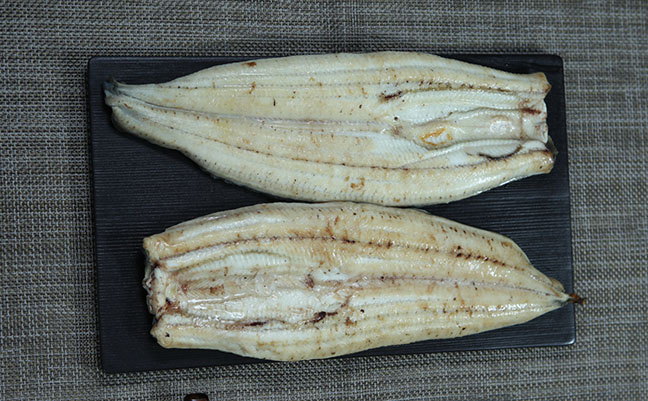
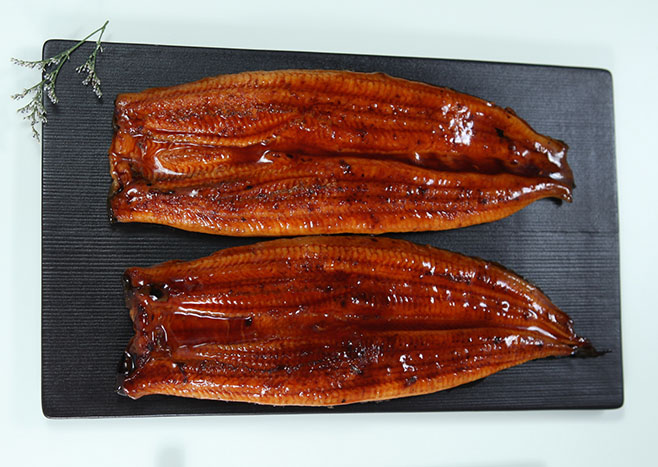
Conclusion: Match sauce style to the finished product. A pre-sauced kabayaki portion needs different handling from white-roasted eel that will be glazed later.
If you are serving prepared eel, compare the glaze already used on the product with any finishing sauce. Our kabayaki sauce article explains why sauce application affects the finished flavor rather than functioning as a simple topping.

How Foodservice Buyers Should Match Sauce and Eel Products
For a restaurant or distributor, is unagi sauce eel sauce is not only a diner question. It affects menu wording, ingredient documentation, product training, and whether the kitchen needs a separate sauce line at all.
The first decision is whether to buy finished kabayaki with sauce already applied or white-roasted eel that can be glazed in the kitchen. Neither choice is automatically superior. Finished kabayaki suits operations that need speed and consistent portion presentation. White-roasted eel suits kitchens that want control over the final flavor or wish to use their own house sauce. The second option does not suit every outlet because it adds handling steps.
| Buying situation | Recommended approach | Why it fits | Limit to consider |
|---|---|---|---|
| High-volume sushi counter | Choose finished frozen kabayaki with a defined glaze profile | Reduces back-of-house sauce handling and supports repeatable plating | Less room for a unique house flavor |
| Restaurant with a signature tare | Choose white-roasted or lightly prepared eel, then apply house sauce | Gives the chef control over final flavor and menu identity | Requires staff training and an extra preparation step |
| Retailer selling bottled sauce | Request a complete ingredient and allergen document | Supports accurate shelf information and customer questions | Product naming alone is not enough for label approval |
| Import buyer supplying several markets | Review product specification, traceability, and food-safety documents before launch | Helps align sauce and eel products with the buyer’s own import requirements | Requirements vary by destination and customer contract |
Eelpro Co., LTD supplies frozen roasted eel and related sauce products with export-oriented quality control. Our facility holds ISO 22000:2018, HACCP, HALAL certification, export food producer registration, and an SC Food Production License. We also operate two modern production lines with an annual finished-goods capacity of 4,000 tons, supported by 1,000 tons of cold storage.
Those facts help buyers assess supply capability, but they do not remove the need to review the exact sauce specification for each order. Product formulas, packaging formats, and customer requirements should be confirmed before purchase. For eel sourcing, see our unagi kabayaki product information and compare it with the intended menu application.
Frequently Asked Questions About Unagi Sauce Terminology
Is unagi sauce eel sauce if it is served on sushi?
Usually, it is sauce for eel rather than sauce made from eel. Sushi restaurants often use the term because the flavor pairs well with unagi and other menu items. The limitation is that a restaurant may use a house-made nitsume containing eel broth, so ask if the ingredient matters to you.
Is unagi sauce eel sauce when it is sold in a bottle?
Most bottled products do not contain eel, but the only dependable answer is the product label or supplier specification. This approach fits retail and foodservice bottles. It does not allow assumptions about every brand or every regional recipe.
Is unagi sauce eel sauce for allergy purposes?
Do not rely on the name for allergy decisions. Check the complete ingredient list, allergen declaration, and supplier documentation. If the product is restaurant-made and the recipe is unclear, ask the restaurant directly or avoid it when certainty is needed.
Does kabayaki sauce always contain soy sauce?
Many kabayaki sauces use soy sauce or a soy-based seasoning for saltiness and fermented depth, but formulations vary. A buyer should verify the actual ingredient declaration, especially when managing soy-related dietary needs or menu claims.
Can the same sauce be used beyond unagi?
Yes. Its sweet-savory profile can suit sushi rolls, grilled fish, rice bowls, and selected vegetable dishes. Start with a light application because the sauce can dominate delicate ingredients. It may not fit dishes that need a bright, acidic, or spicy finish.
For more menu ideas after selecting your sauce and eel format, explore our eel rice bowl toppings guide. If you are selecting sauce or frozen unagi for a foodservice program, request a product specification or sample from Eelpro Co., LTD.
 WhatsApp
 sales@chinaeels.com
 +8619937922411