

Raw Eel Sushi Does Not Exist the Way Most Diners Assume
A customer once asked a sushi chef for "eel sashimi." The chef paused, then explained something most menus never spell out: eel is never served raw in sushi. That single question sums up a gap in public knowledge that costs restaurants time, and sometimes costs import buyers money when specs get confused during ordering. If you're sourcing unagi for a menu or comparing suppliers, understanding why eel skips the raw treatment entirely will save you from mislabeling, customer complaints, and wasted stock.
Unlike tuna or salmon, freshwater eel carries a toxin in its blood called ichthyotoxin. It's destroyed by heat but not by the curing or freezing methods used for typical sashimi-grade fish. That's the biological reason behind every piece of kabayaki eel you've ever eaten. There's no raw eel sushi tradition to speak of — not in Tokyo, not in Osaka, not anywhere eel has been prepared safely for centuries.
Is Eel in Sushi Already Cooked? Here's the Direct Answer
Yes. Eel served in sushi is always fully cooked before it reaches the plate. This applies to both unagi (freshwater eel) and anago (saltwater conger eel). Neither is served raw, and no reputable sushi restaurant offers a raw eel preparation.
- Unagi is typically butterflied, skewered, grilled, and basted repeatedly in a sweet soy glaze — this is the kabayaki method.
- Anago is usually simmered first, then lightly grilled or brushed with a lighter sauce.
- Both are served warm or at room temperature over rice, never chilled and raw like sashimi.
So if a menu lists "unagi sushi" or "eel nigiri," you're getting pre-cooked eel over rice, finished with a glaze — not a raw cut. This is the standard across Japan, and export-grade suppliers build their entire process around it.
Why Do Sushi Restaurants Use Pre-Cooked Eel Instead of Raw Cuts?
Three reasons drive this, and each one matters differently depending on whether you're a chef, a buyer, or just curious.
1. Food safety — the non-negotiable reason
Eel blood toxin breaks down at cooking temperatures but survives freezing and curing. This makes heat treatment mandatory, not optional. There's no safe raw-eel equivalent to salmon sashimi, no matter how fresh the eel is.
2. Texture — the reason chefs actually prefer it
Raw eel flesh is tough and unpleasant. Grilling with a soy glaze breaks down connective tissue, producing the tender, almost custardy bite that unagi is known for. Cooking isn't a compromise here — it's what makes the dish good.
3. Consistency — the reason import buyers care
Restaurants running multiple locations or high volume need eel that behaves the same batch after batch. Pre-cooked, pre-glazed frozen unagi solves that. A kitchen doesn't need a specialist griller on every shift if the eel arrives already roasted and ready to reheat.
Does Unagi Sushi Contain Raw Eel? Clearing Up the Confusion
No — and this misunderstanding usually comes from three things looking similar on a sushi counter: raw-looking marinated fish, glossy grilled unagi, and finished nigiri. Here's a straight comparison to stop menu confusion before it starts.
| Format | Appearance | Cooking State | Typical Use |
|---|---|---|---|
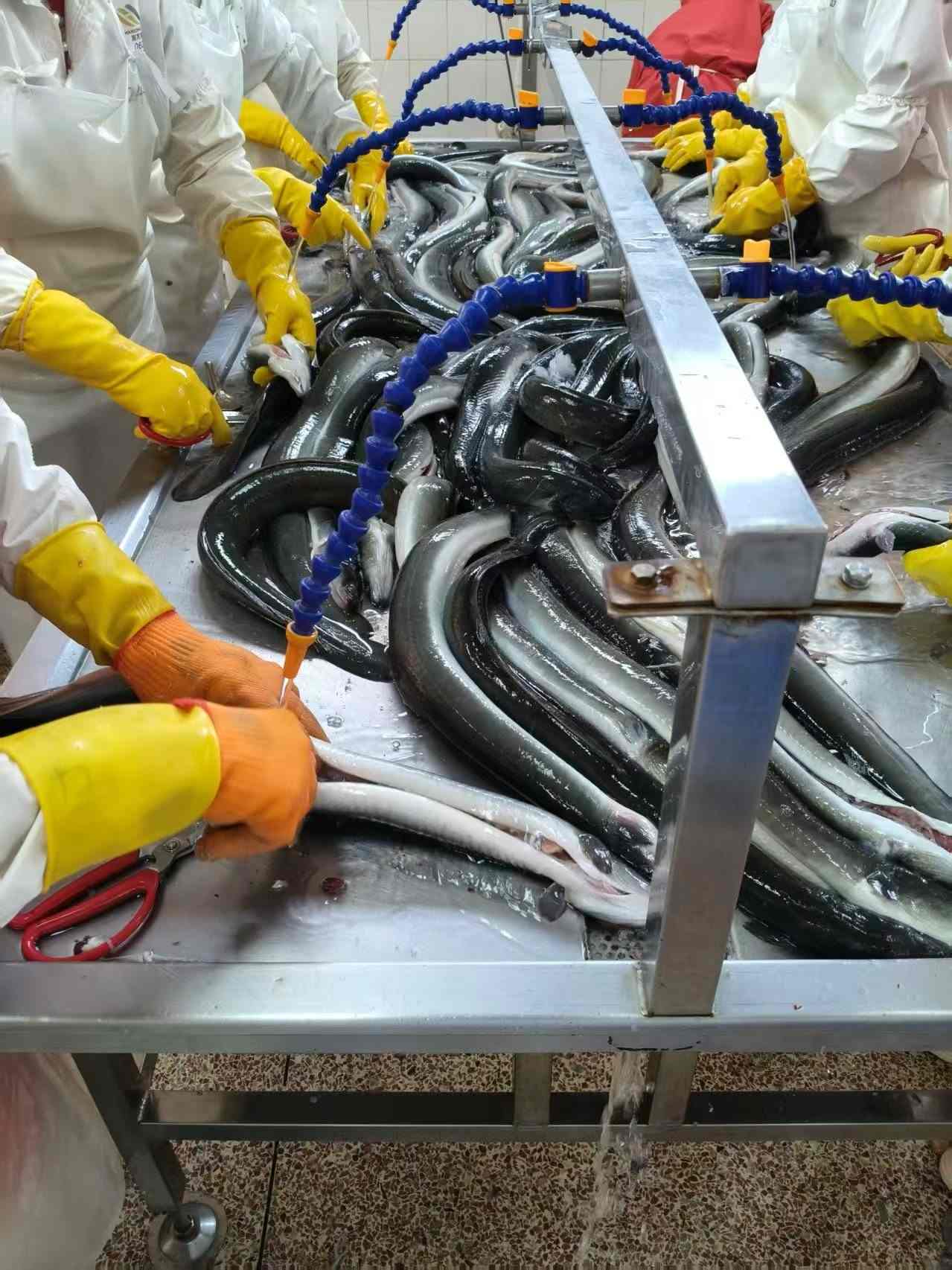
| Raw-looking eel (unprocessed) | Pale, translucent, slick skin | Not cooked — not sushi-ready | Only handled by trained processors before roasting |
| Pre-cooked frozen unagi (kabayaki) | Dark brown, glazed, grill marks | Fully roasted with soy glaze, then frozen | Thawed, reheated, sliced for nigiri or donburi |
| Finished sushi service | Warm glazed eel over rice, extra sauce brushed on | Cooked, reheated, plated | Served directly to the guest |
The point of confusion is almost always between the first two rows. Raw-looking eel is never something a kitchen serves — it's an intermediate stage handled under controlled conditions before roasting. What reaches your kitchen as inventory should always be the second row: pre-cooked, frozen, ready to finish. If a supplier can't confirm their eel arrives already roasted and heat-treated, that's a sourcing red flag, not a quality nuance.
How Kabayaki Eel Is Actually Made — Step by Step
Understanding the process helps buyers evaluate supplier quality claims instead of just trusting a label. Here's the general sequence used in export-grade production:
- Live eel sourcing from certified farming bases, with traceability back to the pond.
- Cleaning, skinning, and deboning to prepare butterflied fillets.
- Layered soy sauce roasting — typically four coating passes with temperature control at each stage, building the color and glaze depth.
- Cooling and freezing under cold-chain conditions to lock in texture and food safety.
- Cutting to spec — whole fillet, chunks, strips, dice, or sushi slices depending on kitchen use.
- Packaging — skin-pack or bulk format, then stored in cold storage until shipment.
This is the process behind frozen unagi kabayaki products built for foodservice. The four-layer soy roasting standard isn't cosmetic — it's what determines whether the glaze holds up after reheating or turns thin and watery on the plate.
Common Mistakes Buyers Make When Ordering Eel for Sushi Menus
- Assuming "frozen" means "raw." Frozen eel for sushi use is pre-cooked, not raw-frozen. Confirm this explicitly in your spec sheet.
- Ordering by weight only, ignoring cut type. Sushi slices, chunk-cut, and whole fillets reheat differently — mismatched cuts slow down service.
- Skipping sauce compatibility checks. Some kitchens pair frozen kabayaki with their own glaze, which can clash with the factory-applied coating. Testing a sample batch avoids this.
- Not asking about microbiological and veterinary drug residue testing. Buyers importing into Japan, the US, or the EU need documentation matching those specific inspection standards, not just a general "food safe" claim.
- Overlooking MOQ mismatches. Wholesale, catering chain, and export trader orders often carry different minimum order thresholds — confirm this before requesting a quote to avoid renegotiating specs mid-process.
A Practical Sourcing Checklist Before You Order
- Does the supplier confirm the eel is fully cooked (roasted) before freezing?
- Can they provide documentation for microbiological and residue testing matching your import market?
- Do they offer the cut format your kitchen needs — whole, sliced, diced, or strip-cut?
- What's their standard lead time? For reference, a typical order runs about 30 days from confirmation to shipment, negotiable by spec and volume.
- Is cold-chain storage and logistics part of their service, or will you need a separate cold-chain partner?
Buyers evaluating suppliers should also look at how the roasting color standards are defined — terms like "white-roasted" versus "1st-through-4th soy-sauce coating" describe distinct stages of the kabayaki process, and a supplier who can explain these clearly usually has tighter process control overall. This level of detail is also where quality separates fastest. For kitchens building glaze-based dishes beyond nigiri, pairing frozen kabayaki with a matching eel sauce keeps flavor consistent across the menu, from unadon bowls to rolls.
Where Frozen Eel Sushi Fits Into Broader Menu Planning
Frozen, pre-cooked unagi isn't just a raw-eel workaround — it's a foodservice tool. Deboned, standardized cuts reduce back-of-house prep time significantly compared to processing whole eel in-house. For chains scaling across multiple locations, this consistency matters more than any theoretical "fresh eel" advantage, since raw eel was never a service option to begin with.
If you're expanding beyond nigiri, there's a lot of room to work with kabayaki eel creatively — from rolled sushi formats to grilled rice bowl toppings. The cooking method stays the same; only the final plating changes.
Frequently Asked Questions
Is eel in sushi already cooked?
Yes. All eel served in sushi — unagi and anago alike — is cooked before serving. There is no raw eel sushi format in traditional or modern practice.
Why do sushi restaurants use pre-cooked eel?
Food safety is the primary driver, since eel blood contains a toxin destroyed only by cooking. Texture and kitchen consistency are secondary but practical reasons restaurants stick with pre-cooked, frozen formats.
Does unagi sushi contain raw eel?
No. Unagi sushi always uses roasted, glazed eel. If a dish looks raw, it's likely a different fish entirely, not eel.
What's the difference between pre-cooked unagi and finished sushi service?
Pre-cooked frozen unagi is the ingredient — roasted, glazed, and frozen for storage. Finished sushi service is the final plated dish, where the eel is reheated, sliced, and placed over rice with extra sauce.
For buyers ready to compare specs, request a sample batch or a spec sheet covering cut options, glaze standards, and cold-chain packaging before placing your first order.