





What Eel Sauce Taste Actually Delivers on Sushi and Grilled Eel
Ordering unagi for the first time, or writing it into a menu for the first time — the same question stops people cold. What does eel sauce actually taste like, and will it drown out the fish underneath? Eel sauce taste comes down to four moving parts: soy, sugar, mirin, and how long the mixture reduces over heat. Get one part wrong and a delicate glaze turns into a sticky, one-note syrup that tastes the same on everything. This article breaks down what happens on your palate, why the same bottle tastes different on sushi versus grilled unagi, and what a foodservice buyer should check before committing to a bulk order.
Where Eel Sauce Taste Actually Comes From
Traditional eel sauce — known in Japan as unagi tare — is not a single seasoning. It is a reduction built from soy sauce, sugar or mirin, and often the pan drippings from roasted eel itself. That last part matters more than most recipes admit. Eel fat carries a savory depth that plain soy-sugar mixtures cannot fake.
At production scale, this reduction has to be repeatable across thousands of batches, not just one skillet at a time. Our roasting line applies a 4-layer soy-sauce coating process, where each layer is brushed on at a controlled temperature step. The first layer sets the base savory note. The second and third build caramelization on the skin. The fourth locks in gloss and the final color standard we call "4th soy-sauce coating." Skip a layer, or rush the temperature step, and the sauce tastes flat instead of layered — thin on top, harsh underneath. This is one reason our kabayaki sauce process is treated as a production variable to control, not an afterthought poured on at the end.
Sensory Breakdown: Sweetness, Saltiness, Umami, Caramel Notes, and Viscosity as the Sauce Cools
A well-made sauce is a balance, not a single dominant flavor. Below is how each parameter behaves in practice, and what goes wrong when a supplier or home cook gets it out of range.
| Sensory Parameter | What It Actually Affects | What Happens If It's Off |
|---|---|---|
| Sweetness (sugar/mirin ratio) | Balances soy's saltiness; carries the caramel finish on the palate | Too high: sauce masks the eel's natural taste and feels cloying. Too low: the sauce reads as harsh, almost bitter |
| Saltiness (soy sauce concentration) | Anchors the umami base; controls how the sauce cuts through rice | Too high: overpowers sushi rice and raw fish pairing. Too low: sauce tastes watery on grilled eel |
| Umami (eel stock / fish reduction) | Gives the "savory depth" that separates real tare from a generic teriyaki-style glaze | Missing umami makes the sauce taste like sweetened soy — thin, one-dimensional, no lingering finish |
| Caramel notes (Maillard development during roasting) | Adds the roasted, slightly smoky top note that makes grilled unagi smell appetizing before you taste it | Under-roasted: sauce smells raw and soy-forward. Over-roasted: bitter, burnt edge that ruins the finish |
| Viscosity as it cools | Determines whether the sauce clings to the eel or pools on the plate; directly affects mouthfeel and how much sauce a diner actually tastes per bite | Too thin at room temperature: sauce runs off skewers or nigiri, wastes flavor. Too thick: sauce turns gummy and coats the tongue instead of blending with the fish |
The umami component is the one buyers underestimate most often. Without a real eel-based reduction, sauce tastes sweet and salty but never savory — and diners can tell, even if they cannot name why.
How the Same Sauce Tastes Different on Sushi vs Grilled Unagi
Temperature and texture change how a sauce reads on the palate, even when the recipe stays identical.
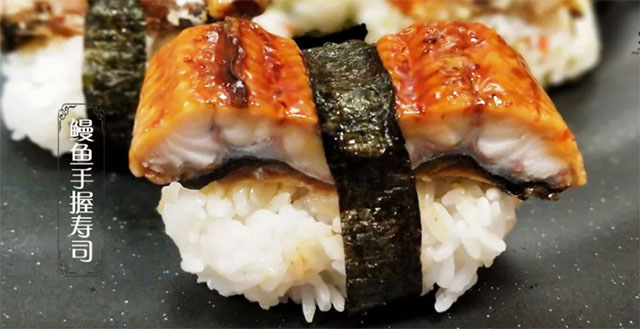
- On sushi (room temperature or slightly chilled): viscosity needs to stay high enough to cling to a small piece of fish without dripping onto the rice. Sweetness reads stronger at cooler temperatures, so a sauce built for grilling can taste too sweet on nigiri unless it's adjusted or applied more sparingly.
- On grilled unagi (hot off the flame): heat opens up the caramel and umami notes, and the sauce thins slightly, soaking into the flesh instead of sitting on top. This is why kabayaki tastes richer and less sweet straight off the grill compared to the same sauce spooned cold over sushi rice.
- Reheated frozen product: if the sauce was applied before freezing, viscosity on reheat depends on how the product was thawed. A rushed microwave reheat can break the glaze and make it taste watery, even though the sauce itself is unchanged.
For kitchens working with unagi kabayaki products, this means the reheating method is part of the flavor outcome — not just a logistics step.
Common Mistakes That Change Eel Sauce Flavor
Most flavor complaints trace back to a handful of repeatable errors, not the sauce recipe itself.
- Over-reducing the sauce: pushing it too long on the heat concentrates sugar and salt disproportionately, producing a sauce that tastes burnt-sweet instead of balanced.
- Using soy sauce alone without an eel-based reduction: this produces a teriyaki-style glaze that lacks the umami depth diners expect from real unagi tare.
- Serving sauce cold on grilled eel: cold sauce mutes caramel notes and makes the dish taste flat, even if the eel itself was roasted correctly.
- Over-saucing sushi rolls: because viscosity is highest at room temperature, a heavy hand with the bottle overwhelms delicate raw fish pairings.
- Poor cold-chain handling during transport: temperature swings during shipping can separate the sauce or alter viscosity before it ever reaches the kitchen.
For a deeper walkthrough of fixing these issues step by step, see our kabayaki sauce recipe guide on fixing flavor mistakes.
A Buyer's Decision Checklist for Sourcing Consistent-Tasting Eel Sauce
For import buyers and foodservice operators, taste consistency batch-to-batch matters more than any single tasting note. Before signing a purchase order, check the following:
- Certification coverage: confirm the supplier holds ISO 22000:2018 and HACCP certification, plus an export food producer registration — this affects whether the product clears customs in your target market.
- Raw material traceability: ask whether the eel is sourced from customs-registered farming bases with batch-level tracking. Our supply comes from roughly 20 registered bases covering over 2,150 mu, with traceability from farm through shipment.
- Cold-chain capacity: a supplier with dedicated cold storage (we operate a 1,000-ton facility) is less likely to ship sauce or roasted eel with temperature-related viscosity damage.
- In-house quality control: ask if the facility runs its own lab and metal detection at critical control points. Ours does, staffed by 25 dedicated quality-control personnel out of 160+ employees — see our in-house testing lab for how sampling works.
- Lead time realism: a standard order typically runs about 30 days from confirmation to shipment, though this shifts with specification and volume — get this in writing, not as a verbal estimate.
- Compliance for your specific market: if you're importing into Japan, the US, or the EU, confirm the product has been checked against veterinary drug residue and microbiological standards for that market specifically, not a generic "export grade" claim.
Buyers exporting to Japan, the US, Germany, Poland, Australia, Indonesia, and other Southeast Asian markets typically need slightly different documentation packages — worth confirming before, not after, the container ships.
Matching Sauce to Cut and Application
Not every cut of eel needs the same sauce viscosity. Sushi slices and unakyu maki need a thinner, more controlled coat; skewers and whole fillets for grilling can carry a thicker glaze since heat will loosen it further. Our custom cutting specifications — including sushi slices, chunk-cutting, and 3-section cuts — are paired with sauce application methods suited to each format, which is part of why the finished unagi kabayaki eel tastes consistent whether it lands on a rice bowl or a sushi counter.
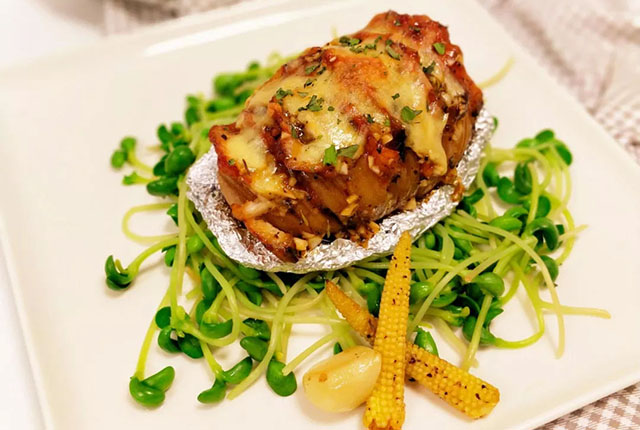
For teams building out a broader seafood program, our frozen seafood range and eel supply chain both run on the same quality standards, so sauce consistency doesn't sit apart from the rest of the sourcing decision.
Requesting a Sample Before You Commit
Reading a sensory breakdown only gets a buyer so far. Before locking in a purchase order, request a small sample batch and taste it both cold (as on sushi) and reheated (as on grilled unagi). Compare viscosity at both temperatures, check whether the caramel note survives reheating, and confirm the sauce doesn't separate after a freeze-thaw cycle. This ten-minute test catches problems that a spec sheet alone will not.
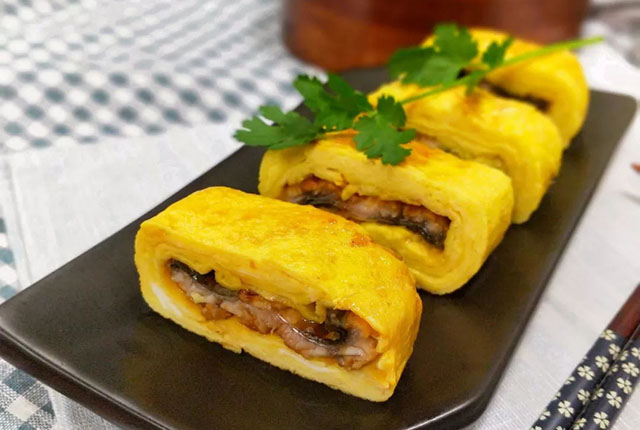
If you're sourcing frozen unagi kabayaki or eel sauce for a restaurant chain, retail line, or foodservice distributor, request a spec sheet and sample batch to confirm the flavor profile fits your menu before placing a full order.
 WhatsApp
 sales@chinaeels.com
 +8619937922411