





What Is Eel Sauce and How Far Can It Go Beyond Sushi Rolls
You brush eel sauce on a sushi roll and it clings like glass. You try the same bottle on grilled chicken at home and it slides right off. Same jar, different result. So what is eel sauce, and why does it behave so differently depending on how you use it? The short answer: it's a reduced soy-mirin-sugar glaze, and its whole personality depends on viscosity, heat, and timing — not just the ingredients list.
What Is Eel Sauce, Actually
Eel sauce, called unagi tare in Japanese kitchens, is a soy sauce, mirin, and sugar mixture simmered down until it turns glossy and coats a spoon. Despite the name, most bottled versions contain no eel meat. The name comes from tradition: sushi chefs originally basted grilled eel (unagi kabayaki) repeatedly in a soy-based glaze, and the pan drippings from roasted eel would slowly enrich the sauce over years of reuse. That's the real reason it's called eel sauce — it was literally made for eel, layer after layer, not because eel is an ingredient.
At Eelpro, our production process reflects that same logic on an industrial scale. We apply a 4-layer soy-sauce coating process with temperature-controlled steps during roasting, building what our technical team calls "1st-through-4th soy-sauce coating color" — a standard that controls how deep the glaze penetrates without burning the sugars. That's the difference between a sauce that tastes caramelized and one that tastes scorched.
How Eel Sauce Performs as a Glaze, Drizzle, and Marinade
The same bottle of sauce won't behave the same way in every application. Viscosity, sugar content, and heat exposure change everything. Here's what actually happens with each method, and what goes wrong if you skip a step.
| Application | Ideal Consistency | Best Use | Common Mistake |
|---|---|---|---|
| Glaze (on fish) | Thick, syrup-like, reduced by roughly one-third | Brushed on grilled unagi kabayaki in the last 2-3 minutes of cooking | Applying it too early — the sugar burns before the fish finishes cooking |
| Glaze (on chicken) | Same thick consistency, slightly thinned with 1 tsp water per 2 tbsp sauce | Basted on skin-on thighs during the final 5 minutes under the broiler | Using sauce straight from the fridge — cold sauce won't caramelize evenly on hot skin |
| Drizzle (on rice) | Thin, pourable, room temperature | Poured over warm rice in a donburi bowl right before serving | Drizzling on hot rice straight off the stove — steam thins the sauce and it pools instead of coating |
| Drizzle (on sushi rolls) | Thin but tacky enough to hold shape in a zigzag line | Finished rolls, applied with a squeeze bottle for a controlled thin line | Using a spoon instead of a squeeze bottle — heavier drizzle overwhelms delicate fish |
| Marinade (fish or chicken) | Thinned with rice vinegar or water, 1:1 ratio | 30-60 minute soak before grilling; longer soaks over-salt lean proteins | Marinating over 2 hours — the salt content draws out too much moisture, leaving a rubbery texture |
The rule of thumb: reduce it thick for glazing, thin it out for marinating. Undiluted sauce as a marinade will over-salt fish within an hour because eel sauce carries far more sodium than a standard teriyaki base. If you've had a marinade turn out too salty, that's usually why.
Practical Ways to Use Eel Sauce Beyond Sushi
Once you understand the viscosity logic above, the sauce opens up well past the sushi counter. A few tested combinations:
- Grilled salmon or mackerel — brush on during the last 3 minutes of grilling, exactly like you would with frozen unagi kabayaki. The sugar caramelizes fast, so timing matters more than quantity.
- Roasted chicken thighs — thin slightly with water, baste twice during the last 10 minutes at 400°F (200°C).
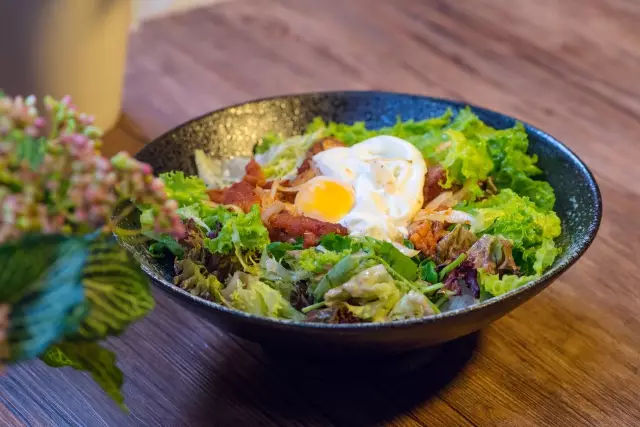
- Rice bowls (donburi style) — drizzle over steamed rice, sliced avocado, and cucumber for a quick weeknight bowl. For more topping combinations, see our eel rice bowl toppings guide.
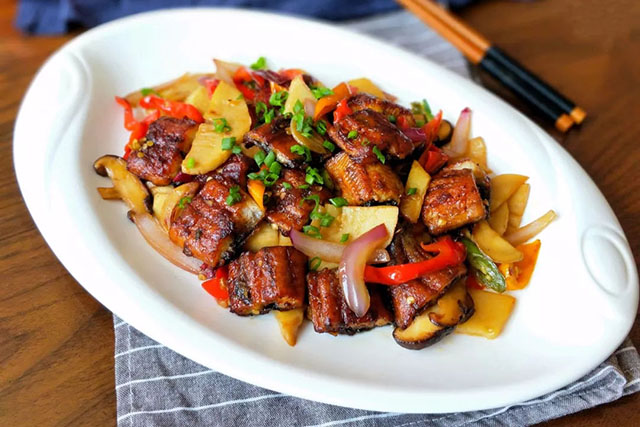
- Grilled vegetables — eggplant and shiitake mushrooms take on a smoky-sweet edge when brushed with a thin layer before charring.
- Noodle soups — a small spoonful stirred into broth adds body without overpowering it, similar to the approach used in our eel recipes collection.
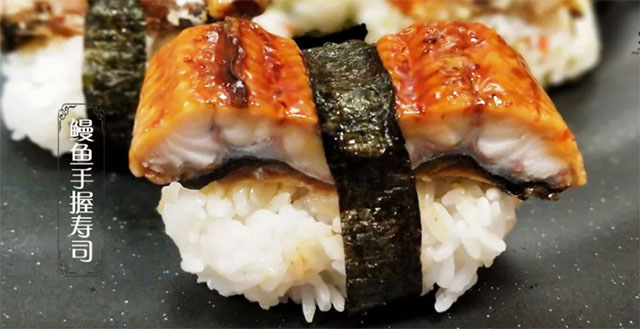
- Sushi rolls, the classic use — for a homemade version, our guide on unakyu maki walks through the roll-and-drizzle order step by step.
Step-by-Step: Turning Bottled Sauce into a Working Glaze
If your sauce came out too thin, or you bought a batch that's more marinade-consistency than glaze-consistency, here's how to fix it at home:
- Pour the sauce into a small saucepan — don't use a wide skillet, it reduces too fast and unevenly.
- Simmer on low heat, never boiling, for 5-8 minutes.
- Stir every 90 seconds. Sugar scorches quickly once it thickens.
- Test consistency by coating the back of a spoon. If it holds a line when you drag a finger through it, it's ready.
- Cool for 3-4 minutes before brushing on hot protein — sauce straight off the stove will slide instead of cling.
This same reduction logic is what separates a flat, watery glaze from one with real shine and cling — the topic covered in more depth in our piece on how to fix common sauce flavor mistakes.
Buying Guide: Choosing Eel Sauce for Home Use
Not all bottled eel sauce is built the same. A few questions worth asking before you buy:
- Is it reduced or just seasoned soy sauce with added sugar? True reduction gives natural thickness without cornstarch. Check the ingredient list — if cornstarch or modified starch appears near the top, it's a shortcut version, not a slow reduction.
- What's the sodium level per tablespoon? If it's higher than 500mg per tablespoon, dilute before marinating to avoid over-salting proteins.
- Does the supplier control roasting temperature during production? Sauce built from an actual eel-roasting process — like our eel sauce line, made using temperature-controlled roasting layers — tends to carry more depth than a sauce mixed cold and bottled.
- Shelf stability — an unopened bottle typically holds 12+ months refrigerated; once opened, use within 4-6 weeks for best flavor. Storage specifics and make-ahead batching are covered in our eel sauce recipe and storage tips.
Quick Decision Checklist
- Cooking fish or chicken today? Choose a thick, pre-reduced glaze.
- Making a rice bowl tonight? Thin sauce works fine straight from the bottle.
- Marinating raw protein overnight? Dilute 1:1 with water or rice vinegar first — never skip this step.
- Buying in bulk for a restaurant or catering menu? Look for suppliers with traceability documentation and food safety certification, not just flavor claims.
A Note on Sourcing for Foodservice Buyers
Home cooks can get away with trial and error. Foodservice buyers can't. If you're sourcing eel sauce or frozen eel supplier partnerships for a menu, consistency matters more than a single good batch. Eelpro operates under ISO 22000:2018 and HACCP certification, holds HALAL certification, and runs an in-house lab with metal detectors at critical control points — the kind of documentation that matters when a shipment needs to clear inspection in Japan, the US, or the EU. Our farming network spans roughly 20 customs-registered eel farming bases covering 2,150 mu, which supports full traceability from farm to finished sauce or kabayaki. For background on how that traceability chain is built, our eel farm page and eel lab page walk through the process in more detail.
The concept behind umami — the savory depth eel sauce delivers — is well documented as one of the five basic tastes recognized in food science, alongside sweet, sour, salty, and bitter. That's part of why a well-reduced glaze works across such different foods: fish, chicken, rice, even roasted vegetables all pick up that same savory backbone.
Whether you're finishing a home-cooked rice bowl or sourcing sauce for a restaurant menu, the sauce itself is only half the equation — how you apply it decides whether it shines or just sits there. If you're evaluating eel sauce or kabayaki for a menu or retail line, request a sample or spec sheet to see how the reduction and viscosity hold up in your own kitchen.

 WhatsApp
 sales@chinaeels.com
 +8619937922411