





What Fish Don't Have Bones and How to Choose Fillets With Fewer Pin Bones
A kitchen manager for a sushi chain once called our office at closing time, upset. A guest had bitten down on a bone in a fish dish, and the whole menu item got pulled overnight. If you buy seafood for a restaurant, a meal-prep kitchen, or your own dinner table, that call is the exact scenario you want to avoid. So what fish don't have bones, really — and which cuts get you closest to zero? The honest answer: almost no fish is truly bone-free, but species, fillet cut, and processing method decide how many bones actually reach the plate.
The Short, Honest Answer About Boneless Fish
Cartilage fish like shark and skate skip the sharp intermuscular bones that trouble most bony fish, but they aren't common on retail or foodservice menus. Among true bony fish, flatfish (sole, flounder) and skinless loin cuts of tuna carry very few floating bones. Freshwater eel is a special case worth knowing: once the backbone and rib structure are removed during kabayaki-style processing, what's left is a fillet with a sharply reduced bone count compared to salmon, trout, or herring, which are famous for stubborn pin bones running down the center of the flesh. So when buyers ask what fish don't have bones in a practical, sourcing sense, the answer is really "which prepared cuts have the bones already taken out for you."
How Fillet Cut, Processing Method, and Species Choice Reduce the Chance of Encountering Bones
Three factors stack together to lower bone risk: the species you pick, the cut you order, and how the processor handles deboning. Get all three right and complaints drop close to zero. Get one wrong and the other two won't save you.
| Format | Typical Bone Risk | Prep Work Needed | Best Use Case |
|---|---|---|---|
| Whole fish | High | Full deboning required in-house | Only when a kitchen has trained fish butchers |
| Skin-on loin | Medium | Pin-bone removal with tweezers | High-end sashimi or grilling programs |
| Standard fillet | Medium-Low | Spot-check remaining bones | Retail and casual dining |
| Deboned kabayaki-style eel fillet | Low | Ready-to-heat, minimal QC check | Foodservice chains, catering lines |
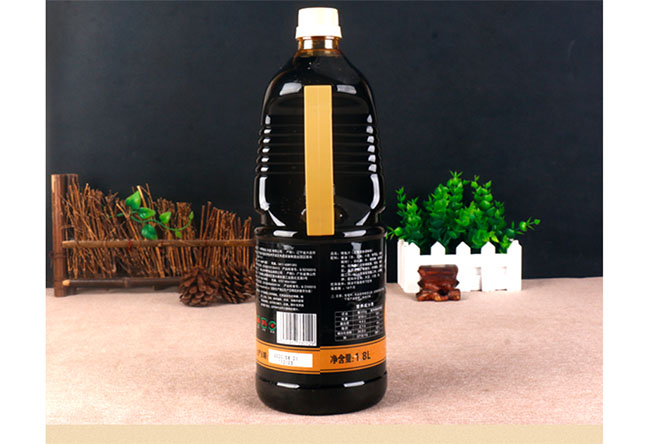
Processing method matters as much as the cut itself. Manual deboning with tweezers is accurate but slow and inconsistent between workers. Mechanical deboning lines move faster but can miss thin bones near the tail. Our own roasting process uses a four-layer soy-sauce coating with temperature-controlled steps, which lets technicians visually inspect and correct bone remnants at each pass rather than relying on a single check. Combined with metal detectors at critical control points, this catches both bone fragments and processing debris before packing — a step generic frozen fillet lines often skip.
Species choice closes the loop. Eel, sole, and boneless tuna loin naturally have fewer intermuscular bones than salmon or mackerel, so even average processing yields a cleaner result. If your menu depends on a low-bone guarantee, pairing a naturally low-bone species with a controlled deboning process is the only combination that reliably works — cut alone or species alone isn't enough.
Step-by-Step: How to Check a Fillet for Bones Before You Buy or Serve
- Step 1 — Check the spec sheet. Ask the supplier whether the product is labeled skin-on, boneless, or deboned. Failure reason: buyers often assume "fillet" automatically means boneless — it doesn't.
- Step 2 — Run your fingers along the centerline. On a thawed sample, press gently from head to tail. Any hard ridge under the flesh signals leftover pin bones. Failure reason: skipping this on frozen product, where bones are harder to feel.
- Step 3 — Hold a slice up to light. Thin bones show as faint shadows in translucent flesh. Failure reason: testing under poor kitchen lighting misses small bones.
- Step 4 — Request the supplier's QC documentation. A facility with an in-house lab and metal detection at critical control points should be able to share inspection logs. Failure reason: accepting a verbal assurance instead of a written record.
- Step 5 — Run a cook test batch. Cook a small sample lot before committing to a full order. Failure reason: skipping this step to save time, then discovering the issue mid-production.
Buyer's Decision Checklist for Low-Bone Seafood Sourcing
- Does the supplier hold food safety certification (ISO 22000, HACCP) that covers cooked and seasoned aquatic products?
- Can they trace raw material back to a registered farming base, not just a general region?
- Is the cut specification (skin-on, boneless, skewer, kabayaki, cut pieces) clearly stated on the packing list?
- Do they offer a cold-chain guarantee, or does storage depend on your own facility?
- Is there a metal detector or bone-detection step documented in their process flow?
- Does the export documentation match the import country's veterinary drug residue and microbiological standards?
This checklist matters most for buyers sourcing for foodservice chains or retail private label, where one bone complaint can trigger a recall review. It matters less for a home cook buying a single portion — in that case, a visual and touch check at the counter is usually enough.
Common Mistakes That Lead to Bone Complaints
- Assuming "fillet" means "boneless." Many fillets, especially salmon and trout, keep pin bones by default unless the pack specifically says deboned.
- Buying on price alone. A cheaper case price often means less time spent on manual bone removal upstream.
- Skipping supplier audits. A facility without a dedicated quality-control team is more likely to have inconsistent deboning between batches.
- Ignoring species differences. Choosing a bony species for a menu item that requires zero-bone confidence, instead of switching to eel, sole, or loin cuts.
- No cook test before bulk order. Committing to a full container before running a trial batch through the kitchen.
Why Deboned Eel Fits Foodservice Kitchens Looking to Cut Bone Risk
For kitchens weighing labor costs against bone risk, deboned unagi kabayaki often changes the math. A back-of-house team manually deboning whole eel can spend real labor minutes per portion; a ready-to-heat, pre-deboned fillet removes that step almost entirely. Our two production lines cover frozen roasted eel and deep-processed aquatic products, with a combined annual capacity of 4,000 tons, and every batch moves through a 1,000-ton cold storage facility before shipment — which keeps texture and bone-removal quality consistent from the first case to the last.
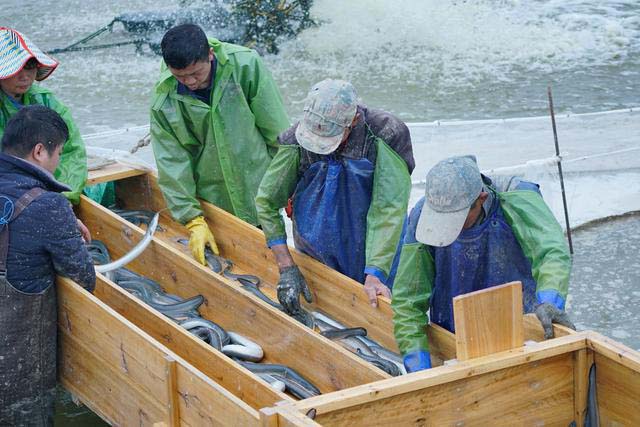
Raw material traceability backs this up. Roughly 20 customs-registered eel farming bases, covering over 2,150 mu, feed a full-chain system — from farming registration through process verification, sampling, and shipment records. Our in-house eel lab and metal detectors at critical control points give buyers documentation to answer "what fish don't have bones in this shipment specifically," not just a general industry claim.
This approach has supported long-term supply to Japanese restaurant chains sourcing kabayaki eel, US importers bringing in unagi kabayaki and eel sauce, and distributors across Germany, Poland, and the wider EU working under veterinary drug residue and microbiological standards. Foodservice partners in Australia, Indonesia, and Southeast Asia use the same boneless, standardized-cut format to lower back-of-house prep costs.
Matching Cut Specifications to Your Menu or Product Line
Not every kitchen needs the same cut. Skewers work well for grilled menu items; cut pieces suit rice bowls and bento boxes; sushi slices need thinner, more precise cutting. Custom cutting specifications — shredding, dicing, strip-cutting, chunk-cutting, 3-section cut, sushi slices — each carry a slightly different bone-check requirement, since thinner cuts expose bone fragments more easily during visual inspection. For a deeper look at how sauce and glaze interact with cut thickness, see this piece on kabayaki sauce pairing, or check the cleaning, skinning and deboning guide if your kitchen still processes whole eel in-house.
Packaging format also plays a role buyers sometimes overlook. Skin-packaging keeps portions visible for quality checks at receiving; gift-box formats prioritize presentation over inspection speed. MOQ policies differ between catering chains, wholesalers, and export traders, so specification and packaging choice should be discussed together with your supplier before finalizing an order — regular order lead time runs about 30 days from confirmation to shipment, though this is negotiable by spec and volume.
A Quick Decision Scenario
A mid-size Southeast Asian catering group recently needed a bone-free protein for a set-menu rollout across 40 locations. Whole fish was ruled out immediately — too much labor variance across kitchens. Skin-on loins were considered but rejected because pin-bone removal still required trained staff at each site. The final choice was a deboned, standardized cut format shipped frozen with cold-chain support, which let every location follow the same reheating step without a butchery skill requirement. That's the practical version of asking what fish don't have bones — it's less about finding a mythical zero-bone species and more about matching cut and process to your kitchen's actual capability.
If you're comparing whole fish, loins, or deboned fillets for your own menu or import program, our team can walk through spec options, cutting formats, and MOQ terms based on your order volume. Request a quote or sample pack and we'll help you match the cut to your kitchen's needs.
 WhatsApp
 sales@chinaeels.com
 +8619937922411