


Why Is Eel Sauce Called Eel Sauce? The Nitsume Exception
You read "eel sauce" on the menu and wonder: is there eel in the bottle?
Usually, no. So why is eel sauce called eel sauce? Because it was made to glaze grilled eel. The name tells you the job, not the recipe. There is one exception, and it is where most online answers get fuzzy.

The Short Answer: It Is Named for the Dish, Not the Ingredient
Think of "barbecue sauce." Nobody expects barbecue inside it.
Eel sauce works the same way. In Japan, the glaze for kabayaki (split, skewered, grilled eel) is called unagi no tare. "Unagi" is freshwater eel. "Tare" is a dipping or basting sauce. English-language restaurants shortened it to "eel sauce."
The modern restaurant version is typically built from soy sauce, mirin, sugar, and sometimes sake, reduced until glossy. That is why you will also see it sold as "kabayaki sauce" or "sushi sauce." Same bottle, three names.
Where this applies: restaurant menus, retail bottles, and home cooking in English-speaking markets. Where it does not: traditional Japanese kitchens that keep their own house sauce, which brings us to nitsume.
Eel-Free Restaurant Sauce vs Nitsume: Where the Naming Splits
Nitsume means "simmered down." It is a thick, sweet-savory glaze that traditional sushi chefs reduce from the cooking liquid of simmered anago (saltwater conger eel). Because the liquid carries eel flavor, a true nitsume can contain eel-derived broth.
The two get confused because both are dark, sweet, and brushed on eel. The table separates them.
| Point | Modern "eel sauce" / kabayaki sauce | Traditional nitsume |
|---|---|---|
| Japanese name | Unagi no tare, kabayaki no tare | Nitsume (also called tsume) |
| Typical base | Soy sauce, mirin, sugar, sometimes sake | Reduced simmering liquid from anago, seasoned with soy, mirin, and sugar |
| Eel-derived content | Often none in restaurant-style bottles; confirm on the ingredient list | Can include eel broth by design |
| Usual partner | Grilled freshwater eel (unagi), rolls, rice bowls | Anago nigiri and some simmered sushi toppings |
| Why the name fits | Named for the dish it glazes | Named for the technique (simmered down) |
| Risk if mislabeled | Diners assume fish content that is not there | Diners assume "just soy glaze" when eel broth is present |
The practical rule: "eel sauce" is a use-based name. "Nitsume" is a method-based name. A product can be called either without telling you what is inside. Only the ingredient list does that.
Limit of this table: house recipes vary. Some Japanese eel restaurants keep a long-running tare and may add grilling drippings or bones. I would not generalize beyond "some do, some don't." Ask.
Quick Answers to the Questions People Actually Ask
Does eel sauce contain eel?
Often not. Restaurant-style eel sauce is a soy-mirin-sugar reduction. Nitsume and some traditional house tare can contain eel broth or eel-derived extracts. Read the ingredient line, not the product name.
Is unagi no tare the same as kabayaki sauce?
In everyday use, yes. Both describe the sweet soy glaze brushed on grilled eel. Our kabayaki sauce article covers why that glaze matters so much to the final bite.
Is nitsume the same as eel sauce?
No. They overlap in flavor and use, but nitsume is defined by its simmered-down base. Calling nitsume "eel sauce" is common and not wrong in casual speech. On a label, it is imprecise.
Can I use eel sauce on things other than eel?
Yes. Sushi rolls, rice bowls, tempura, and grilled fish all take it well. See eel rice bowl toppings for pairing ideas. The name describes origin, not a limit on use.
Why do some bottles taste thinner than the glaze at a restaurant?
Reduction level. A glaze needs to cling to hot fish, so it is cooked down thicker than a table sauce. A bottled sauce meant for drizzling is looser. If you want a restaurant finish, simmer it further. Our eel sauce recipe guide explains reduction and storage.
Cold Fact: The Glaze Is Built in Layers
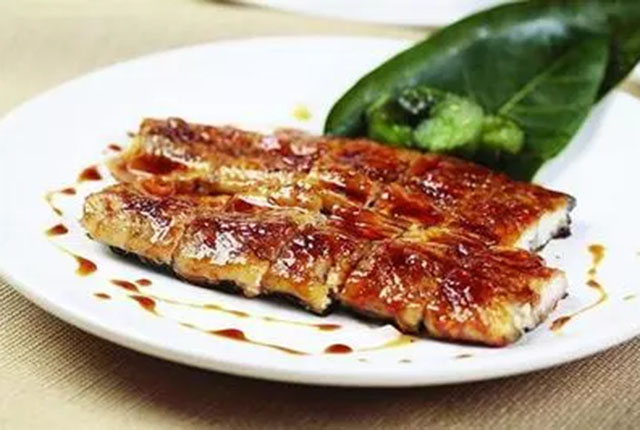
On a properly grilled kabayaki, the sauce is not poured on at the end. It goes on in several coats, with grilling between each, so sugars caramelize and the surface turns lacquered.
Our own export roasting process uses 4 precise soy-sauce layers with temperature-controlled steps. We also keep reference standards for a "white-roasted color" and for the 1st-through-4th coating color. Eel sauce tastes different once it has met fire, which is another reason the name stays tied to the grilled dish.
Menu and Label Pitfalls to Avoid
I have spent over a decade on kabayaki roasting and deep processing, and the same naming slips keep surfacing in menus and spec sheets.
- Assuming "eel sauce" means eel-free. Not guaranteed. Check the ingredient declaration.
- Assuming "eel sauce" contains eel. Equally wrong for most restaurant bottles.
- Using "nitsume" as a fancy synonym. If your sauce is a soy-mirin-sugar reduction, call it unagi tare or kabayaki sauce.
- Ignoring allergen wording. Eel is fish. If a sauce contains eel-derived ingredients, say so clearly, and check the labeling rules in your market.
- Mixing up unagi and anago. Unagi is freshwater eel. Anago is saltwater conger. Nitsume is traditionally tied to anago.
A Naming Checklist for Menu Writers and Buyers
- Check the base. Soy, mirin, sugar only? Call it eel sauce, unagi tare, or kabayaki sauce.
- Check for eel broth or extract. If present, avoid calling it a plain soy glaze, and state it plainly.
- Match the name to the audience. Western diners know "eel sauce." Japanese-literate diners expect "tare" or "nitsume" to mean something specific.
- Confirm the fish. Unagi (freshwater) or anago (conger)? The dish name should match.
- Request the written spec. Ingredient list, allergen statement, and usage guidance should come from the supplier in writing.
What We Can and Cannot Tell You About Sourcing
This article is a general naming guide. The following points are company facts, kept separate from that guidance.
- Eelpro Co., LTD supplies unagi kabayaki product lines and an eel sauce product page for buyers who want sauce and eel from one source.
- We hold ISO 22000:2018, HACCP, and HALAL certification, plus an export food producer registration.
- Raw material comes from about 20 customs-registered farming bases covering over 2,150 mu, with traceability from farm to shipment. You can see more at our unagi eel farm for Eelpro Co., Ltd page.
- We have supplied eel products to buyers in Japan, the United States, Germany, Poland, Australia, Indonesia, and across the EU and Southeast Asia.
What we do not claim: that every sauce called "eel sauce" matches our formulation, or that an exact ingredient spec applies without checking. Ingredient, allergen, and labeling questions should be answered per product from the spec sheet, not from a blog post.
Over to You
Ever ordered "eel sauce" and been surprised by what was in it? Or seen a menu use "nitsume" for a plain soy glaze? Share it in the comments. It helps other readers spot the pattern.
If you are writing a menu or a product label and want to confirm the naming against real product specs, ask us for an ingredient and allergen sheet. For more on cooking, start with how to cook eel: easy methods and tips.