





Picture this: it’s 5:45 PM. Your grill is scorching hot, dinner service starts in 15 minutes, and someone pulls a block of frozen eel straight from the walk‑in freezer and dumps it into a sink filled with warm water. Within minutes, the edges go soft, the centre stays rock‑hard, and the delicate eel flesh starts to weep. By the time it hits the grill, you’re not serving glistening unagi—you’re plating chewy, water‑logged fish. That’s money down the drain and a table who won’t come back.
Good frozen eel handling isn’t a luxury step reserved for high‑end omakase counters. It’s the difference between meaty, golden‑browned fillets and a soggy mess. We’ve spent years shipping pristine fresh‑water eel from our farms to kitchens around the world, and we’ve learned that defrosting is where the real cooking begins.
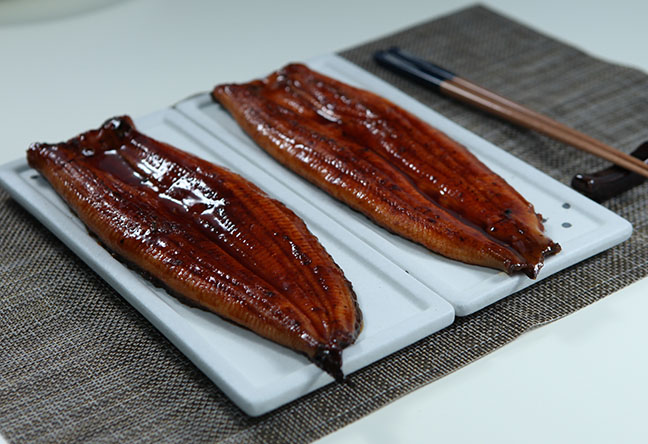
Eel muscle is unlike flaky white fish. It’s rich in fat and a particular type of collagen that sets beautifully when cooked—but only if you treat it properly before heat ever touches it. When you rush the thaw, ice crystals puncture cell walls, that fat leaks out, and the flesh turns spongy. Even a perfect unagi kabayaki glaze can’t hide poor texture.
There’s a food safety angle too. Eel protein is a breeding ground for bacteria once it crosses 4°C. Leave frozen eel on a prep table for a few hours and the outer layers hit the danger zone long before the core defrosts. The result? Off‑flavours, shortened shelf life, and—worst case—a health inspector’s red flag.
Good eel cold storage practice always starts with a solid defrost plan. Whether you’re running a busy izakaya or supplying a seafood distributor, the method you choose directly impacts yield, taste, and safety.
We’ve tested every approach in our own R&D kitchen—from the “leave it on the counter and pray” technique to expensive rapid‑thaw gadgets. For foodservice, only two methods consistently deliver clean, sushi‑grade results. Both require a probe thermometer and a little patience.
This is the gold standard for thawing frozen eel. It takes planning but protects texture and minimises bacterial growth.
Move the vacuum‑sealed eel from freezer to coldest part of the refrigerator (0–4°C).
Place the package on a rimmed tray to catch any condensation or accidental leaks.
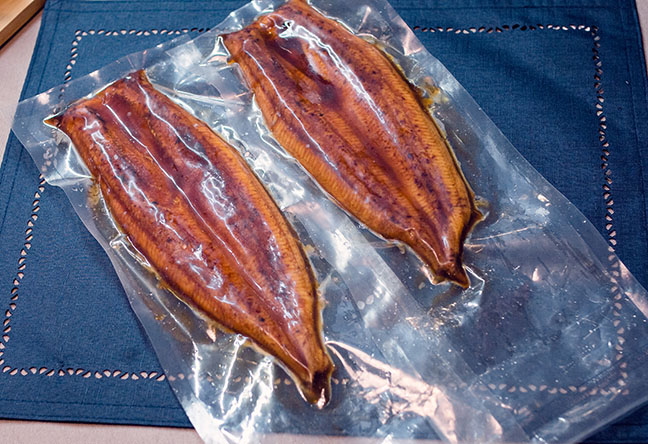
Expected time: roughly 12 to 24 hours per kilogram. A 2‑kg block often needs a full 36 hours. Thinner, individually portioned kabayaki fillets can be ready overnight.
Check early: once the fillet flexes without any hard centre, it’s ready. Use a thermometer—the core should read between 0°C and 2°C.
We’ve noticed that frozen eel defrosting in a fridge set to exactly 2°C gives the cleanest separation between fillets. If you regularly handle whole frozen eel, dedicate a bottom shelf just for seafood thawing.

Sometimes the walk‑in was restocked late or a last‑minute booking throws your prep schedule off. The cold‑water method works, but only if you control every variable.
Keep the eel inside an intact, leak‑proof vacuum bag. Any nick in the plastic lets water in and flavour out.
Submerge the package in a clean sink or container filled with cold tap water (below 21°C).
Let a thin stream of cold water run continuously into the vessel. The flow should be just enough to create a gentle swirl—this accelerates heat exchange without warming the water.
Time estimate: approximately 1 to 2 hours per kilogram. Small unagi kabayaki portions can defrost in under 30 minutes. Never use warm or hot water; it cooks the surface and encourages bacterial growth.
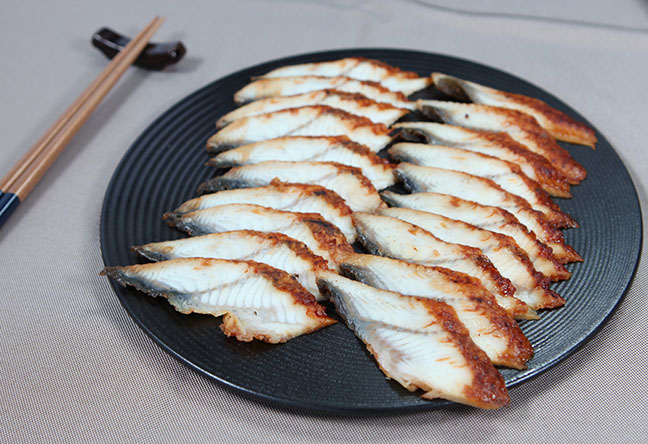
This is also the best way to handle frozen eel when you need it in smaller pieces quickly. We’ve seen chefs use this for eel destined for eel noodle soup—they slice the half‑frozen fillet into thin strips with a heavy cleaver before the last few degrees of chill dissolve, preserving shape.
Some shortcuts look tempting but end in tears (and a trash can full of wasted product).
Room‑temperature defrosting: The core stays frozen while the exterior sits in the bacterial danger zone for hours. Even in a chilled kitchen, the risk isn’t worth the 20 minutes it saves.
Microwave defrost: Eel fat heats unevenly in a microwave. You’ll get cooked‑edge, raw‑center fillets that turn rubbery the second they hit a plancha.
Hot water or steam: This partially cooks the eel, denatures the collagen too early, and creates a weird, mealy texture. If your eel looks grey before it even sees a flame, you’ve made this mistake.
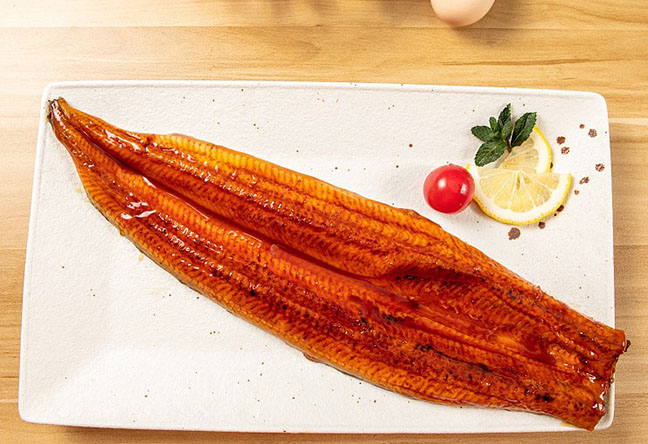
Once your thawing frozen eel is completely done, move fast but gentle. Pat the fillets dry with paper towels—moisture on the surface steams the fish instead of searing it. If you’re working with our pre‑glazed unagi kabayaki, keep the glaze intact: it caramelises directly on a hot grill.
We recommend holding thawed, uncooked eel at 0–4°C and using it within 24 hours. Never refreeze raw eel that has been completely thawed. You disrupt the meat structure twice, and the second freeze pushes moisture loss through the roof. That said, if you’ve already cooked the eel—say, basted with our eel sauce and grilled—you can safely freeze it again for up to 30 days without major quality loss.
One efficiency trick: portion your eel before freezing. If you receive bulk frozen eel, break down the block while it’s still semi‑frosty using a bandsaw or heavy knife. Then vac‑pack individual service sizes and return what you don’t need immediately to eel cold storage at −18°C or below. This minimises the defrost‑refreeze cycle entirely.
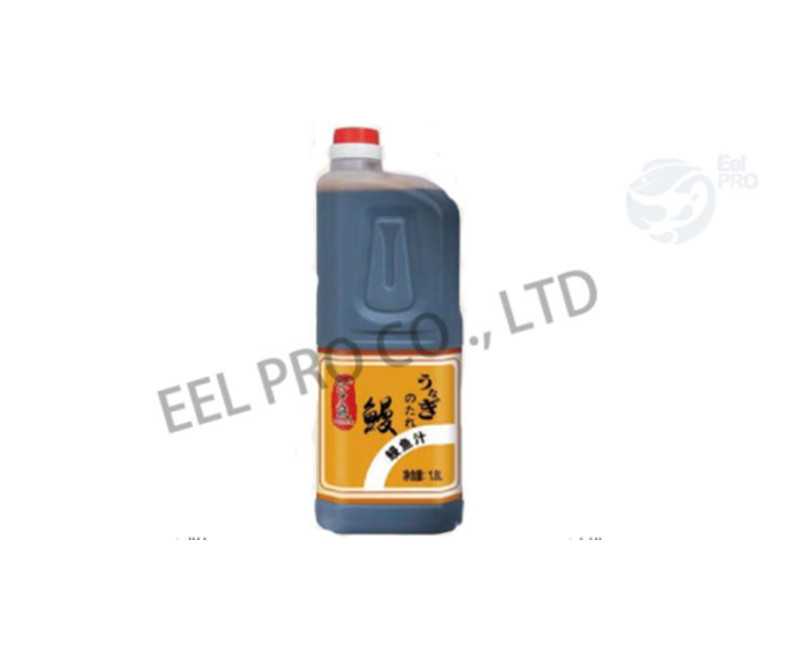
Smart chefs know that kabayaki sauce does more than add a glossy sweet‑savoury finish. It’s also a handy quality indicator. Here’s what we mean: when you brush warm unagi tare onto a properly thawed kabayaki fillet, the sauce adheres in a thin, even layer and bubbles gently under a broiler. On a badly defrosted fillet, the sauce pools into wet pockets, slides off, or burns before the fish warms through. If your sauce isn’t behaving, revisit your defrosting steps before adjusting your grill temperature.
Drizzling a little extra unagi tare at the very end—just before plating—can also rescue eel that lost a touch of its natural sheen during the thaw. It won’t fix texture, but it’ll bring back that signature lacquer‑like gloss your guests expect.
If your refrigerator shelves are packed, use an insulated cool box with ice packs. Place the sealed frozen eel inside and monitor the temperature. It should stay below 4°C. The thaw will still take 18–36 hours, but you free up reach‑in space. Rotate ice packs if needed. The cold‑water method described above is also perfectly safe when done under running cold water, as long as the package is leak‑proof.
This depends entirely on thickness and method. For a standard 200‑g kabayaki fillet: roughly 18–24 hours in the fridge, or about 25–40 minutes under cold running water. A whole 1‑kg frozen eel will need up to 48 hours in the fridge or 1.5–2 hours in cold water. Always check the core by feel—there should be zero hard resistance.
The best way is to treat it like fragile fresh fish. Keep it cold (0–4°C) until the moment you cook it. Dry the surface thoroughly. If you’re glazing, apply the first layer of sauce only after the flesh begins to firm up on the heat. Avoid stacking fillets, which traps moisture. And never, ever leave thawed eel sitting in its own purge liquid—strain it off immediately.
Great eel dishes start long before the grill lights up. By mastering safe, consistent frozen eel defrosting, you lock in the fattiness, the bounce, that unmistakable umami depth that keeps customers ordering a second round. We’ve spent decades raising fresh‑water eel and perfecting our kabayaki process, so when our frozen eel arrives at your door, most of the hard work is already done. Your job? Just defrost it with the care it deserves.
Ready to taste the difference? Explore our full range of unagi kabayaki, rich eel sauce, and whole frozen eel. Questions about bulk orders or cold‑chain shipping? Drop us a line—our team speaks kitchens, not just sales scripts.
[xss_clean] { "@context": "https://schema.org", "@type": "FAQPage", "mainEntity": [ { "@type": "Question", "name": "How to thaw frozen eel safely without taking up fridge space for 24 hours?", "acceptedAnswer": { "@type": "Answer", "text": "If your refrigerator shelves are packed, use an insulated cool box with ice packs. Place the sealed frozen eel inside and monitor the temperature. It should stay below 4°C. The thaw will still take 18–36 hours. Rotate ice packs if needed. The cold‑water method under running cold water is also safe when the package is leak‑proof." } }, { "@type": "Question", "name": "How long does frozen eel take to defrost in a busy restaurant kitchen?", "acceptedAnswer": { "@type": "Answer", "text": "This depends on thickness and method. For a standard 200‑g kabayaki fillet: roughly 18–24 hours in the fridge, or about 25–40 minutes under cold running water. A whole 1‑kg frozen eel will need up to 48 hours in the fridge or 1.5–2 hours in cold water. Always check the core by feel—there should be zero hard resistance." } }, { "@type": "Question", "name": "What is the best way to handle thawed eel so it doesn’t become mushy?", "acceptedAnswer": { "@type": "Answer", "text": "Treat it like fragile fresh fish. Keep it cold (0–4°C) until cooking. Dry the surface thoroughly. If glazing, apply the first layer of sauce only after the flesh begins to firm up on the heat. Avoid stacking fillets. Never leave thawed eel sitting in its own purge liquid—strain it off immediately." } } ] } [xss_clean]
 WhatsApp
 sales@chinaeels.com
 +8619937922411