





How Do I Make Eel Sauce Without Ending Up With Something Too Thin, Too Salty, or Too Sweet
Your pot is bubbling. The sauce smells right. But it's still running off the spoon like soy sauce, or it tastes like a salt lick, or the sugar has taken over completely. If you're standing at the stove right now wondering how do I make eel sauce that actually behaves like the glossy, clingy glaze on restaurant unagi, the answer isn't "add more of everything." It's diagnosis first, correction second.
This happens to home cooks and small kitchen teams alike. Unagi tare (the Japanese eel glaze made from soy sauce, mirin, sake, and sugar) looks simple on paper. In practice, three variables — water content, salt concentration, and sugar level — move independently, and fixing one wrong can wreck the other two.
Diagnose Before You Fix: Thin, Salty, or Sweet — What's Really Wrong?
Before touching the pot again, figure out which problem you actually have. A thin sauce and a salty sauce sometimes look identical on the spoon but need opposite fixes. Check the symptoms in this order:
| Symptom | Check First | Likely Cause | Correct Fix | When NOT to Use This Fix |
|---|---|---|---|---|
| Runs off the back of a spoon, no coating | How long has it simmered? Under 15 minutes usually means under-reduced. | Insufficient water evaporation | Continue simmering at a gentle bubble, 5-minute checks | Don't reduce further if it already tastes over-salted — you'll concentrate the salt more |
| Coats the spoon but tastes sharp or bitter-salty | Taste a cooled drop — hot sauce always reads saltier | Soy sauce ratio too high, or over-reduced | Dilute with a little mirin/water blend, then re-check consistency | Don't just add sugar — masking salt with sweetness throws off balance and won't fix long-term |
| Thick and glossy but cloyingly sweet | Was extra sugar added mid-cook to "balance" saltiness? | Sugar-to-soy ratio corrected in the wrong direction | Add a small amount of soy sauce or dashi to rebalance, then re-reduce briefly | Don't dilute with plain water — it resets both sweetness and body, forcing a full re-reduction |
The rule of thumb we use when reviewing batches: reduction fixes thin sauce, dilution fixes over-concentration, and ratio correction fixes flavor imbalance. Mixing up which tool applies to which problem is the single biggest reason home batches spiral — cooks reduce a salty sauce further (making it saltier), or dilute a thin-but-balanced sauce (undoing the work).
Step-by-Step Reduction Fix for Thin Unagi Tare
If your diagnosis points to "just needs more reduction," here's the sequence that keeps flavor from drifting off balance while you thicken:
- Taste and note the current flavor before doing anything else. You need a baseline to compare against.
- Simmer uncovered at a low, steady bubble — not a hard boil, which scorches sugar and turns the sauce bitter.
- Check consistency every 5 minutes by dragging a spoon across the pot bottom. If the trail holds for 2-3 seconds, you're close.
- Cool a small spoonful on a plate to judge true thickness — hot sauce always looks thinner than it will be at serving temperature.
- Stop reducing once the sauce coats the back of a spoon and holds a thin ribbon when poured. This roughly matches the viscosity used in commercial kabayaki sauce production, where a controlled multi-layer coating process builds body without over-concentrating salt.
This works well when your flavor was already balanced before reduction — you're just chasing consistency. It does not apply if the sauce was already salty before you started reducing; further reduction on an already-salty base only concentrates the problem.
Balancing Salt and Sweetness: Ratio Corrections That Work
A classic tare ratio runs roughly equal parts soy sauce, mirin, and sugar, with sake added for depth. When a batch drifts, small ratio nudges — not full restarts — usually solve it.
| Problem | Starting Ratio Issue | Adjustment | Approximate Amount |
|---|---|---|---|
| Too salty | Soy sauce dominant | Add mirin + a touch of sugar | 1-2 tbsp mirin per cup of sauce, taste after each addition |
| Too sweet | Sugar or mirin overcorrected | Add soy sauce or a splash of dashi | 1 tsp soy sauce at a time, re-tasting cooled sample |
| Flat, one-note | Missing sake or aromatics | Add a small splash of sake, simmer 2 more minutes | 1 tbsp per cup, then reduce briefly to cook off alcohol |
Adjust in small increments and always taste a cooled sample — this is the part most home cooks skip, and it's why they end up over-correcting. If you want a documented starting ratio to work from instead of guessing, the fix flavor mistakes guide walks through proportions used as a baseline before troubleshooting.
Common Mistakes When Reducing Kabayaki Sauce
- Boiling instead of simmering — high heat causes uneven sugar caramelization and bitter notes that no amount of dilution fixes.
- Tasting the sauce hot — heat suppresses sweetness perception and exaggerates saltiness, leading to wrong corrections.
- Adding sugar to mask salt — this hides the problem temporarily but the sauce reads as unbalanced once cooled and used on grilled eel.
- Diluting with plain water — resets flavor concentration entirely, forcing a second full reduction cycle instead of a small fix.
- Skipping the cooled-sample test — consistency and flavor both shift significantly between 80°C and room temperature.
When to Rescue the Batch vs Start Over
Not every batch is worth saving. Use this checklist before deciding:
- Rescue it if: the base flavor is still recognizable as balanced tare, and the issue is purely thickness or a mild salt/sweet skew.
- Rescue it if: you can identify a single ingredient that was overdosed (usually soy sauce or sugar), since one-variable fixes are predictable.
- Start over if: the sauce tastes burnt or bitter from scorched sugar — this can't be diluted or masked out.
- Start over if: you've already added three or more "corrective" ingredients and lost track of the ratio — stacked corrections compound rather than cancel.
For a worked example: a batch built with 1 cup soy sauce, 1 cup mirin, and ¾ cup sugar came out too salty after 20 minutes of reduction. The fix was adding 3 tablespoons of mirin and 1 tablespoon of sugar, then simmering 5 more minutes to re-thicken. That's a rescue. A separate batch that scorched during unattended high-heat boiling had to be discarded — no ratio fix reverses caramelization that's gone bitter.
If you're prepping tare ahead for later use rather than fixing it mid-cook, storage stability matters just as much as the ratio — see the make-ahead and storage tips for how thickness changes after refrigeration.
Why Consistent Sauce Matters More at Volume
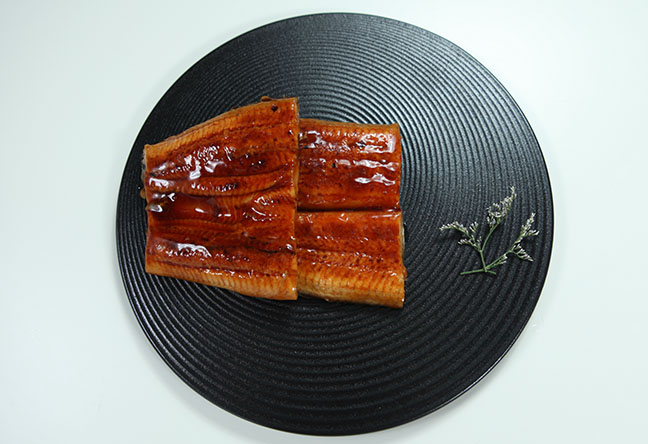
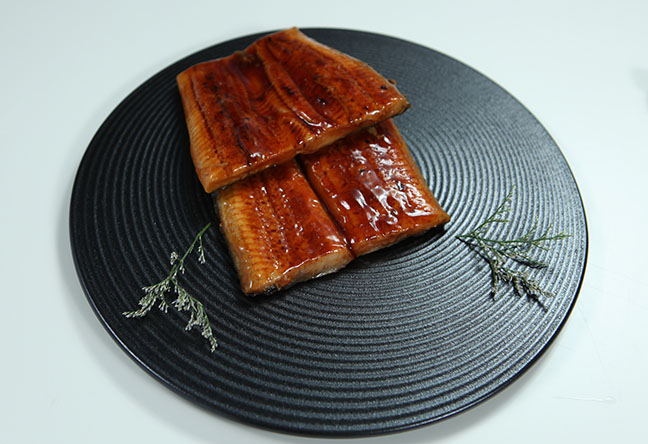
Home batches tolerate a little drift. Foodservice kitchens can't. At Eelpro, our roasting process uses a 4-layer soy-sauce coating with temperature-controlled steps, developed specifically so viscosity and salt concentration stay within a fixed range across every production run — not just the first batch of the day. That standard was built for pairing with frozen unagi kabayaki, where the glaze has to perform the same after freezing, shipping, and reheating as it did fresh off the grill.
If you're scaling a menu item and don't want to troubleshoot tare batch after batch, a pre-made eel sauce built to a fixed ratio removes that variable entirely — useful for kitchens where consistency across shifts matters more than made-from-scratch flexibility.
Getting the answer to how do I make eel sauce right isn't about a fixed recipe — it's about knowing which lever to pull when a batch drifts. Diagnose the symptom, apply one correction at a time, and taste cooled samples before deciding it's done.
Looking for a tare that holds its ratio batch after batch? Request a sample of Eelpro's eel sauce or ask our team for the technical spec sheet before your next order.
 WhatsApp
 sales@chinaeels.com
 +8619937922411