


How to Cook Eel and Fix Rubbery Texture With Pan Heat and Resting
Your eel looked gorgeous in the pan. Then you bit in. Tough flesh, wet skin, glaze like tar.
Don't blame the fish yet. Knowing how to cook eel mostly comes down to three things: heat, moisture and timing. Get those right and even a leftover fillet comes back tender.
Below is a symptom-first troubleshooting path. Start with what you see on the plate, check the cheap causes first, and fix one variable at a time.
Name the Symptom Before You Touch the Pan
An observation is not a diagnosis. "Rubbery" is what you felt. "Overheated protein" is only a suspect until the other checks rule things out.
| What you observe | Possible cause (not yet confirmed) | Check first |
|---|---|---|
| Flesh bounces back, chews like rubber | Heat too high or cooked too long; fillet still cold in the center | Pan temperature, cook time, whether the fillet was fully thawed |
| Flesh dry and crumbly, not elastic | Over-reheating without moisture | Was the lid, foil or a splash of liquid used? |
| Skin soft and slippery | Skin never contacted dry heat; surface water; crowded pan | Was it patted dry? Which side hit the pan first? |
| Glaze black and bitter | Tare applied too early over high heat | When did the sauce go on? |
| Watery pool under the fillet | Rushed thaw, or no resting | Thaw method, and whether it rested before slicing |
Run the Diagnosis in This Order
Go from the cheapest check to the most involved. Stop as soon as one fix changes the result.
- Check the thaw. Press the thickest part. If the center feels icy or stiff, the outside will overcook before the middle warms. Thaw fully in the refrigerator and cook again. If texture improves, you're done.
- Check surface moisture. Blot both sides with paper towel. Wet skin steams instead of crisping. This is the most common cause of soft skin, and it costs nothing to fix.
- Check pan temperature. Hold your palm about 5 cm above the pan. You want steady, medium heat, not a hard sizzle. If the fillet curls hard within seconds, the pan is too hot.
- Check the sequence. Skin-side first or flesh-side first? Details are in the next section.
- Check sauce timing. If the glaze scorched but the flesh was fine, the problem is sugar and heat, not toughness.
- Check resting. Cutting straight from the pan pushes juices onto the board. That reads as dry, tough flesh.
Stop and rethink if the eel smells sour or off, or the flesh looks slimy before cooking. That is a storage problem, not a pan problem. Don't cook it to "fix" it.
How Pan Heat, Skin-Side Sequencing, Basting and Resting Prevent Tough Flesh and Soft Skin
These four variables decide the final texture. Here is what each one does and how it fails.
| Variable | What it protects | Observable sign it's right | Sign it's wrong | Limit |
|---|---|---|---|---|
| Pan heat: medium, preheated | Flesh. Gentle heat warms the protein without squeezing out moisture. | Steady, quiet sizzle; fat renders slowly | Violent spitting, curling edges, smoke | Very thick cuts may need a lid for the last minute |
| Skin-side first, 2–3 minutes | Skin. Direct dry contact renders fat and firms the surface. | Skin sets and releases easily from the pan | Skin sticks, tears or stays glossy and wet | Timing depends on fillet thickness; treat it as a starting point |
| Flesh side, 1–2 minutes only | Flesh. Short contact warms the interior without toughening. | Edges hot, center just warm | Flesh bounces back when pressed | Pre-cooked kabayaki needs warming, not cooking |
| Basting in the last 30–60 seconds | Glaze. Sugars caramelize quickly and burn just as fast. | Glossy, amber coat | Dark, bitter, sticky crust | Cold tare straight from the fridge can cool the pan; warm it first |
| Resting 3–5 minutes | Juices. Fibers relax and reabsorb moisture. | Little liquid on the board when sliced | Puddle under the cut | Rest loosely tented; sealed foil softens skin |
One note on the science. Browning of glaze and skin is the Maillard reaction, and it needs a dry surface and moderate heat. Wet, crowded or overheated pans work against it.
A Worked Example: Reheating a Kabayaki Fillet Without Wrecking It
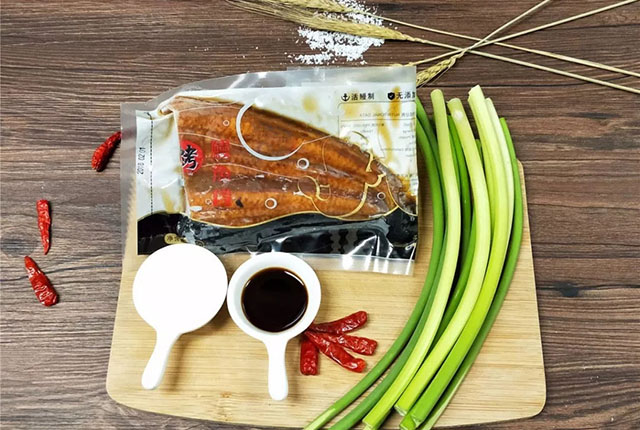
Say you bought a frozen unagi kabayaki product and your first attempt came out rubbery. The fillet is already roasted, so your job is gentle warming, not cooking from scratch.
- Thaw overnight in the refrigerator. Don't use hot water.
- Blot off surface moisture and excess old glaze.
- Preheat a non-stick or lightly oiled pan on medium for about a minute.
- Lay the fillet skin-side down for 2–3 minutes. Don't press it.
- Flip. Warm the flesh side for 1–2 minutes.
- Brush on a thin coat of warmed tare in the last 30–60 seconds. A good eel sauce product page will show sauce options if you need to adjust sweetness.
- Rest 3–5 minutes on a rack, then cut.
Result check: press lightly. Tender flesh gives and slowly springs back. Rubbery flesh pushes back hard. If it still feels tough, go back to step one of the diagnosis and look at the thaw, then the pan temperature. Those are the likeliest culprits.
For raw or fresh eel, the prep is different. Cleaning, skinning and deboning change how fast it cooks. Our guide on how to cook eel: cleaning guide covers that stage.
Common Mistakes That Make Eel Rubbery, Soggy or Burnt
- Cranking the heat to "crisp it fast." This tightens the protein before the center warms. Use medium, and give it time.
- Saucing at the start. The sugar burns before the flesh is warm. Baste last.
- Crowding the pan. Steam builds up and softens skin. Cook in batches.
- Cooking from partly frozen. The outside overcooks while the center stays cold. Thaw first.
- Skipping the rest. Juices run out and the flesh feels dry.
- Treating pre-roasted eel like raw fish. It only needs warming. Extra minutes only dry it out.
Fun fact: raw unagi blood carries a mild toxin that heat breaks down. That's one reason eel is always served cooked.
Prevention, and When to Ask Your Supplier
If you cook eel often, build a small routine: same thaw method, same pan, same timer. Change one variable at a time, and write down what you changed.
Sometimes the cause isn't in your kitchen. If you've fixed thaw, heat, sequence, sauce timing and resting, and the texture is still off, look at the product itself. Record these before you contact the supplier:
- Lot or batch code and the packaging format
- Thaw method and duration
- Pan type, heat setting and cook time
- Photos of the cut surface and the skin
As an eel producer, we can only judge a case with this kind of record. At Eelpro, kabayaki goes through a 4-layer soy-sauce coating process with temperature-controlled steps, and our patented low-fat roasting technology is applied to the finished eel. Farms are traceable and checks run through our own lab. That helps us trace a batch, but it won't tell us whether your pan was too hot. We'd rather rule out your cooking steps first and then look at the batch together. Overseas buyers in Japan, the United States, Germany and Poland receive the same quality controls, and support follows contract terms.
For menu ideas once your texture is dialed in, see our eel recipes: 10 flavor pairings for what to serve alongside.
Which step fixed your eel: the thaw, the heat or the rest? Tell us in the comments. If you source for a kitchen and want to test a sample against your own method, ask us for one in your preferred cut and packaging.