

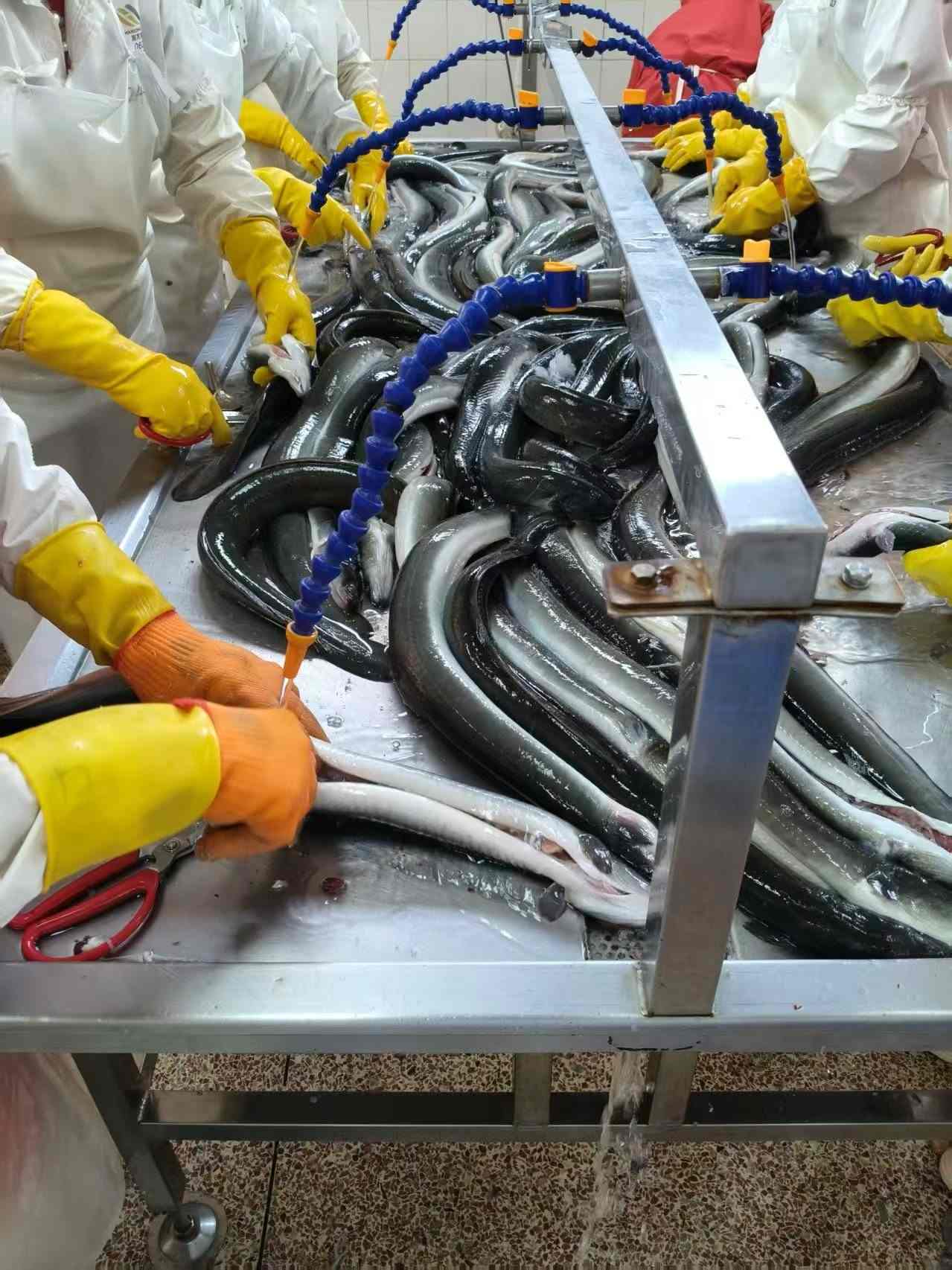
Control Kabayaki Sauce Thickness Without Cornstarch
Your sauce may look glossy in the pan, then turn into a sticky syrup the moment it touches grilled eel. The problem is usually not the ingredients. It is heat, pan shape, and cooling. A good kabayaki sauce recipe should cling to a brush, coat the fish in a thin layer, and leave the surface shiny rather than gummy.
For a brushable glaze, you do not need cornstarch. You need to manage viscosity through controlled evaporation and cooling. This kabayaki sauce recipe approach works especially well when you are preparing sauce before cooking eel, salmon, mackerel, or other rich fish at home.
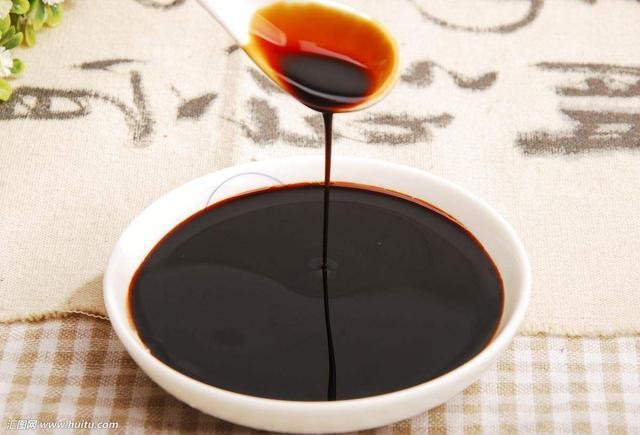
The target is simple: the sauce should flow from a spoon in a smooth ribbon, not fall in heavy blobs. It should spread easily over warm fish, then settle into a light lacquered finish. That is the difference between a proper glaze and a syrupy topping.
Build thickness from reduction instead of cornstarch
A dependable kabayaki sauce recipe builds body by reducing soy sauce, sweet seasoning, and sugar together. The water content gradually leaves the pan, while dissolved sugar and naturally occurring solids remain. The result is a darker, fuller sauce with a clean shine.
Use a short ingredient list. This gives you more control and makes mistakes easier to identify.
- Soy sauce: Provides salt, color, and the savory base. Choose a soy sauce you already enjoy at the table; a harsh or overly salty soy sauce will become more intense as the liquid reduces.
- Sweet seasoning: Mirin-style seasoning or another suitable sweet cooking liquid adds roundness. It fits when you want a Japanese-style glaze. It does not fit if the final dish needs a dry, smoky barbecue profile.
- Sugar: Gives shine and helps the sauce cling after brushing. Use it carefully because sweetness becomes stronger as the sauce reduces.
- Eel trimmings or grilled fish bones: Optional for cooks preparing whole eel. They add a deeper roasted note, but they are not required for a clean home version.
For this kabayaki sauce recipe, start with a mixture that tastes slightly lighter and thinner than the finished sauce you want. This is the right starting point because reduction concentrates salt and sweetness. It is best for sauces made in an open pan. It does not apply to a bottled sauce that has already been balanced by the producer.
If you need a ready-made reference point, compare your homemade batch with an eel sauce product page. A commercial unagi tare can help you identify the expected color, shine, and coating behavior before you adjust your own version.
Use a controlled cooking sequence for a brushable glaze
Treat each kabayaki sauce recipe batch as a small observation exercise. Do not walk away from the pan. Sugar can shift from glossy to bitter quickly once the liquid becomes concentrated.
- Combine ingredients before heating. Stir until the sugar is visibly dissolved as much as possible. This prevents dry sugar from sitting on the pan surface and scorching early. This step suits all home batches; it does not correct soy sauce that is already overly salty.
- Bring the mixture to a gentle simmer. Look for small, steady bubbles across the surface. Avoid a hard boil. Aggressive bubbling throws sauce up the pan sides, increases uneven reduction, and can create a bitter edge.
- Stir around the perimeter. The outer edge thickens first because it receives direct heat. Scrape that concentrated sauce back into the center so the batch stays even. This is especially useful with sugar-heavy formulas.
- Check the spoon trail. Lift a spoon and let the sauce run back into the pan. A finished brushable glaze forms a continuous ribbon, then disappears into the surface without sitting in a mound. If it lands in thick folds, it has reduced too far.
- Remove it while it still seems slightly loose. A kabayaki sauce recipe becomes thicker after heat is removed. Stopping early is the safer choice because you can always return the pan to heat, while an over-reduced batch needs careful dilution.
- Cool before making the final judgment. Transfer a small amount to a cool spoon or plate. Once it loses its steam, test whether it brushes in a thin layer. This is the texture that matters on the fish.
Cold fact: A hot sauce can appear thinner than it really is. The same batch may seem perfect over heat and feel too thick after cooling. That is why checking only in the pan often leads to a syrupy glaze.
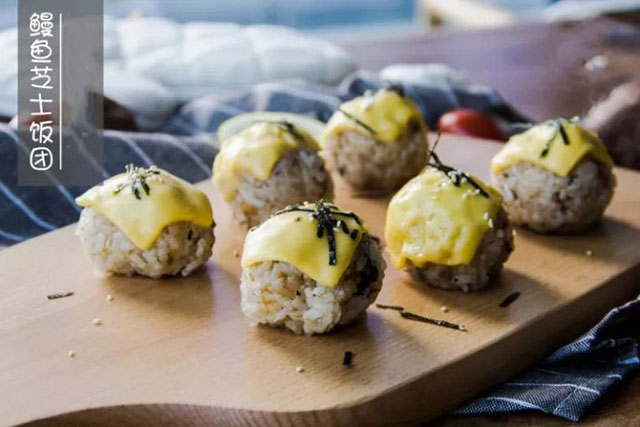
Change simmer time, pan surface area, and cooling to adjust viscosity without starch
The most useful controls in a kabayaki sauce recipe are simmer exposure, pan surface area, and cooling. Each one changes how quickly water leaves the sauce or how thick the sauce feels at serving temperature. Adjust only one factor at a time so you know what solved the issue.
| Control | What it changes | Best use case | Checkpoint | Common failure reason |
|---|---|---|---|---|
| Longer gentle simmer | Removes more water and increases body | Thin sauce that runs straight off a brush | Watch for a smooth ribbon from a spoon | Reducing until it looks thick while hot |
| Shorter simmer | Retains more water and keeps the glaze fluid | Sauce intended for repeated brushing during grilling | Cool a small sample before deciding it is too thin | Serving it before the flavor has blended |
| Wide pan | Exposes more liquid to air and speeds evaporation | Small batches needing faster concentration | Stir the edges often because they reduce first | Using high heat to force an even faster reduction |
| Narrow pan | Slows evaporation and gives more time to observe changes | First-time cooks or sweeter sauce formulas | Keep the simmer calm and consistent | Assuming a slow reduction means the sauce will stay thin |
| Cooling | Reveals the actual brushable texture | Every batch, especially before glazing fish | Test sauce on a cool spoon or plate | Adding cornstarch before checking the cooled sample |
For a thin batch, extend the gentle simmer rather than adding cornstarch. The reasoning is straightforward: reduction strengthens flavor and thickness together. This works when the sauce still tastes balanced. It does not work when the sauce already tastes too salty or too sweet; in that case, further reduction will make the flavor problem worse.
For an over-thick kabayaki sauce recipe, add a small amount of compatible liquid, stir completely, and warm gently only if needed to blend it. Avoid adding a large splash all at once. A gradual correction protects the roasted, savory character you have built.
Avoid the mistakes that turn glaze into syrup
Most failures are easy to prevent once you know where to look. A kabayaki sauce recipe does not need complicated equipment, but it does need attention at the final stage.
- Using cornstarch too early: Cornstarch can make the sauce look thick quickly, but it can mute the clean, reduced character of unagi tare. Use reduction when you want a glossy brushable coating. Starch may be useful for a thick stir-fry sauce, but it is not the best fit for traditional-style eel glazing.
- Cooking at a hard boil: Fast bubbling can darken the sauce unevenly and push sugars toward bitterness. Use a gentle simmer when you want control. High heat may fit a sauce that needs rapid finishing under close supervision, but it gives beginners less margin for error.
- Testing only while hot: Hot liquid hides thickness. Always cool a spoonful before deciding the sauce needs more reduction. This applies to every kabayaki sauce recipe made from scratch.
- Brushing on too much sauce at once: A thick coat can pool, burn, and hide the fish. Apply a light layer, allow the heat of the fish to set it, then add another thin layer if needed. This works well for grilled eel and fish; it does not suit a dish meant to be served with sauce on the side.
- Ignoring the pan edge: Sauce at the rim becomes concentrated before the center. Stir around the edge so the entire batch develops evenly.
If your sauce is sweet but flat, the issue may be ingredient balance rather than thickness. Review the practical checks in this flavor mistake guide before you keep reducing. More cooking cannot fix every flavor problem.
Match the finished sauce to eel and fish preparation
A brushable kabayaki sauce recipe is designed for food that will receive heat after the sauce is applied. Brush it onto grilled eel near the finishing stage so the glaze adheres without becoming heavy. For fish cooked in a pan, apply it after the surface has browned and excess moisture has cooked away.
Frozen eel is particularly convenient for this style of cooking because the sauce can be prepared while the product is thawed or reheated according to its pack instructions. Eelpro supplies unagi kabayaki product options for buyers who want roasted eel with a ready-to-use glaze format rather than raw eel preparation.
For home cooks, choose the sauce texture based on the serving style:
- Rice bowls: Keep it slightly fluid so it can lightly season both eel and rice.
- Sushi-style slices: Make it more brushable and controlled, so the rice stays distinct.
- Grilled fish fillets: Use a thinner glaze if you plan to brush more than once.
- Side dipping sauce: Stop reduction earlier so guests can pour it easily.
These choices are not interchangeable. A glaze that works beautifully on hot grilled eel may feel too dense as a dipping sauce. For more preparation ideas, see these eel cooking methods.
Choose sauce and eel products with the final application in mind
When buying prepared eel or sauce for a restaurant menu, retail program, or home cooking project, decide first whether the sauce will be brushed, poured, or packed separately. That decision affects the desired texture more than a general preference for “thick” or “thin.”
Eelpro Co., LTD produces frozen roasted eel and deep-processed aquatic products through two modern production lines with annual finished-goods capacity of 4,000 tons. Its sauce and eel supply programs are supported by ISO 22000:2018, HACCP, HALAL certification, export food producer registration, and full-chain traceability from customs-registered farming bases through shipment.
For buyers serving Japanese restaurant, foodservice, or retail channels, request product details that match the intended use: separate eel sauce sachets, brushing sauce, or finished frozen unagi kabayaki. Eelpro also applies a 4-layer soy-sauce coating process to roasted eel products, giving buyers a useful benchmark for layered glaze appearance rather than a single heavy coating.
Need help choosing an eel sauce or frozen unagi format for your menu? Request product selection advice from Eelpro.