





Cooling and Portioning Sushi Rice Keeps Your Unagi Hand Roll Crisp Instead of Soggy
Why does your homemade unagi hand roll turn chewy and limp within ten minutes of rolling it? The answer is almost never the eel. It's the rice. Warm sushi rice releases steam, and that steam travels straight into the nori sheet. Softened nori is the single biggest reason a unagi hand roll falls apart in your hand instead of snapping with a clean crunch. Get the rice temperature and portioning right, and the rest of the recipe takes care of itself.
Why Steam From Warm Rice Softens Nori on a Hand Roll
Nori is dried, pressed seaweed with almost no moisture content of its own — usually under 10%. That's what gives it a papery snap when you bite into a good unagi hand roll. Rice fresh off the cooker sits between 140°F and 160°F (60-70°C). At that temperature it's still shedding visible steam. Wrap warm rice in nori, and you trap that steam directly against the sheet. Within two to three minutes the nori absorbs enough moisture to turn rubbery. By the time your unagi hand roll reaches the table, it has already lost the texture that makes the dish worth eating in the first place.
Cold knowledge: professional sushi counters cool rice with a hand fan (uchiwa) specifically to drive off steam faster than air-drying alone — the wafting motion also gives the rice its glossy sheen without mashing the grains.
How Cooling and Portioning Sushi Rice Protects the Nori
This is the core technique behind every crisp unagi hand roll, whether you're rolling one for lunch or forty for a party. Follow these steps in order, and check the temperature at each stage rather than guessing by feel alone.
- Spread rice into a thin layer on a wooden hangiri or shallow sheet pan the moment it finishes cooking. Reasoning: a thin layer sheds heat far faster than a mounded pile. Checkpoint: no more than 3/4 inch (2 cm) deep. Common failure: leaving rice in the cooker on "warm," which holds it above 130°F indefinitely.
- Fan or fold the rice for 60-90 seconds while mixing in seasoned rice vinegar. Reasoning: moving air speeds surface evaporation and drops temperature faster than sitting still. Checkpoint: the surface should look glossy, not wet. Common failure: over-mixing, which mashes grains into paste.
- Let the rice rest until it reaches 85-95°F (29-35°C) before it touches any nori. Reasoning: this range still feels warm to eat but is too cool to generate steam. Checkpoint: use an instant-read thermometer, or test with the back of your hand — it should feel warm, never hot. Common failure: rushing this step and wrapping at 110°F or higher, which defeats the whole process.
- Portion rice right before assembly, roughly 2-3 tablespoons per roll, rather than pre-measuring far in advance. Reasoning: portioned rice left exposed too long dries out and loses stickiness. Checkpoint: portions should hold shape when pressed lightly but still separate into individual grains. Common failure: portioning 30+ minutes ahead, which lets the surface crust over.
- Add the nori sheet last, right before serving. Reasoning: nori exposed to humid kitchen air for more than a few minutes starts losing crispness even with properly cooled rice. Common failure: pre-rolling a full batch of unagi hand rolls for a party table and letting them sit under a cover — the nori softens regardless of rice temperature.
| Rice Stage | Temperature | What To Do |
|---|---|---|
| Just cooked | 140-160°F (60-70°C) | Spread thin, do not touch nori yet |
| Cooling | 95-110°F (35-43°C) | Fan and fold in seasoned vinegar |
| Ready to roll | 85-95°F (29-35°C) | Portion and wrap into the unagi hand roll immediately |
| Too cool | Below 75°F (24°C) | Grains harden; rewarm slightly or repurpose for another dish |
Choosing Eel That Holds Up Inside an Unagi Hand Roll
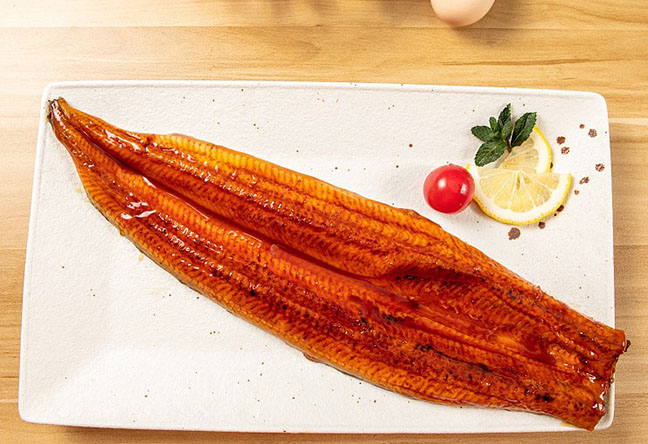
Not every eel preparation belongs in a hand roll. Overly oily kabayaki can bleed grease into the rice and soften the nori from the inside, no matter how carefully you cooled the grains. Look for kabayaki that has gone through a controlled low-fat roasting process rather than heavy deep-frying. Eelpro's frozen unagi kabayaki is finished with four coats of soy-based glaze applied in temperature-controlled steps, building a caramelized surface without an oil pool underneath — a detail that matters more than most home cooks assume when building an unagi hand roll at home.
Reheat frozen fillets by steaming or a brief pan warm-up, then brush on a little eel sauce right before assembly for gloss without adding extra liquid to the rice. For more background on how the glaze itself affects shelf texture, see our notes on kabayaki sauce. If you'd rather roll it sushi-style with rice inside instead of hand-rolled, our unakyu maki guide covers that variation step by step.
Common Mistakes That Ruin a Hand Roll
- Wrapping rice while it's still steaming hot — the single most common reason an unagi hand roll turns soggy within minutes.
- Using cold, refrigerated rice straight from the fridge — starch retrogrades below 40°F, turning grains hard and chalky instead of tender.
- Over-filling with eel and rice so the roll can't close tightly, letting air and moisture circulate and soften the nori faster.
- Assembling rolls too far ahead of serving — even fully cooled rice can transfer ambient humidity to nori over 15-20 minutes.
- Skipping the vinegar-mixing step — unseasoned rice tends to be wetter and stickier, meaning more direct moisture contact with the wrap.
A Quick Assembly Checklist Before You Serve
Say you're prepping unagi hand rolls for eight guests. Cook the rice 20 minutes before they arrive, spread and cool it per the steps above, then hold portioned rice under a damp cloth — not plastic wrap, which traps steam — until the table is set. Bring out the nori and eel last, and roll to order at the table restaurant-style. That one change keeps texture crisp through the whole meal instead of only the first roll.
- Rice cooled to 85-95°F before touching nori?
- Nori opened only when you're ready to build each unagi hand roll?
- Eel patted dry of excess glaze or sauce?
- Portions measured at 2-3 tablespoons per roll?
- Rolls served within 5 minutes of wrapping?
Sourcing Eel That Performs Well for Hand Rolls
Texture problems at home usually start with the rice, but eel quality still matters. Fillets that arrive with freezer burn or excess surface moisture add exactly the kind of dampness this whole process tries to avoid. Products drawn from traceable eel farming bases and kept in continuous cold storage tend to hold their texture better once thawed, since temperature swings during transit are what usually cause moisture separation in the glaze. If you're comparing suppliers before your next batch of unagi hand rolls, our frozen eel supplier page outlines what to check on a spec sheet before ordering.
Want a printable version of the temperature steps above for your kitchen, or curious which kabayaki cut works best for hand-rolling versus nigiri? Reach out for a sample or spec sheet, and let us know what you're serving — we're happy to point you to the right cut.

 WhatsApp
 sales@chinaeels.com
 +8619937922411