





Scaling up a beloved recipe rarely works by simply doubling the quantities. This is especially true for Japanese eel sauce — a balanced syrup of soy, mirin, sugar, and sake. A mistake can throw off months of menu planning. We’ll walk through how to adapt your recipe unagi sauce for restaurant production without losing that signature glaze.
Before you multiply anything, you need to nail the foundation. A standard Japanese eel sauce leans on four ingredients: dark soy sauce, mirin, sugar, and sake. Some kitchens add a touch of kombu dashi or sake lees, but the classic ratio is 4 parts soy, 2 parts mirin, 2 parts sugar, 1 part sake. Simmered gently until it reduces by about a third, the liquid thickens into a glossy, umami-packed glaze.
You might think you can just scale the numbers. Pour 4 liters of soy, 2 liters of mirin, 2 kilograms of sugar, and 1 liter of sake into a large pot and let it bubble. But here’s the catch: evaporation doesn’t scale linearly in a wide, shallow pan versus a tall stockpot. Sugar caramelization changes with volume. A small home batch reduces in 20 minutes; a 10-liter mix can take over an hour. That extra time intensifies the sweetness, sometimes burning the sugar at the edges. So the actual cooking process needs as much rethinking as the ingredient list.
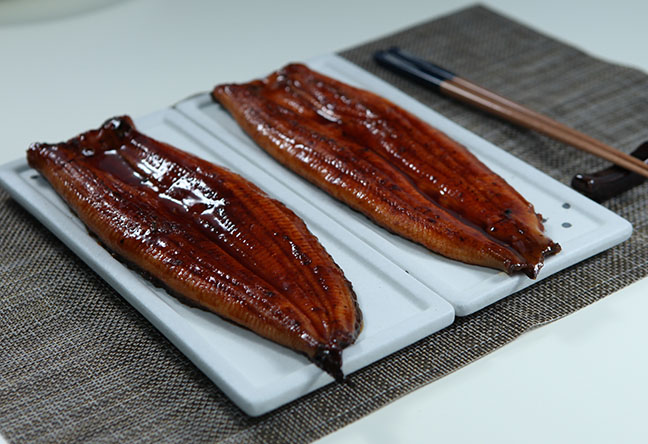
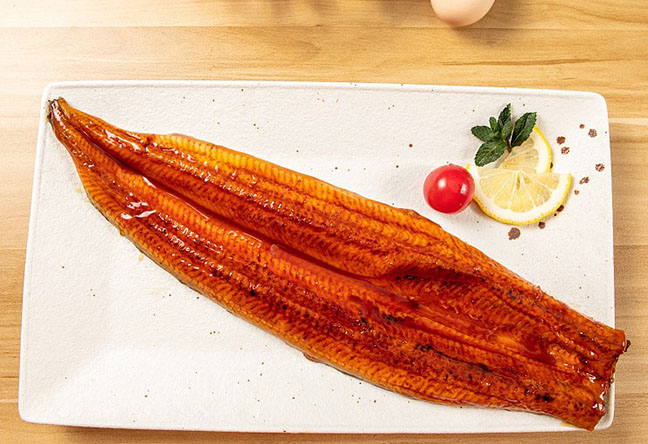
We’ve seen plenty of chefs trying to turn their grandmother’s four-portion recipe into a 50-portion batch and ending up with a syrupy mess. Commercial unagi sauce isn’t just a large home brew. It demands precision. When you’re serving unagi kabayaki to hundreds of guests, the sauce texture must be identical every single service. A few degrees off during reduction and you lose that signature cling.
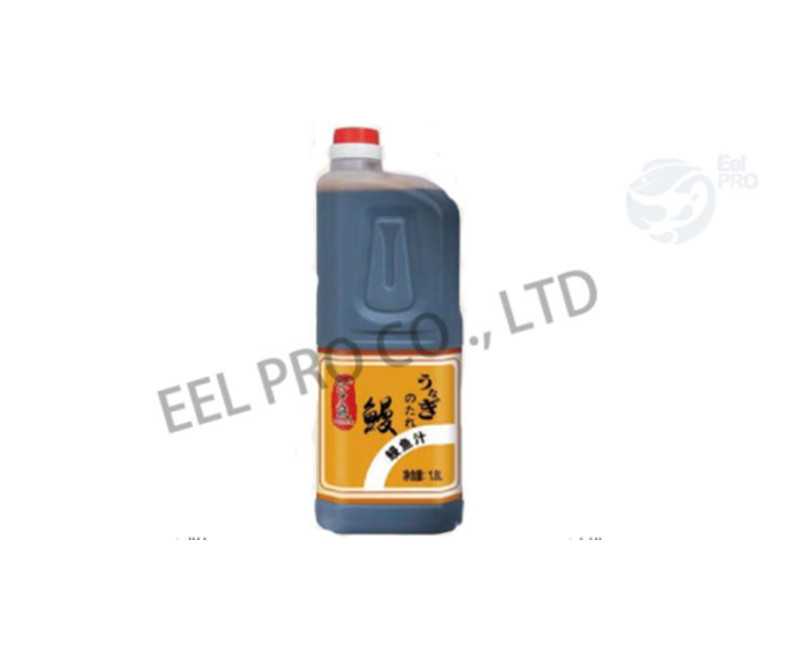
Many restaurant groups eventually opt for a ready-made eel sauce to save kitchen hours and guarantee batch-to-batch consistency. If you’re running a tight brigade, that’s a smart shortcut. But if you’re set on producing your own, you’ll need a systematic approach. Think in terms of yield, not just ingredients.
Let’s turn theory into a working formula. Start with the base ratio and decide your finished volume. Say you want 6 liters of final sauce — enough for about 220–250 unagi donburi. To end up with 6 liters, you’ll need around 9–10 liters of raw liquid, because reduction will shrink the volume by roughly 30–35%. That gives you an initial mixture of:
4.0 L dark soy sauce
2.0 L mirin
2.0 kg white sugar (start with 1.8 kg, adjust to taste)
1.0 L sake
Yes, we reduced the sugar by 10% right out of the gate. Large pots trap more heat, so sugar dissolves and darkens faster. Starting slightly under lets you correct later without over-sweetening. This unagi sauce recipe for restaurants isn’t written in stone — tasting as you go is the real secret. Let the mix simmer at around 85–90°C, never a rolling boil, for 60–75 minutes. Skim any foam. When the liquid coats the back of a spoon and leaves a clear trail when you draw a finger through it, you’re there.

A bulk unagi sauce run demands your full attention. Here's a workflow we’ve refined with several kitchens:
Use a wide, heavy-bottomed stainless steel kettle — a 20–25 liter capacity works for a 10L raw batch. Keep a long-handled wooden spatula, a fine-mesh skimmer, and a reliable probe thermometer within reach. Pre-measure all ingredients. You don’t want to scramble for an extra kilo of sugar while the pot threatens to catch.
Pour the soy sauce, mirin, and sake into the pot. Stir in the sugar until it’s mostly dissolved, then turn the heat to medium-high. Bring the liquid to 90°C slowly — about 20 minutes for a full kettle. Rapid heating can cause uneven caramelization at the base. Once you see the first bubbles, drop the heat to maintain a gentle simmer.
This is where batch size changes everything. A 10-liter batch might need 70–90 minutes of simmering, while a 5-liter batch could be ready in 50 minutes. Don’t walk away. Stir every 5–7 minutes, more often during the final 15 minutes. Skim the froth that accumulates at the surface — it’s just coagulated proteins from the soy and mirin, but leaving it can cloud your sauce.
Dip a metal spoon into the pot. Hold it horizontally. The sauce should cling and drip very slowly. Another test: place a small drop on a chilled plate; it should set up with a jam-like consistency within a minute. At this stage, you can add that reserved sugar if it needs a touch more sweetness. Stir and simmer two extra minutes.
Strain the hot sauce through a fine chinois into a sanitized container. Let it cool with the lid off for 30 minutes, then seal and refrigerate. Rapid cooling is important — we place our containers in an ice-water bath before fridging. This helps preserve that clean, bright flavor you built. If you’re serving eel recipes like unagi noodle soup, this sauce will be the star.
A restaurant’s reputation hangs on consistency. For every batch of bulk unagi sauce, record the exact cooking time, final weight, and a tasting note. This log becomes your audit trail. Small tweaks — a 2°C difference in holding temperature, a different soy sauce brand — can shift the profile. We’ve learned that the kabayaki sauce secret most often lies in the simmer temperature, not an exotic ingredient.
Shelf-life: A properly strained, cooled, and sealed batch can last 3–4 weeks under refrigeration. The high sugar and salt content acts as a natural preservative. For larger operations, we recommend dividing the batch into 1-liter or 2-liter containers to minimize exposure to air each time you open one. Always use a clean, dry ladle. If you spot any mold or fermentation bubbles, discard the container — don’t try to salvage it.
Scaling requires more than simple multiplication. Account for reduced evaporation rates in larger pots, adjust cooking times, and test consistency as you go. We start with a 0.9x factor for sugar when scaling up, then fine-tune. Always work in grams and liters, not "cups."
A 10-liter base mixture typically reduces to 6.5–7 liters of finished unagi sauce. That covers roughly 250–300 servings of unagi donburi. Yield depends on reduction time and desired thickness — a thicker sauce yields less volume.
It really comes down to your kitchen's throughput. For a busy but manageable operation, a 5-liter finished sauce batch is a sweet spot. It stays fresh for 2–3 weeks and doesn’t dominate the stove for hours. Larger batches work if you have blast chillers and sufficient cold storage, but we suggest making no more than you can use in 4 weeks.
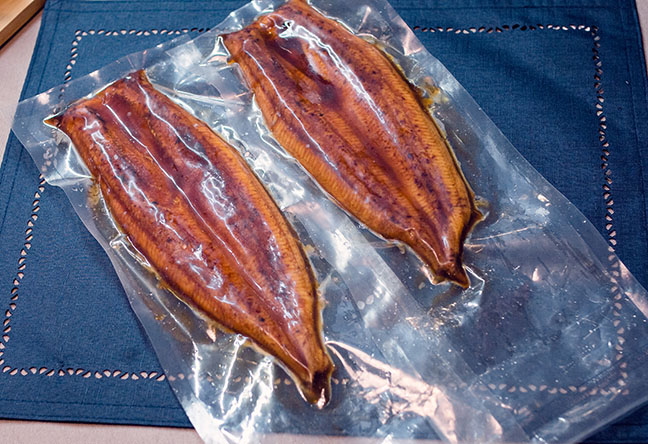
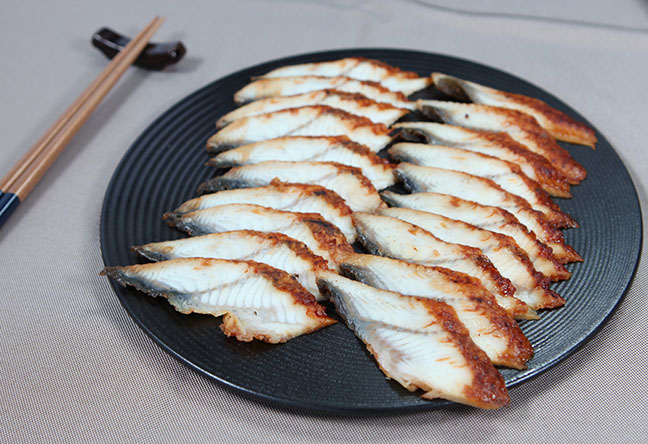
Now you have the blueprint. Whether you craft your own or choose a reliable commercial eel sauce, consistency is everything. At Eelpro Co., LTD, we supply kitchens worldwide with frozen unagi kabayaki and bulk Japanese eel sauce to match. Explore our products and take the guesswork out of your next menu rollout.
 WhatsApp
 sales@chinaeels.com
 +8619937922411