





A Dependable Unagi Don Recipe for Crisp Rice and Glossy Kabayaki Every Time
You reheated the eel. You cooked the rice. Then you plated it — and ten minutes later the skin turned rubbery, the rice went mushy, and sauce pooled at the bottom of the bowl. That's the most common failure point in any unagi don recipe: not the ingredients, but the sequence. Get the order wrong and trapped steam does the damage before you even pick up your chopsticks. This guide, reviewed with input from Nancy Chen, a food safety specialist who has audited eel export lines for over a decade, breaks down the exact assembly order, reheating window, and mistakes to avoid when working with packaged frozen kabayaki eel at home.
What Actually Makes Unagi Don Fall Apart at Home
Three things ruin a bowl in this order: steam, sauce, and timing. Hot rice releases moisture for several minutes after cooking. If glossy kabayaki sits directly on that rice while it's still venting, the skin absorbs the steam and turns soft instead of staying tacky-glossy. Pour sauce before that steam has escaped, and you get a flooded bowl with diluted flavor at the bottom.
Cold-knowledge tip: restaurant kitchens rarely plate rice and eel together immediately after cooking. They let rice rest under a loose lid for a short window first — this single pause is what separates a clean bowl from a soggy one.
The Assembly Sequence That Keeps Steam From Softening the Eel
This is the part most home versions of an unagi don recipe skip. The order below is not decorative — each step controls where moisture goes.
| Step | What To Do | Checkpoint | Common Failure If Skipped |
|---|---|---|---|
| 1. Rest the rice | Uncover cooked rice for 2–3 minutes, fluffing gently | Steam visibly stops rising | Rice stays wet, eel skin softens on contact |
| 2. Reheat kabayaki separately | Warm eel on its own tray or pan, never directly on rice | Fillet reaches 60–65°C at the thickest point | Center stays cold while edges overcook |
| 3. Create a shallow well | Press a slight dip in the center of the plated rice | Sauce collects in the well, not the edges | Sauce runs to the sides and pools under the rice |
| 4. Place eel skin-side up | Lay reheated kabayaki on rice only after resting both | No visible steam fog when eel touches rice | Skin turns rubbery within minutes |
| 5. Sauce in two thin coats | Brush, don't pour — apply half, then the rest after 30 seconds | Glossy sheen, no liquid pooling | One heavy pour floods the rice underneath |
| 6. Serve within 2 minutes | Bring to the table immediately | Eel still holding its glaze | Delay lets residual steam re-soften the skin |
This sequence works for any unagi don recipe made from frozen kabayaki, whether it's a home dinner for two or a foodservice line plating dozens of bowls per hour.
Choosing Frozen Kabayaki That Holds Up to Reheating
Not all packaged eel behaves the same once it hits heat. Fat content, cut style, and the roasting process all affect whether the skin stays glossy or turns tough.
| Cut Type | Best For | Reheat Behavior | Note |
|---|---|---|---|
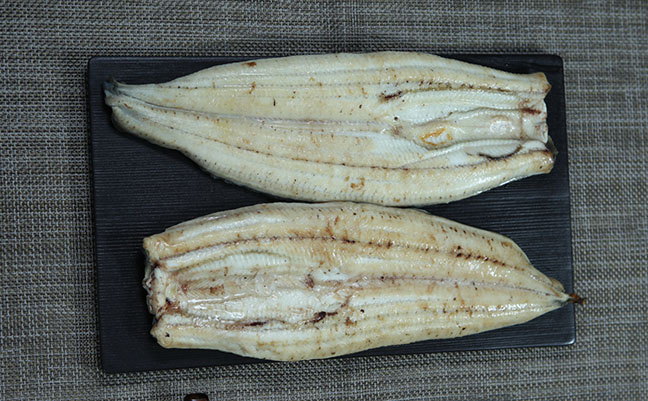
| Whole kabayaki fillet | Classic donburi presentation | Even glaze, holds shape | Needs full reheating time to warm the center |
| Cut pieces (chunk-cut) | Faster plating, portion control | Reheats quickly, edges can dry first | Watch timing closely to avoid drying |
| Skewers | Grilled presentation, smaller servings | Even heat but less sauce surface | Good for tasting portions, less ideal for full bowls |
Eelpro's process applies a patented low-fat roasting method with a 4-layer soy-sauce coating, which is why the glaze holds its color and doesn't turn bitter under a second reheat — a common issue with thinner, single-coated kabayaki. Products meeting export standards for Japan, the US, and the EU also tend to hold texture better after freezing, since fat and moisture content are controlled more tightly during processing. You can review the full unagi kabayaki product specs before ordering samples.
Reheating Frozen Unagi Kabayaki Without Drying Out the Fillet
- Thaw sealed kabayaki in the refrigerator overnight, or under cold running water for 20–30 minutes if pressed for time.
- Preheat oven to 180°C (350°F). Wrap eel loosely in foil to trap moisture.
- Heat for 8–10 minutes, then open the foil for the last 2 minutes to firm the skin.
- Check internal temperature reaches 60–65°C — this is warm enough to serve safely without pushing past the point where fat renders out and the skin turns leathery.
- Rest on a wire rack for 1 minute before plating — this prevents condensation from forming under the fillet.
Skipping the foil step is the most common reason kabayaki dries out at the edges before the center warms through. If you're testing a batch for a menu, this reheating window is the same one we'd recommend checking against any unagi don recipe you're scaling for volume service.
Common Mistakes When Building an Unagi Don Bowl
- Pouring sauce before the eel is warm — cold sauce on cold eel never develops the glossy finish; always sauce after reheating, not before.
- Skipping the rice rest — plating straight off the rice cooker traps steam under the eel skin.
- Over-sauced bowls — more than two light coats usually floods the rice; check our kabayaki sauce guidance on how much glaze a standard fillet actually needs.
- Reheating from frozen without thawing — this cooks the outside before the center reaches temperature, leaving a cold middle.
- Letting the bowl sit before serving — even a 5-minute delay lets residual steam soften the skin again.
Sourcing Consistent Kabayaki for Restaurants and Retail
Home cooks can troubleshoot one bowl at a time. Foodservice buyers can't — consistency has to be built into the product before it reaches the kitchen. That's the difference between a one-off unagi don recipe success and a menu item that performs the same way every service.
Eelpro operates two production lines with a combined annual capacity of 4,000 tons, supported by roughly 20 customs-registered farming bases covering over 2,150 mu, with traceability from farm registration through process verification and sampling. A 1,000-ton cold storage facility keeps product quality stable through the cold chain, and an in-house laboratory with metal detectors at critical control points backs up the ISO 22000:2018, HACCP, and HALAL certifications under SC production license No. SC11135062401122. For buyers comparing suppliers, that traceability chain matters more than any single batch tasting well — it's what keeps reheating behavior consistent across shipments.
If you're building a donburi menu at scale, our frozen eel supplier page outlines cut specifications and packaging formats, including skin-packaging and gift-box options for retail.
A Quick Reference for Plating Order
If you remember nothing else from this unagi don recipe, remember the order: rest the rice, reheat the eel separately, create a well, place the eel, sauce twice lightly, serve fast. Each step exists to keep moisture where it belongs instead of where it ruins the texture. This same logic applies whether you're working from a single fillet at home or plating for a lunch rush — the physics of steam and sauce don't change with volume.
For more ways to build a rice bowl beyond the classic format, our donburi topping ideas cover pairing options that hold up under the same reheating rules. And if sauce consistency is your bigger concern, the eel sauce product page details viscosity and coating behavior across batches.
The rendering of fat during roasting is related to the same browning chemistry known as the Maillard reaction, which is part of why properly reheated kabayaki develops that deep glossy color instead of a flat, steamed look.
Want to test how a specific cut or packaging format holds up in your kitchen? Request a sample of frozen unagi kabayaki or ask for a spec sheet before your next order — happy to walk through reheating behavior for your setup.
 WhatsApp
 sales@chinaeels.com
 +8619937922411