





How to Shape Unagi Eel Sushi Nigiri Without Tearing the Fillet
Reviewed by Nancy Chen, Senior Food Safety & Quality Specialist (ISO 22000 & HACCP certified auditor), Eelpro Co., LTD.
You pull a pack of frozen kabayaki eel from the freezer, thaw it, and try to press it onto a ball of rice. The fillet splits down the middle. Sauce smears across your cutting board. If you've tried making unagi eel sushi at home, you already know this frustration — the eel looks perfect in the package, then falls apart the moment you try to shape it. The fix isn't a sharper knife. It's temperature control and trimming order, done in a specific sequence.
Why Kabayaki Eel Tears Before It Ever Reaches the Rice
Pre-cooked kabayaki eel is soft by design — that's what makes it melt in your mouth. But that same softness is fragile once frozen. Ice crystals form inside the muscle fibers during freezing, and if the fillet thaws unevenly, those fibers separate the moment you apply pressure. Add a heavy glaze of sticky eel sauce on a cold fillet, and the sauce acts like glue on one side while the flesh stays stiff on the other — a tear practically writes itself.
Most home tearing problems trace back to one of these habits:
- Microwaving straight from frozen — the outside overcooks while the center stays icy, creating uneven texture.
- Cutting against the fat line instead of following it, which shears the skin layer.
- Skipping the resting step after warming, so the fillet is still tight and inflexible when shaped.
- Applying sauce before cutting, which makes the knife slip instead of slice cleanly.
How Warming and Trimming Pre-Cooked Kabayaki Eel Prevents Tearing While Shaping Nigiri
This is the sequence that actually matters. Skip a step, and the tear risk goes up even if every other part of the process is right.
| Step | Action | Key Checkpoint | Common Failure Reason |
|---|---|---|---|
| 1. Thaw | Move the fillet to the refrigerator 8-12 hours ahead, or use a sealed cold-water bath for 20 minutes | Internal temperature reaches 34-40°F (1-4°C) evenly throughout | Room-temperature thawing softens the surface while the core stays frozen, causing tearing during handling |
| 2. Warm | Steam or oven-warm sauce-side up at 300°F (150°C) for 4-6 minutes | Center reaches 140-150°F (60-65°C), sauce looks glossy, not bubbling | Overheating dries out the collagen layer, making the skin brittle and prone to cracking |
| 3. Rest | Let it sit covered for 2-3 minutes off heat | Fillet flexes without cracking when you lift one end | Skipping this step means the fillet is still tight and snaps when cut |
| 4. Trim | Cut into nigiri-sized pieces, roughly 2.5 x 6 cm (1 x 2.4 in), using a wet, sharp knife | Clean edge with no frayed skin | A dull knife drags the skin along the fat line instead of slicing through it |
| 5. Shape | Drape the trimmed piece over the rice ball, pressing gently from center outward | Eel conforms to the rice curve without cracking in the middle | Pressing hard on a still-cold fillet causes it to snap rather than bend |
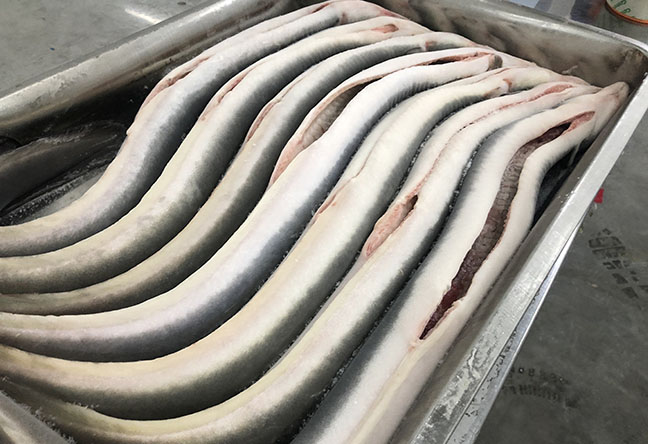
This method applies specifically to pre-cooked, previously frozen kabayaki eel — the kind most home cooks buy for sushi night. It doesn't apply if you're starting from raw eel; that process involves live handling, skinning, and deboning before any cooking happens, which is a separate skill covered in our cleaning, skinning and deboning guide.
Choosing the Right Kabayaki Eel Cut for Nigiri at Home
Not every kabayaki cut is meant for nigiri. Picking the wrong one is a common reason home cooks fight the fillet instead of shaping it.
| Cut Style | Best For | Shaping Ease | Notes |
|---|---|---|---|
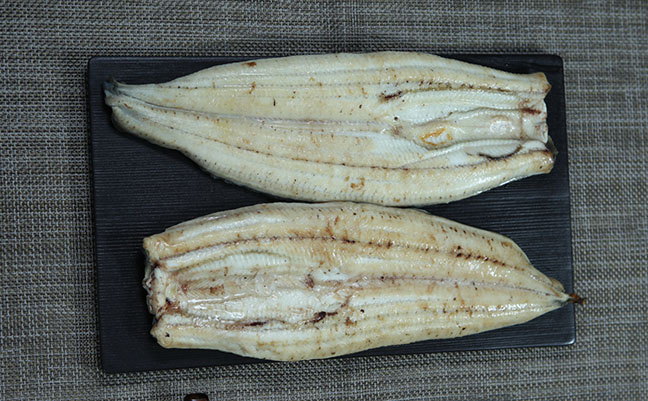
| Whole fillet (self-trimmed) | Cooks who want custom nigiri size | Moderate — requires trimming skill | Most economical option, needs a sharp knife and steady hand |
| Pre-cut nigiri slices | First-time nigiri makers | High — ready to drape | Consistent thickness, less trimming waste |
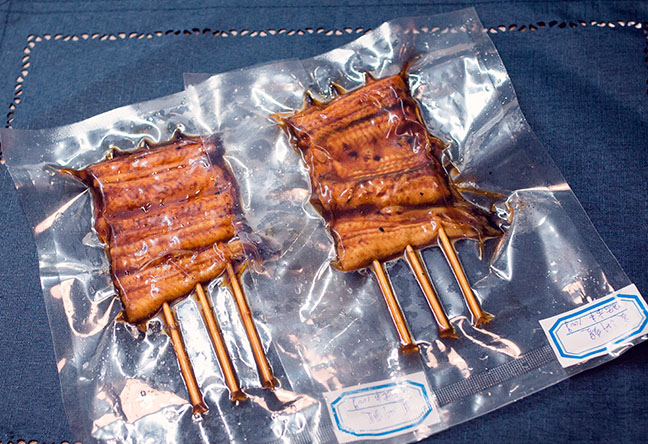
| Kabayaki skewers | Donburi bowls, not nigiri | Low for nigiri shaping | Better suited for rice bowls — see eel rice bowl toppings for ideas |
If you're new to plating unagi eel sushi, pre-cut nigiri slices remove one variable — you only need to master warming and pressing, not trimming. Once you're comfortable, a whole unagi kabayaki fillet gives you more control over portion size and rice-to-eel ratio.
A Cold-Storage Fact Worth Knowing
Kabayaki eel loses texture fastest between -4°C and 0°C — the temperature range where ice crystals grow largest during slow freezing or partial thawing. Keeping the fillet at or below -18°C until you're ready to thaw it protects the fiber structure and reduces tearing later. This is the same principle behind commercial cold-chain storage, just scaled down to a home freezer.
Assembling the Nigiri — Rice Temperature, Sauce Timing, and the Final Press
Once the eel is trimmed, the rice and sauce sequence decides whether the piece holds together on the plate.
- Shape sushi rice into ovals around 15-20g each, warm to body temperature (around 98°F/37°C) — cold rice won't bind to the eel.
- Add a small dab of wasabi to the rice if desired, not directly on the eel.
- Drape the trimmed kabayaki piece over the rice, skin-side down where applicable.
- Brush a thin layer of warmed eel sauce (unagi tare) over the top after placement, not before — sauce applied too early makes the fillet slippery during shaping.
- Press gently with your thumb from the center outward, molding the eel to the rice curve rather than flattening it.
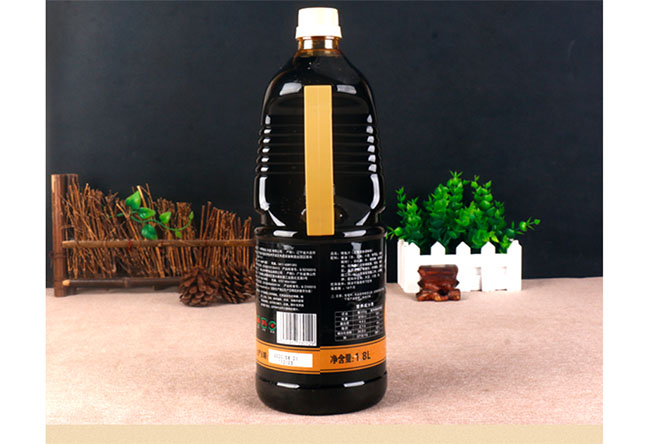
The sauce itself matters here too. A thin, well-reduced glaze clings without pooling, while a thick or under-reduced sauce adds weight that can pull the fillet apart at the fold. If you want the reasoning behind sauce consistency, our article on why our kabayaki sauce works covers the reduction process in more detail.
Buyer's Checklist — What to Look for Before You Buy Kabayaki Eel
Since most home cooks in the US, EU, Australia, and Southeast Asia rely on imported frozen eel, quality starts before the fillet ever reaches your kitchen. A few checks help avoid tearing problems that stem from poor sourcing rather than technique:
- Vacuum-sealed, skin-tight packaging with no visible freezer burn or ice crystals inside the bag.
- ISO 22000 or HACCP certification listed on the supplier or product page — this indicates controlled processing and cold-chain handling.
- Confirmed storage below -18°C throughout transit, not just at the warehouse.
- Traceable sourcing, ideally from registered farming bases rather than unverified bulk suppliers.
These aren't just paperwork items — they directly affect whether the fillet you buy holds together when you shape it into unagi eel sushi. A fillet that's been temperature-abused in transit tears no matter how carefully you warm and trim it at home. Eelpro's own supply runs through registered farming bases and an in-house lab for exactly this reason.
Once you've nailed the warming and trimming sequence, the rest of the plate falls into place quickly — a bowl of unakyu maki or a side of eel noodle soup rounds out a home sushi night without much extra prep. If you're sourcing kabayaki eel for a restaurant menu rather than a home kitchen, request a sample or spec sheet from our team — we can match cut size, sauce coating, and packaging to your prep line before you commit to an order.
 WhatsApp
 sales@chinaeels.com
 +8619937922411