





How to Make Unagi Fried Rice with Separate, Glossy Grains Every Time
Why does restaurant-style unagi fried rice look glossy and separate, while the homemade version turns into a sticky, gray clump within minutes of plating? The answer usually has nothing to do with the eel and everything to do with rice moisture, wok temperature, and when you add the sauce. Get those three variables wrong and even premium unagi rice turns mushy. Get them right, and each grain stays distinct while the grilled eel keeps its silky texture instead of turning rubbery.
This guide breaks down the exact sequence professional kitchens use for eel rice bowls and fried rice service, plus the failure points that ruin batches at home. We will also cover which rice grade to buy, how to time your unagi tare addition, and how to keep grilled eel from drying out during the toss.
What Rice Is Best for Unagi Fried Rice
Short-grain Japanese rice (Koshihikari or similar cultivars) is the standard choice for unagi rice bowls, but it is actually a poor fit for fried rice. Its high starch content makes it clump under high heat. For fried rice specifically, day-old medium-grain rice with lower moisture content performs far better.
- Best option: day-old jasmine or medium-grain rice, cooked slightly firmer than usual (reduce water by 5-10%). Reasoning: lower surface starch and moisture mean grains separate under wok heat instead of steaming into a paste.
- Acceptable option: fresh short-grain rice, spread thin on a tray and refrigerated uncovered for 45-60 minutes. This dries the surface enough to mimic day-old rice when you're short on time.
- Avoid: rice cooked the same day and used warm. Warm rice still carries internal steam, which condenses in the wok and guarantees a soggy result — this is the single most common mistake home cooks make.
Scenario: if you're prepping eel rice bowls for a weekend dinner service, cook your rice the night before, cool it uncovered for 20 minutes, then refrigerate. This single step does more for texture than any wok technique.
Rice Temperature, Wok Heat, and Tare Timing — The Three Variables That Prevent Sogginess
This is the section most recipes skip, and it's the actual mechanism behind glossy, separate grains. Three factors interact here: how cold your rice is going in, how hot your wok stays throughout, and the exact moment you introduce liquid seasoning.
| Variable | Target Condition | Why It Matters | Common Failure |
|---|---|---|---|
| Rice temperature | Cold, straight from the fridge (around 4°C/39°F) | Cold starch granules resist clumping; residual surface moisture evaporates fast on contact with a hot wok | Using room-temperature or warm rice — grains steam instead of frying |
| Wok heat | High heat maintained throughout, not just at the start | Constant high heat flash-evaporates moisture on contact, keeping grains dry and separate | Heat drops after adding rice because the pan is overcrowded or the stove is underpowered — rice sits and steams |
| Tare timing | Added in the last 30-45 seconds, off direct high flame or on reduced heat | Unagi tare is sugar-heavy and burns fast; adding it early scorches the sauce and oversoaks the rice before frying finishes | Pouring tare in at the start — rice absorbs liquid before grains have separated, resulting in sticky clumps |
Step-by-Step Procedure
- Heat the wok dry for 60-90 seconds until it's smoking slightly, then add oil.
- Add cold rice in one motion, breaking clumps immediately with the back of your spatula.
- Toss constantly for 90 seconds without stopping — this is the window where grain separation happens.
- Push rice to one side, add diced vegetables or egg, cook 30 seconds, then combine.
- Fold in pre-warmed, sliced grilled eel (see next section for exact timing).
- Drizzle unagi tare around the edge of the wok, not directly onto the rice pile, then toss for 20-30 seconds to distribute evenly.
- Remove from heat immediately once the sauce is glossy and coated — extended cooking after this point dries out the eel.
Failure reason checklist: if your fried rice still turns soggy after following this order, check whether your wok lost heat when the rice went in (a cold pan is the most frequent culprit), or whether you used fresh rice instead of dried, day-old rice.
When Should Unagi Be Added to Fried Rice
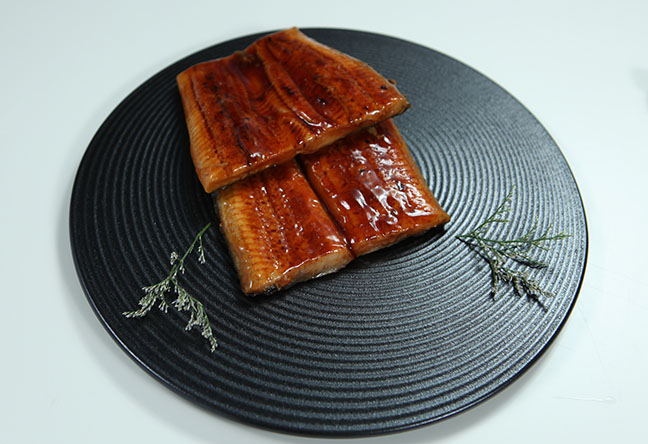
Timing the eel matters as much as timing the sauce. Grilled eel, whether you're using frozen unagi kabayaki or fresh grilled fillets, is already fully cooked and glazed. Adding it too early in the fry cycle dries it out and can shred the delicate flesh under repeated tossing.
- Correct timing: add sliced eel in the last 45-60 seconds, after the rice grains have already separated. This warms the eel through without cooking off its natural moisture.
- Method: thaw kabayaki gently in its sauce packet, warm briefly in a steamer or low oven (150°C/300°F for 4-5 minutes), then slice and fold into the fried rice at the very end.
- What to avoid: adding cold or partially frozen eel directly into a hot wok. The temperature shock breaks down the glaze and turns the surface tough.
This sequencing also protects the flavor of the tare glaze already on the kabayaki. If you plan to add extra eel sauce on top of the fried rice, do it as a final drizzle after plating, not during the wok toss — this keeps the sauce glossy rather than absorbed into the grains.
Common Mistakes That Ruin Unagi Fried Rice
- Overcrowding the wok. A home stove burner rarely produces enough BTU output for large batches. Cook in batches of 2 cups of rice or less per pass.
- Skipping the rice-drying step. Fresh rice has too much surface moisture; this is the top cause of clumping.
- Adding tare too early. Sugar in the sauce caramelizes and burns before the rice finishes frying, giving a bitter edge.
- Overcooking the eel. Kabayaki only needs reheating, not additional cooking — extended wok time turns it chewy.
- Using table salt instead of tare for seasoning. Tare carries the umami base (soy, mirin, sugar) that defines the dish; salt alone flattens the flavor.
Buyer's Checklist Before Sourcing Ingredients
For chefs and importers evaluating suppliers before building an eel rice bowl or fried rice menu item, a few sourcing questions decide whether the final dish holds up under service volume:
- Does the kabayaki come pre-glazed with tare, or will you need to source sauce separately? (Eelpro supplies both together or independently.)
- Is the eel individually vacuum-packed for portion control, or bulk-frozen in blocks?
- What is the sauce viscosity — thin tare works better for drizzling, thicker tare for glazing during reheat.
- Can the supplier provide a sample batch before a full container order?
For teams building a broader eel menu, it's worth reviewing eel rice bowl topping ideas and comparing them against fried rice applications — some toppings that work for donburi (like scallion oil or pickled ginger) do not hold up well under wok heat.
Cost Consideration for Menu Planning
Frozen kabayaki portions typically cost less per serving than fresh grilled eel prepared in-house, since labor and grilling equipment costs are removed from the equation. For a restaurant testing a new eel rice bowl or fried rice dish, ordering a smaller trial case of frozen eel supplier stock before committing to bulk volume reduces waste risk if the dish doesn't perform on the menu.
FAQ
How do you keep unagi fried rice from getting soggy?
Use cold, day-old rice with reduced moisture, keep wok heat high and constant, and add tare only in the final 30-45 seconds. Each of these independently reduces sogginess; skipping any one of them increases the risk significantly.
What rice is best for unagi fried rice?
Day-old medium-grain rice cooked slightly firmer than normal. Traditional short-grain sushi rice works for rice bowls but tends to clump in fried rice applications due to its higher starch content.
When should unagi be added to fried rice?
In the last 45-60 seconds of cooking, after the rice has already separated and other mix-ins are incorporated. Adding it earlier dries out the flesh and breaks down the glaze.
For a deeper look at balancing sauce reduction and glaze consistency, see this breakdown on kabayaki sauce formulation, and for troubleshooting flavor issues in your tare batches, check the kabayaki sauce recipe fixes guide. The starch behavior described above draws on general principles of rice cooking chemistry, which explains why grain age and moisture content matter more than most home cooks expect.

If you're sourcing kabayaki or tare for a fried rice menu trial, request a sample batch or spec sheet from our team before placing a full order — it's the fastest way to confirm glaze consistency and portion sizing match your kitchen's needs.
 WhatsApp
 sales@chinaeels.com
 +8619937922411