

Unagi Roll Ingredients Every Home Cook and Buyer Should Know Before Sourcing
You defrost a pack of eel, grab nori and rice, and then stall. What else actually goes into an unagi roll? Skip one component and the roll falls apart — literally, on the cutting board. This guide breaks down the unagi roll ingredients that are essential, the ones that are optional, and where buyers most often get sourcing wrong before a menu launch or a home dinner.
The Core Unagi Roll Ingredients List
An unagi roll, sometimes called eel maki or unakyu maki when cucumber is added, is built around five fixed components. Everything else is style, not structure.
| Component | Role in the Roll | Typical Spec |
|---|---|---|
| Roasted eel (unagi kabayaki) | Main protein, flavor anchor | Boneless fillet, soy-glazed, pre-cooked |
| Sushi rice | Structure and acidity balance | Short-grain, seasoned with rice vinegar |
| Nori (seaweed sheet) | Wrap that holds the roll together | Toasted, full or half sheet |
| Eel sauce (unagi tare) | Sweet-savory glaze, finishing flavor | Soy-based, reduced with sugar and mirin |
| Sesame seeds | Texture and visual finish | Toasted, white or black |
Remove the eel or the rice and it stops being a roll. Remove sesame seeds and nobody notices. Quality varies widely between brands here — our eel sauce line lists reduction ratios and salt content for buyers comparing suppliers. That distinction between fixed and flexible matters more than it sounds, which is exactly why the next section separates what's required from what's optional.
Essential Eel Maki Components vs Optional Fillings, Toppings, and Garnishes
This is the question we get most from foodservice buyers building a menu around unagi roll ingredients: what do we actually need to stock, and what can we treat as an upsell? Here are direct answers.
What are the essential eel maki components?
Four items are non-negotiable: roasted eel, sushi rice, nori, and eel sauce. Drop any one and the dish is no longer recognizable as unagi maki. A roll made with rice, nori, and cucumber but no eel is a cucumber roll — not eel maki, regardless of what the menu calls it.
What fillings are optional, not essential?
Cucumber, avocado, and cream cheese show up often but none of them define the roll. Unakyu (eel plus cucumber) is the most common variant, but plenty of authentic versions skip cucumber entirely and rely on eel and rice alone.
What toppings and garnishes can I skip without changing the roll's identity?
Sesame seeds, scallion, tobiko (flying fish roe), and torched mayo are all garnish-level additions. They change presentation and support a higher price point on menus, but none of them are part of the base recipe.
Where's the line between a standard unagi roll and a specialty roll?
Once you add a second protein, a sauce beyond tare, or a tempura crunch layer, you've moved into specialty territory — dragon rolls and rainbow rolls, for example. Those builds still start from the same essential eel maki components; they just stack extras on top.
| Category | Examples | Required? |
|---|---|---|
| Essential | Roasted eel, sushi rice, nori, eel sauce | Yes — defines the dish |
| Optional fillings | Cucumber, avocado, cream cheese | No — regional/style variation |
| Optional toppings/garnish | Sesame seeds, scallion, tobiko, torched mayo | No — presentation and upsell only |
How to Choose Eel and Sauce for Your Roll
Getting these unagi roll ingredients right starts with two things: eel quality and sauce quality. Use this checklist before placing an order.
- Check the fat content of the eel. Overly fatty fillets turn greasy after glazing; low-fat processed eel holds its texture better through reheating.
- Confirm the eel is boneless. Deboned kabayaki cuts prep time in a commercial kitchen and avoids the single biggest complaint on eel dishes — bones.
- Ask whether the sauce is pre-reduced. A properly reduced eel sauce should coat the back of a spoon; thin sauce usually means it was diluted, not simmered through a full soy-layering process.
- Verify cold-chain handling. Frozen unagi that thawed and refroze in transit loses texture — request cold storage documentation from your supplier.
- Match the cut to your format. Sushi slices for maki are different from chunk-cut for donburi bowls; confirm the cutting spec before ordering.
For sourcing, frozen unagi kabayaki that's already boneless and pre-glazed removes most of this guesswork for foodservice kitchens working on tight prep schedules.
Common Mistakes When Sourcing Unagi Roll Ingredients
- Buying eel sauce and eel glaze as if they're identical. Some bottled sauces are thinner teriyaki blends, not true tare — check the ingredient list for soy sauce, sugar, and mirin as the base three.
- Skipping a taste test after thawing. Eel that tastes fine frozen can shift after thawing if the cold chain was broken; always taste-test a sample batch before a full order.
- Assuming all kabayaki is roasted the same way. Roasting layers vary — a rushed single-glaze product tastes noticeably flatter than one built through multiple soy-sauce coating passes.
- Ignoring bone content in bulk orders. Ask suppliers directly whether fillets are deboned; this is a common complaint point in bulk foodservice orders.
- Over-relying on garnish to fix a weak base. Extra tobiko or torched mayo won't cover for low-grade eel or thin sauce — fix the core four ingredients first.
Step-by-Step: Assembling an Unagi Roll
- Prep the rice. Cook short-grain rice, season with rice vinegar while warm, and let it cool to room temperature before rolling.
- Warm the eel. Reheat pre-glazed kabayaki gently — oven or pan, not microwave — to keep the glaze from separating.
- Lay the nori. Shiny side down on a bamboo mat, rice spread in an even layer with a 1-inch border left at the top edge.
- Add the eel and any optional filling. Place strips along the center line; add cucumber or avocado here if using.
- Roll and seal. Use the mat to roll tightly, sealing the border edge with a few grains of rice.
- Glaze and garnish. Brush eel sauce over the top, then finish with sesame seeds or scallion as desired.
- Slice. Cut into 6-8 pieces with a wet, sharp knife to keep edges clean.
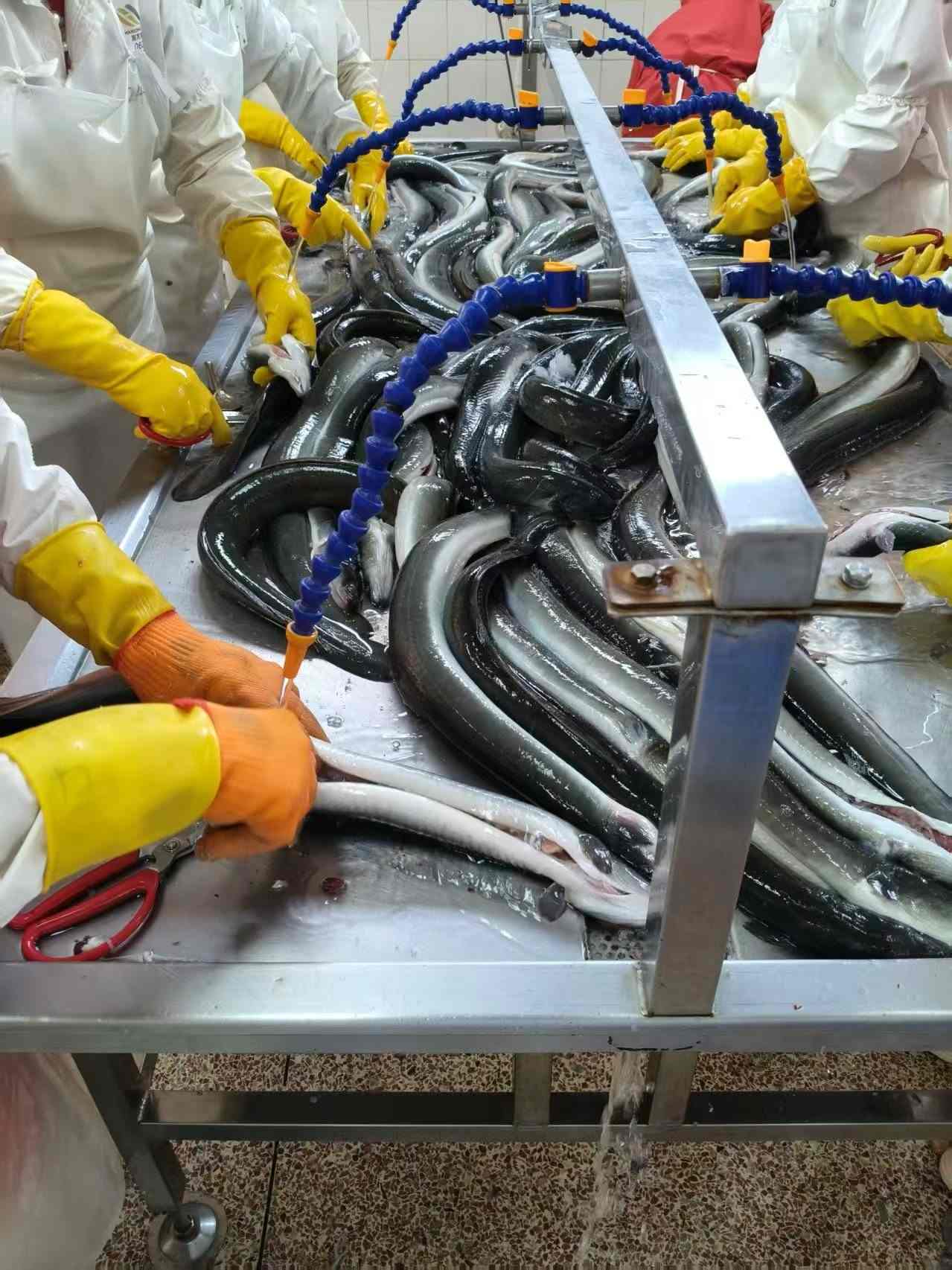
For a deeper look at technique, our unagi roll recipe walks through timing and roll tightness in more detail, and the cleaning, skinning and deboning guide is worth reading if you're working with whole eel rather than pre-processed fillets.
Cost Breakdown for Foodservice Buyers Sourcing Eel Maki Ingredients
Menu pricing for unagi roll ingredients depends on which items you treat as base cost versus upsell. A rough per-roll breakdown for a foodservice kitchen sourcing in bulk looks like this:
| Ingredient | Share of Roll Cost (Approx.) | Notes |
|---|---|---|
| Roasted eel | 50-60% | Largest cost driver; boneless cuts reduce labor cost too |
| Sushi rice | 10-15% | Stable, low-volatility cost |
| Nori | 5-8% | Minor cost, but quality affects wrap integrity |
| Eel sauce | 8-12% | Cost rises with reduction quality and soy content |
| Optional fillings/garnish | 10-15% | Flexible — can be scaled up as a premium upsell |
Eel typically drives more than half the ingredient cost on any unagi roll, which is why sourcing directly from a supplier running full-chain traceability — from certified farming bases through processing — tends to hold pricing more stable than buying through multiple resale layers.
Where Quality Control Fits Into Unagi Roll Ingredients
For import buyers, ingredient quality isn't just about taste — it's about compliance. Eel headed to the US, EU, or Japanese market needs to clear veterinary drug residue and microbiological testing before it reaches a commercial kitchen. Facilities working under HACCP protocols, with in-house labs and metal detectors at critical control points, catch these issues before shipment rather than after a customs hold. That's a meaningfully different risk profile than sourcing eel through an unverified reseller with no traceability back to a registered farm.
None of this changes what goes into the roll on the plate. But it does change whether the eel and sauce you're building the roll around are safe to put in front of a paying customer — worth checking before the ingredients list, not after.
Curious how eel sauce is made and stored at volume? Our kabayaki sauce breakdown covers reduction ratios and shelf stability in more depth.
Ready to source pre-glazed kabayaki or bulk eel sauce for a menu trial? Request a sample pack or spec sheet before your next order to confirm cut, fat content, and sauce consistency match your recipe.