

Japanese Eels in Aquaculture: Farming Methods
Japanese eels are raised through a carefully managed aquaculture process, yet most commercial production does not begin with eggs produced on a farm. This distinction influences feed planning, stocking, traceability, and supply risk for buyers and food lovers alike. A warm bowl of unagi rice may look simple on the table, but it depends on a demanding production chain.
Picture the finished dish: glossy sauce, tender flesh, and smoke rising from the grill. Before reaching the table, the eel passes through juvenile stocking, feed management, water monitoring, grading, harvesting, processing, and cold-chain handling. This guide explains how the system works and what commercial buyers should consider when choosing freshwater eels, frozen unagi kabayaki, or related products.
What Are Japanese Eels in Aquaculture?
The Japanese eel, commonly known as Anguilla japonica, is a migratory eel species associated with rivers, lakes, estuaries, and coastal waters across East Asia. Its life cycle is unusual: mature adults migrate toward the ocean to spawn, while young eels later move into freshwater and coastal habitats to grow.
Commercial farms generally raise young eels, often called glass eels or juvenile eels, after they have been collected from natural recruitment areas. Farms then provide controlled conditions to support growth. This differs from producing every life stage within a hatchery.
For B2B buyers, the distinction matters. “Farm-raised” does not automatically mean “fully closed-cycle bred.” A supplier should be able to explain whether its raw material comes from farm-raised juveniles, hatchery-produced juveniles, or another legally documented source.
How Are Japanese Eels Farmed?
So, how are Japanese eels farmed? The process usually begins when juvenile eels are stocked into prepared ponds, tanks, or recirculating production units. The exact setup varies by region, farm scale, water source, and production target.
1. Juvenile eel stocking
Young eels are delicate and require careful acclimation. Sudden changes in water quality, salinity, temperature, or handling conditions can cause stress. Farms typically inspect incoming juveniles, remove weak specimens where appropriate, and introduce the remaining fish gradually.
Stocking density must be managed throughout the production cycle. Eels do not all grow at the same rate. When smaller fish remain mixed with much larger fish for too long, competition for feed and space may increase. Regular grading helps farms separate size groups and plan feed more accurately.
2. Water and growth conditions
Water management is central to Japanese eel farming. Operators monitor conditions that affect appetite, movement, oxygen availability, and waste removal. Depending on the production system, this may include water temperature, dissolved oxygen, acidity or alkalinity, ammonia, turbidity, and water exchange.
Warm-water conditions generally support eel activity and feeding, but targets must be managed rather than assumed. Sudden changes can be more damaging than a stable reading that sits slightly outside a preferred range. Farm teams therefore carry out routine checks and adjust aeration, flow, feeding, or water replacement as conditions change.
In pond systems, natural microorganisms and sediment management can affect the production environment. In tank-based systems, filtration and water circulation take on more of the workload. Recirculating systems can reduce water use, but they also rely on equipment, monitoring, backup planning, and trained operators.
3. Feed management
Feed is a major operating concern in unagi aquaculture. Farm diets are designed to support growth while limiting uneaten feed and water pollution. Eels may receive formulated diets suited to their growth stage, with feeding plans adjusted according to appetite, water conditions, biomass, and fish size.
Timing also matters. Overfeeding can leave excess feed in the water and degrade water quality. Underfeeding can lead to uneven growth and make the production cycle less predictable. Skilled workers observe feeding responses rather than relying solely on a fixed schedule.
Pellet size changes as fish grow. A juvenile eel cannot handle the same feed format as a larger fish. Farms may check whether feed is consumed quickly, whether fish are gathering normally, and whether any group is falling behind in growth.
4. Grading and health observation
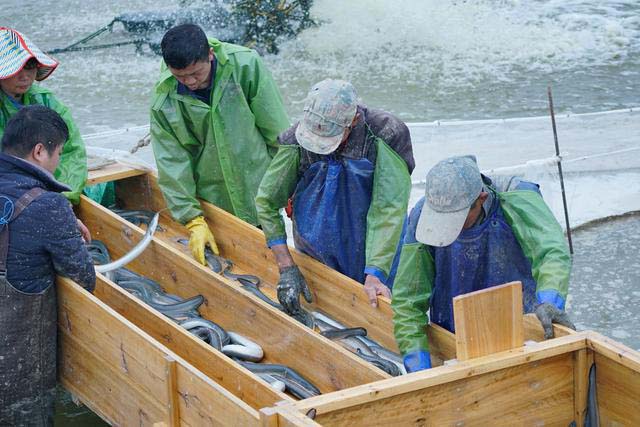
Grading is a practical part of commercial production. Farm workers separate eels by size to keep feed access and tank or pond space more balanced. Handling should be controlled because unnecessary disturbance can affect feeding behavior and increase stress.
Health observation includes checking swimming activity, body condition, skin appearance, appetite, and mortality. Farms also review water records and watch for unusual behavior. Prevention depends on good husbandry, clean equipment, suitable stocking practices, and prompt action when conditions move away from the farm plan.
Japanese Eel Farming Systems Used by Producers
There is no single farm design used everywhere. Common systems include outdoor ponds, indoor tanks, flow-through units, and recirculating aquaculture systems. Each comes with different operating needs.
| System | Typical operating focus | Buyer-relevant consideration |
|---|---|---|
| Outdoor ponds | Water exchange, pond condition, weather, and stocking control | Production may be affected by seasonal conditions and local water management |
| Indoor tanks | Temperature, oxygen, filtration, cleaning, and feeding observation | More direct control can support consistent handling, but equipment and labor are important |
| Flow-through systems | Continuous water movement and discharge management | Water source quality and local regulations need attention |
| Recirculating systems | Mechanical and biological filtration, oxygen, pumps, and backup systems | Records and equipment maintenance are central to supply reliability |
For foodservice and retail buyers, the farm system is only one part of the decision. Product form matters as well. A buyer purchasing raw freshwater eels may need filleting, cooking, freezing, and sauce preparation capabilities. A buyer purchasing frozen unagi kabayaki is evaluating a more finished product with different storage, portioning, and menu requirements.
See Eelpro’s unagi eel farm information for a closer look at the company’s eel-related business context, or review the frozen eel supplier page when comparing product formats.
Harvesting and Processing Farmed Eels
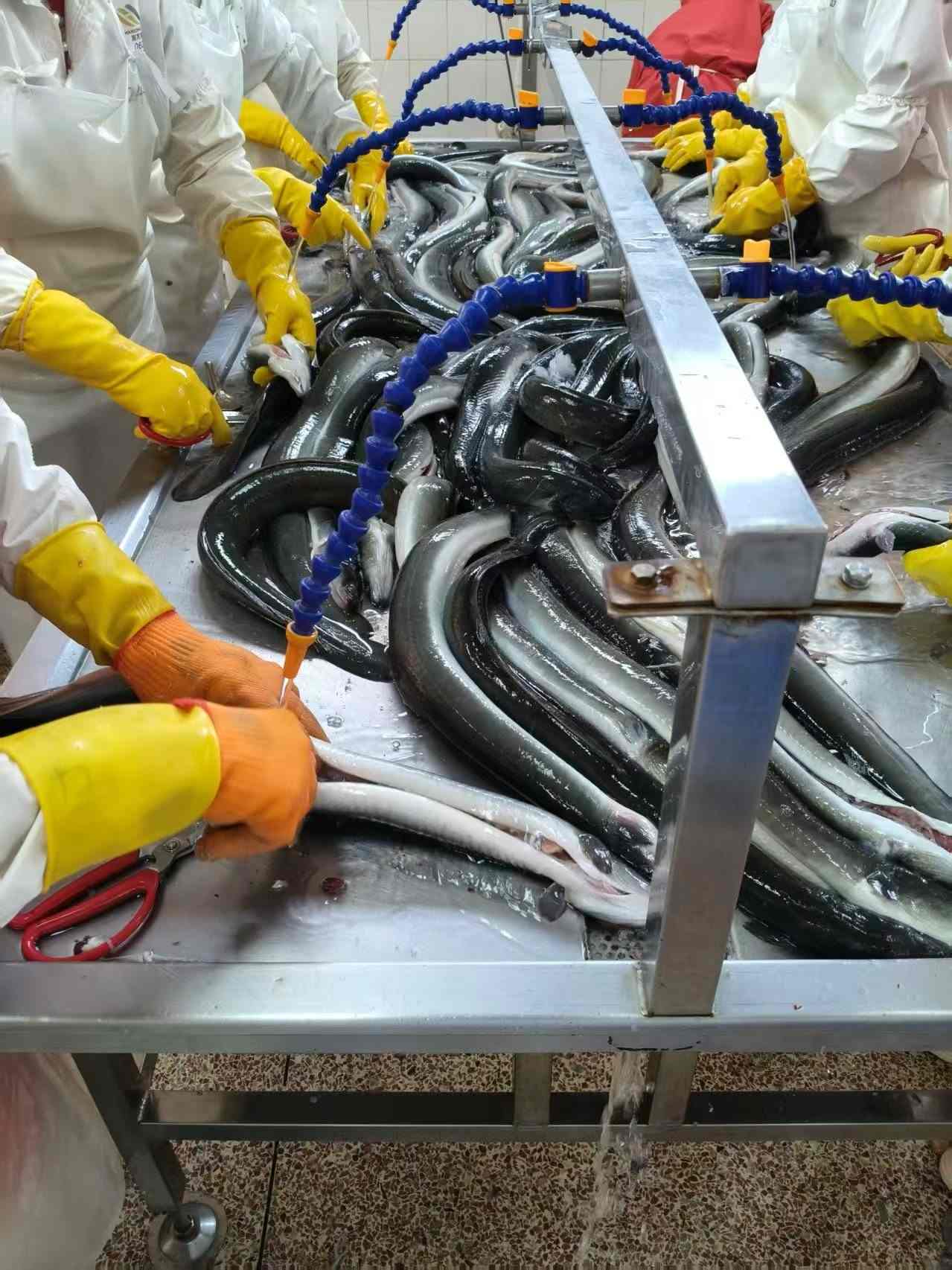
Harvest planning begins before nets are drawn or tanks are emptied. Farms and processors consider eel size, order requirements, production conditions, and the intended product format. Eels may be selected for fresh processing, frozen whole fish, fillets, or cooked products such as kabayaki.
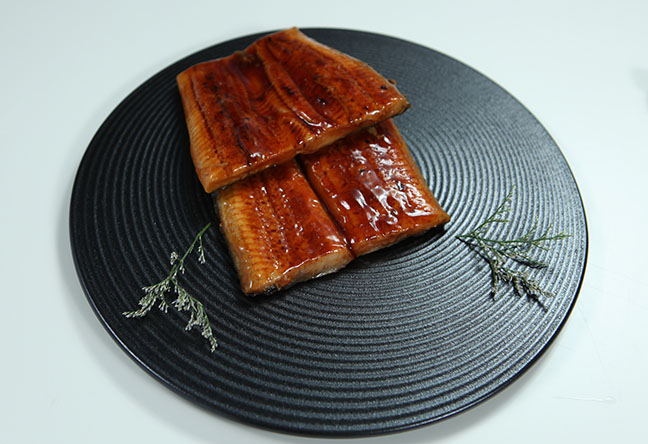
Handling after harvest affects the final eating experience. Fish must move through processing carefully to protect flesh texture and appearance. For kabayaki, preparation commonly includes cleaning, splitting, deboning, grilling or cooking, sauce application, and freezing. Exact processing details vary by producer and product specification.
For a restaurant buyer, the practical question is not only “Where was the eel raised?” It is also “How will this product perform in my kitchen?” A frozen kabayaki item may suit quick-service operations, donburi menus, sushi applications, or retail meal kits. Raw eel may be a better fit for a processor with its own cooking line.
Eelpro supplies frozen unagi kabayaki, eel sauce, frozen seafood, and freshwater eels for overseas buyers. Buyers should confirm pack format, portion specifications, storage requirements, labeling, and shipping documentation directly during quotation.
Wild-Caught Juveniles Versus Closed-Cycle Breeding
One of the most misunderstood aspects of eel aquaculture is the difference between grow-out farming and closed-cycle production.
In the widely used grow-out model, farms obtain juvenile eels from an external source and raise them to market size. The farm controls feeding, water conditions, grading, and harvest, but it does not produce juveniles from its own spawning adults.
Closed-cycle breeding aims to complete the life cycle under controlled conditions. That means managing mature adults, spawning, larvae, early juvenile stages, and later grow-out. It is a far more difficult technical task because eel larvae have demanding biological needs, and the transition from larvae to glass eels is difficult to reproduce at commercial scale.
Can Japanese eels be commercially bred? Research has shown that controlled reproduction is possible, but commercial closed-cycle production remains difficult and is not the same as ordinary farm grow-out. Challenges include broodstock management, egg and larval survival, suitable feed for early life stages, disease control, water quality, and production cost.
Cold fact: A farm-raised eel can still originate from a wild-caught juvenile. “Raised in a farm” describes the grow-out stage; it does not necessarily describe the complete life cycle.
What Are the Challenges of Japanese Eel Aquaculture?
What are the challenges of Japanese eel aquaculture? The main pressures involve juvenile supply, biological control, environmental management, and market consistency.
- Juvenile availability: Natural recruitment can vary, affecting stocking plans and raw material supply.
- Uneven growth: Eels within the same group may develop at different rates, requiring grading and separate management.
- Water quality: Feed waste and fish waste must be controlled through suitable water exchange, filtration, aeration, and cleaning.
- Energy and equipment: Indoor and recirculating systems depend on pumps, oxygen systems, filtration, monitoring, and contingency planning.
- Early-life biology: Producing healthy larvae and juveniles in a closed system remains technically demanding.
- Traceability: Buyers need clear information about sourcing, processing, lot identification, and cold-chain movement.
These challenges are why supplier discussions should cover more than price. Ask about raw material origin, product form, processing location, storage conditions, lot documentation, and intended use. A low quoted price may offer little value if the pack size, cooking yield, or delivery format does not fit the menu.
How Buyers Can Evaluate Eel Products
For importers, distributors, restaurants, and food manufacturers, a straightforward evaluation checklist can reduce avoidable problems.
- Define the product: Decide whether you need raw freshwater eels, fillets, cooked kabayaki, eel sauce, or another frozen seafood item.
- Match the menu: Confirm whether the product will be used for donburi, sushi, noodle dishes, appetizers, retail packs, or prepared meals.
- Check the specification: Ask for size range, net weight, glazing or sauce details, packaging format, and storage instructions from the supplier.
- Review the supply story: Request clear information about juvenile sourcing, farming or processing stages, and lot traceability.
- Test kitchen performance: Evaluate texture, sauce balance, reheating behavior, portion control, and appearance after preparation.
- Plan the cold chain: Confirm how the product should be received, stored, thawed, and handled before service.
Avoid this mistake: Do not compare two eel products by carton price alone. Differences in portion size, sauce ratio, bone-removal method, or cooking stage can change the actual cost per serving.
For menu development, Eelpro’s eel sauce product can be considered alongside kabayaki. Home cooks and chefs can also explore practical ideas such as unagi ramen ideas and an eel rice bowl guide.
From Farm Management to the Finished Unagi Dish
Japanese eel production connects biology with kitchen performance. Juvenile stocking establishes the starting point. Feed management supports growth, while water control protects the production environment. Grading helps manage uneven development, and harvest and processing determine the product form that ultimately reaches a restaurant, retailer, or household.
For buyers, the most useful questions are specific. Where did the juvenile eel come from? How was the product processed? What documentation accompanies the shipment? Does the pack suit the menu? Can the supplier provide the product format and sauce profile needed for service?
Eelpro Co., LTD supports overseas buyers with frozen unagi kabayaki, eel sauce, frozen seafood, and freshwater eels. To compare applications, visit the unagi kabayaki product page and consider which format matches your operation.
Have you noticed a difference between farm-raised eel products, frozen kabayaki, and restaurant-prepared unagi? Share your experience or menu ideas with us. For more cooking inspiration, explore Eelpro’s collection of eel recipes and serving suggestions.