

Unagi Freshwater Eel: Habitat and Aquaculture
Picture a perfectly grilled fillet of unagi, glistening with a caramelized lacquer of sweet-savory tare sauce. That rich, buttery texture melting over a bowl of steamed rice is a sensory experience millions crave. But here’s the cold truth that keeps seafood buyers up at night: that exact piece of unagi freshwater eel on the plate has one of the most complex and fragile supply chains in the global seafood industry. It’s not just a fish—it’s a biological miracle that travels thousands of miles before it ever reaches a farm, let alone a kitchen.
For importers and distributors, understanding where Anguilla japonica comes from isn’t just academic trivia. It directly dictates price volatility, seasonal availability, and the consistency of your frozen kabayaki shipments. Let’s wade into the murky waters of eel biology to see why this delicacy remains so elusive and valuable.
What Exactly is the Unagi Freshwater Eel?
When we talk about "unagi" in a culinary context, we are almost always talking about Anguilla japonica, the Japanese eel. While the term "unagi" is the Japanese word for freshwater eel, the specific species is distinct from its European (Anguilla anguilla) or American (Anguilla rostrata) cousins. The Japanese eel carries a higher fat content and a sweeter flavor profile, making it the gold standard for kabayaki preparation.
But here is the kicker: despite being called a "freshwater" eel, its life depends entirely on the vast, salty expanse of the Pacific Ocean. This contradiction defines the entire unagi aquaculture industry. You cannot simply breed these animals in captivity from start to finish. Every single glass eel—the starting point for farming—must be caught in the wild. This biological bottleneck makes the unagi trade fundamentally different from farming salmon or tilapia.
At Eelpro, we work exclusively with this premium species, transforming wild-caught glass eels into unagi kabayaki product through meticulous farming and processing. The journey from the deep sea to our unagi eel farm is a story of precision and patience.
The Natural Freshwater Eel Habitat: A Tale of Two Worlds
To understand the value of a high-quality unagi fillet, you must first understand its impossible journey. The freshwater eel habitat is not a single place. It is a migratory loop spanning thousands of kilometers of ocean and river.
The Spawning Grounds: Where Do Unagi Freshwater Eels Live at Birth?
For decades, this question baffled marine biologists. Where do unagi freshwater eels live when they are born? We now know that Japanese eels spawn in the open ocean near the West Mariana Ridge, an underwater mountain range east of Guam. That is roughly 2,000 to 3,000 kilometers from the freshwater rivers of East Asia where they will eventually live.
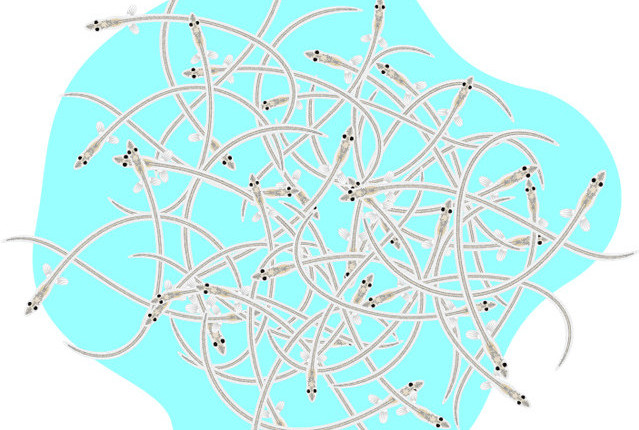
An adult female releases millions of eggs in these deep, warm waters. The larvae that hatch look nothing like an eel. They are leaf-shaped, transparent, and drift like a piece of delicate seaweed. They are called leptocephali. For months, these fragile larvae ride the North Equatorial Current, surviving on marine snow—tiny particles of organic matter drifting in the ocean.
The Migration: From Ocean Glass to River Gold
As they approach the continental shelf near China, Japan, Korea, and Taiwan, they metamorphose into "glass eels." This is the stage where they look like a tiny, transparent eel, about 5 to 6 centimeters long. This is the stage where the Japanese eel farming industry intercepts them.
In the wild, these glass eels would swim upstream into rivers, lakes, and estuaries. They transform again into "elvers," gaining pigmentation and darkening to a brownish-yellow. They spend anywhere from 5 to 20 years in this freshwater eel habitat, hiding in mud, under rocks, and in vegetation, feeding on insects, crustaceans, and small fish. They are nocturnal and secretive, building body mass for the final act of their lives.
When they reach sexual maturity, they undergo a final, dramatic change. Their eyes enlarge, their guts dissolve to make room for reproductive organs, and they turn a metallic silver. These "silver eels" then swim back downstream, out into the Pacific, retracing the impossible journey to the Mariana Ridge to spawn and die. No human has ever witnessed this spawning event in the wild.
Cold Knowledge: An eel’s gut actually dissolves during its final migration. It stops eating entirely, surviving solely on stored fat reserves for the 3,000 km swim. This is why the fat content in a farmed, pre-migration eel is so critical to flavor—nature designed them to be a floating energy reserve.
How Are Freshwater Eels Farmed for Food? The Aquaculture Puzzle
So, how are freshwater eels farmed for food if they refuse to breed in captivity? The answer is a high-stakes capture-based aquaculture system. It is a race against time, biology, and market demand that shapes the entire global supply of unagi kabayaki manufacturer products.
Step 1: The Glass Eel Rush
Every year, between November and April, fishermen along the coasts of China and Taiwan head out with fine-meshed nets and bright lights at night. Their target: the transparent wave of incoming glass eels. This is a wild fishery, regulated by strict quotas because the stock is fragile. A bad recruitment year—where ocean currents shift and fewer larvae drift toward the coast—can send shockwaves through the global seafood market. Prices for glass eels can swing wildly, sometimes reaching thousands of dollars per kilogram.
This is the first major risk point for B2B buyers. A supplier without strong relationships in the glass eel market might face sudden raw material shortages. We mitigate this by leveraging our long-term, exclusive partnerships with coastal collectors, ensuring priority access even during lean seasons.
Step 2: The Nursery Stage
Once caught, the glass eels are transported to indoor, climate-controlled nurseries. This is arguably the most delicate phase. Wild glass eels have never eaten manufactured feed. They must be "weaned" off their natural preference for marine snow and trained to accept a formulated paste. This is done with a diet of fish meal, vitamins, and often a special starter compound derived from squid or cod roe.
The water here is pristine, recirculated, and kept at a consistent 28°C to 30°C. At this temperature, the glass eels grow rapidly into elvers. Mortality here is the highest. Poor water quality, disease, or a bad feed formula can wipe out an entire cohort. Our eel lab constantly monitors water chemistry and adjusts feed micronutrients to maximize survival rates during this critical window.
Step 3: Grow-Out Ponds
After they reach a certain size and resilience, the juvenile eels move to larger grow-out ponds. These can be indoor concrete raceways or outdoor earthen ponds lined with geomembrane liners. The feeding strategy shifts to maximize growth and, crucially, fat deposition. A lean eel is a tasteless eel. The feed is adjusted to include high-quality fish oils and proteins to simulate the rich diet they would have consumed in the wild.
This is where the art of unagi aquaculture intersects with the craft of flavor. Farmers must balance rapid growth with flesh texture. Overcrowding leads to stress and lower fat content. Underfeeding extends the growth cycle and ties up capital. It takes roughly 12 to 18 months for a glass eel to reach the ideal processing size of 150 to 200 grams.
Avoid the Pitfall: Some low-cost producers push growth too fast using high-energy feeds, resulting in an eel that looks plump but has a mushy, watery texture when grilled. A premium unagi fillet should have distinct, visible layers of muscle and fat, much like a good cut of pork belly. If the fillet falls apart easily during the kabayaki grilling process, the farm likely prioritized speed over structure.
The Life Cycle of Japanese Eel: A Sourcing Roadmap
Revisiting the question "what is the life cycle of Japanese eel" from a commercial perspective reveals a clear sourcing roadmap. The catadromous life cycle—spawning in saltwater, growing in freshwater—creates a unique set of quality indicators for buyers.
The table below breaks down the life stages and their commercial relevance:
| Life Stage | Location | Commercial Relevance |
|---|---|---|
| Egg / Leptocephali | Deep Ocean (Mariana Ridge) | Unobservable in wild. Determines recruitment volume for the next season based on ocean currents. |
| Glass Eel | Coastal Estuaries | Raw material for farming. High price volatility. Genetic purity (Anguilla japonica vs. bicolor) is critical here. |
| Elver / Yellow Eel | Freshwater Ponds | Growth phase. Feed conversion ratio (FCR) and water temperature dictate flesh quality. |
| Silver Eel (Pre-migration) | N/A (Farmed eels harvested before this) | We harvest just before this biological shift to capture maximum fat content before the gut dissolves. |
Understanding this cycle helps buyers appreciate why a consistent, year-round supply of frozen unagi is such a logistical triumph. Unlike a factory-produced good, you cannot simply order more raw material on demand. The biological clock of the eel dictates the rhythm of our entire operation. When you source from a frozen eel supplier with deep aquaculture roots, you are paying for the ability to smooth out nature's volatility.
Why Habitat and Aquaculture Matter for Your Menu
The connection between the deep Pacific spawning ground and your final product is direct. An eel raised in a pond that poorly mimics the natural freshwater eel habitat—say, with stagnant water or incorrect temperature gradients—will taste muddy. This "geosmin" taint is a common defect in poorly managed farms.
Our processing philosophy is simple: respect the biology. Because we know the eel is designed to store fat for a 3,000 km swim, we manage our feeding to enhance that natural marbling. The result is a fillet that holds its shape on the grill, develops a crispy skin, and offers that melt-in-your-mouth sensation without disintegrating. This is the foundation of a perfect eel sauce product page pairing—the rich tare needs a firm, oily canvas to cling to.
Furthermore, traceability matters. A buyer should know which cohort their frozen fillets came from. Was it a strong El Niño year that shifted the larval drift? Was the water temperature kept stable during the weaning phase? These aren't just academic questions; they are the difference between a premium grade shipment and a standard grade one. We encourage our partners to ask these hard questions. It’s the only way to avoid the "mystery box" of frozen seafood.
Ready to explore how these fillets translate into menu magic? Check out our guide on eel recipes: 10 flavor pairings for menus or learn the precise techniques in our how to cook eel: cleaning, skinning & deboning guide. The journey from the Mariana Ridge to your kitchen is long, but the flavor makes it undeniably worth it.