





A Reliable Japanese Eel Sauce Recipe Turns Simple Soy and Sugar Into a Honey-Thick Glaze
Why does your homemade eel sauce stay thin and watery no matter how long you simmer it? You followed the ratio, you boiled it down, yet it pours like soy sauce instead of coating the back of a spoon. The answer isn't more sugar or cornstarch — it's temperature control and knowing exactly when to pull the pan off the heat. This japanese eel sauce recipe explains the reduction science behind unagi tare, step by step, so your glaze thickens the way restaurant kabayaki does.
Why Your Eel Sauce Stays Thin (Even After an Hour of Simmering)
Most home cooks blame the recipe. Usually it's technique. Here are the mistakes that keep a batch from ever reaching glaze consistency:
- Simmering too gently. A lazy bubble at 85°C (185°F) evaporates water slowly, so sugars never concentrate enough to thicken.
- Measuring thickness while hot. Unagi tare looks runny at 90°C but sets up considerably once it cools to room temperature. Testing hot leads to over-reduction and scorching.
- Skipping the spoon-coat test. Relying on a timer instead of a visual cue means every batch of mirin, soy, and sugar — which vary slightly in sugar content — comes out inconsistent.
- Walking away near the end. The last five minutes of reduction is where sugar concentration jumps fastest. Unattended pans burn quickly here.
The Science Behind the Glaze: Reduction Temperature and Final Volume
A honey-thick unagi sauce is not a starch-thickened sauce. It thickens because water evaporates and sugar concentration rises, the same principle behind simple syrup turning into caramel. No cornstarch, no flour slurry — just heat, time, and volume reduction. Here's how temperature and volume interact at each stage:
| Stage | Pan Temperature | Volume Target | What's Happening |
|---|---|---|---|
| Initial simmer | 90–95°C (194–203°F) | 100% (starting volume) | Soy, mirin, sugar, and dashi dissolve together; alcohol cooks off from the mirin. |
| Active reduction | 95–100°C (203–212°F) | 60–65% of original | Water evaporates steadily; sauce still pours thin but smells sweeter and rounder. |
| Thickening window | 100°C, gentle bubble | 40–45% of original | Sugar concentration rises sharply; the Maillard reaction deepens color and adds roasted notes. |
| Glaze point | Remove from heat | 35–40% of original | Sauce coats a spoon and holds a ribbon for 2–3 seconds before dropping. |
Key checkpoint: once your liquid drops to roughly 35–40% of its starting volume, pull it off the heat immediately. It will thicken further as it cools — pushing past this point risks a sauce that hardens like candy once chilled.
Common failure reason: cooks often stop reducing at 50–55% because the sauce still looks thin while hot. By the time it cools, it's noticeably thinner than true unagi tare. Always judge by volume reduction and the cooled-spoon test, not by how it looks mid-simmer.
Step-by-Step: Cooking Unagi Tare to Honey-Thick Consistency
- Combine base ingredients. Mix soy sauce, mirin, sugar, and a small amount of dashi or eel bone stock in a wide, heavy-bottomed pan. A wide pan speeds evaporation — this matters more than most recipes admit.
- Bring to a gentle simmer. Target 90–95°C. Avoid a rolling boil; it splashes sugar onto the pan sides, where it scorches and turns bitter.
- Reduce uncovered, stirring occasionally. Stop stirring constantly after the first five minutes — excess agitation slows evaporation by cooling the surface.
- Watch for the bubble change. Small, tight bubbles across the whole surface signal you're near the thickening window. This usually happens at 65–75% of your original cook time, depending on batch size.
- Run the cooled-spoon test. Dip a metal spoon, lift it, and count how long the sauce holds a ribbon before dripping. Two to three seconds at room temperature means you've hit glaze stage.
- Remove and rest. Pour into a heatproof jar and let it sit 10 minutes uncovered. True honey-thick consistency only shows once it's cooled to around 40°C.
This method pairs directly with grilled or pan-finished eel — see our guide on kabayaki sauce for how commercial producers layer this same reduction logic across multiple coating passes.
Ingredient Ratios for Different Uses
Not every kitchen needs the same thickness. A glaze for grilling needs to cling to the eel's skin; a dipping sauce for rice bowls can run slightly thinner. Adjust your final reduction target based on use:
| Use Case | Soy : Mirin : Sugar Ratio | Final Volume Target | Texture Result |
|---|---|---|---|
| Grilling glaze (kabayaki brushing) | 1 : 1 : 0.5 | 35–40% | Sticky, clings to skin, caramelizes under heat |
| Donburi drizzle sauce | 1 : 1 : 0.4 | 45–50% | Pourable but coats rice without pooling |
| Sushi roll finishing sauce | 1 : 0.8 : 0.5 | 40% | Thick enough to pipe in fine lines |
If you're building a full rice bowl around this sauce, our eel rice bowl toppings guide pairs well with the donburi ratio above.
Buyer's Decision Checklist Before You Start Cooking
- Do you have a wide, heavy-bottomed pan? Narrow pots slow evaporation and extend cook time unnecessarily.
- Is your mirin genuine hon-mirin, not a mirin-style seasoning? Real mirin reduces more evenly and gives better sheen.
- Do you have a reliable eel source? A frozen unagi kabayaki that's already roasted and sauced saves you from building a glaze from scratch if time is tight.
- Are you making a large batch for meal prep? If so, check our eel sauce recipe make-ahead and storage tips before scaling up quantities — reduction ratios don't scale perfectly linear past 1 liter.
Cold Knowledge: What Commercial Producers Do Differently
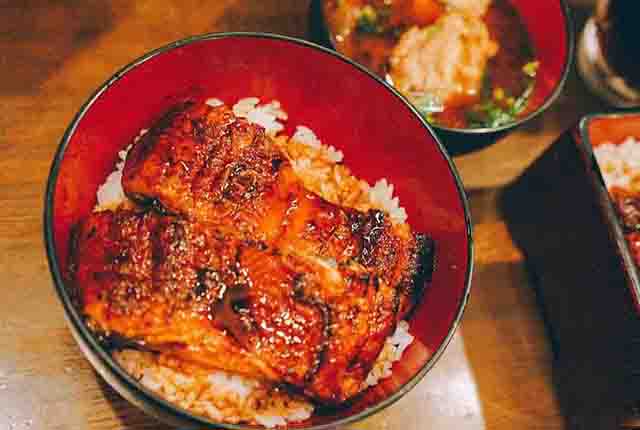
At production scale, eel processors don't rely on a single reduction pass. Export-grade roasting uses a 4-layer soy-sauce coating process, where each layer is applied and set at a controlled temperature before the next goes on. This builds color and flavor gradually instead of trying to force one thick sauce in a single simmer — which is exactly why restaurant kabayaki often tastes deeper and glossier than a home batch cooked in one go. You can mimic a simplified version of this at home by brushing a thin layer of your reduced sauce onto grilled eel, letting it set for a minute, then repeating two or three times instead of pouring on the full amount at once.
Common Mistakes That Ruin a Batch
- Adding sugar too early at high heat — causes uneven caramelization and a burnt-edge taste before the sauce even thickens.
- Using a tall, narrow saucepan — slows water evaporation, sometimes doubling your cook time.
- Judging thickness only by color — a darker sauce isn't always thicker; it can mean scorching, not reduction.
- Refrigerating the sauce before it fully cools — traps condensation, which thins the glaze again and shortens shelf life.
For a deeper troubleshooting list on flavor balance rather than texture, our kabayaki sauce recipe flavor fixes article covers the salt-sweet balance side of the equation.
Storage and Shelf Life Once It's Thickened
A properly reduced unagi tare keeps well because its low water content resists bacterial growth — similar to the logic behind jam preservation. Store it in a sterilized glass jar, refrigerated, and it typically holds its texture and flavor for 2–3 weeks. If it separates slightly, a gentle reheat and stir usually brings it back; if it smells sour or shows mold, discard it rather than trying to salvage it.
Whether you're testing this japanese eel sauce recipe for a dinner party or scaling it up for a small foodservice menu, the reduction principles stay the same — temperature control and volume tracking matter more than exact minute counts. If you'd rather skip the stovetop guesswork, our eel sauce is produced using the same reduction logic at commercial consistency, ready to glaze or drizzle straight from the pouch.
Tried this method at home? Share how your glaze turned out in the comments, or check our related guide on how to cook eel for pairing ideas beyond the glaze itself.

 WhatsApp
 sales@chinaeels.com
 +8619937922411