





This Unagi Recipe Fixes Ready-to-Serve Kabayaki Every Time
Why does store-bought kabayaki turn rubbery, dry, or fishy after reheating — even when the package looked perfect in the freezer? The answer is almost always in the thaw and reheat steps, not the eel itself. This unagi recipe walks through the exact workflow we recommend to restaurant kitchens and home cooks who use ready-to-serve grilled eel, so the skin stays tender and the glaze stays glossy instead of burnt or gluey.
Why Most Home Attempts Ruin a Good Unagi Recipe
Ready-to-serve kabayaki is already cooked and glazed. That's the whole point — it saves prep time. But it also means the eel is far more forgiving of mistakes at the raw-fish stage and far less forgiving of mistakes at the reheating stage. Here are the failure points we see most often:
- Microwaving straight from frozen — this cooks the outer layer twice while the core stays cold, so the flesh turns rubbery before it ever gets hot.
- Skipping the thaw step entirely — dropping frozen kabayaki into a hot pan causes the sauce to scorch before the eel is even warm.
- Over-steaming — a technique borrowed from traditional unagi restaurants, but without precise timing it strips the glaze and leaves the eel mushy.
- Reheating at high heat "to save time" — this is the single biggest cause of dry, stringy eel in home kitchens.
- Adding raw sauce on top of an already-glazed fillet — this doubles the sweetness and masks the natural richness of the fish.
None of these mistakes are about ingredient quality. They're about sequence and temperature control — which is exactly what the workflow below is built to fix.
The Thaw-to-Serve Workflow for Ready-to-Serve Kabayaki
This is the core of any dependable unagi recipe that starts from a frozen, pre-glazed fillet. Follow the steps in order — skipping a step is the most common reason kabayaki turns out overcooked.
| Step | Action | Key Checkpoint | Common Failure |
|---|---|---|---|
| 1. Thaw | Move the sealed kabayaki pack from freezer to refrigerator, 8–12 hours before cooking | Fillet should be fully flexible, not stiff in the center | Room-temperature thawing causes uneven texture and bacterial risk |
| 2. Rest | Let the thawed pack sit at room temperature for 10–15 minutes before opening | Surface should feel cool, not cold | Cooking a cold-core fillet leads to a scorched outside, cold middle |
| 3. Steam or pan-warm | Steam covered for 4–5 minutes, or pan-warm skin-side down over low-medium heat for 2–3 minutes | Internal temperature reaching roughly 60–65°C (140–150°F) | High heat or extended time dries out the flesh and hardens the glaze |
| 4. Glaze refresh | Brush a thin layer of warmed eel sauce (unagi tare) in the last 30 seconds | Glaze should look glossy, not caramelized dark | Adding sauce too early burns the sugars and turns bitter |
| 5. Rest before slicing | Let the fillet rest 1–2 minutes off heat | Juices should stay in the flesh when cut | Cutting immediately releases moisture and dries the portion |
One point worth flagging as a genuine "avoid this" tip: never refreeze a fillet once it has been thawed past step 1. It compromises both texture and food safety, and it is the fastest way to waste a perfectly good piece of eel.
Building the Bowl — Unagi Don Assembly Method
Once the eel is reheated properly, assembling unagi don is fast. Here's the sequence we suggest for a balanced bowl, whether you're plating one serving at home or prepping for a lunch rush:
- Cook short-grain rice slightly firmer than usual — it holds up better under the warm glaze.
- Spoon a thin layer of warmed eel sauce directly onto the rice before placing the eel — this seasons the base instead of leaving it plain.
- Lay the reheated kabayaki fillet, skin-side up, across the rice.
- Brush a second light coat of sauce over the top.
- Add a pinch of sansho pepper or a scatter of scallion for contrast — this cuts through the richness.
For operators testing menu variations, this base method also works well when adapted into other formats — see our donburi topping ideas for bowl variations beyond the classic version.
Choosing the Right Kabayaki Cut and Sauce for Your Recipe
Not every kabayaki format suits every kitchen. Matching the cut spec to your prep style saves labor and reduces waste — this is where a lot of buyers get the sourcing decision wrong.
| Format | Best Use | Prep Time | Limitation |
|---|---|---|---|
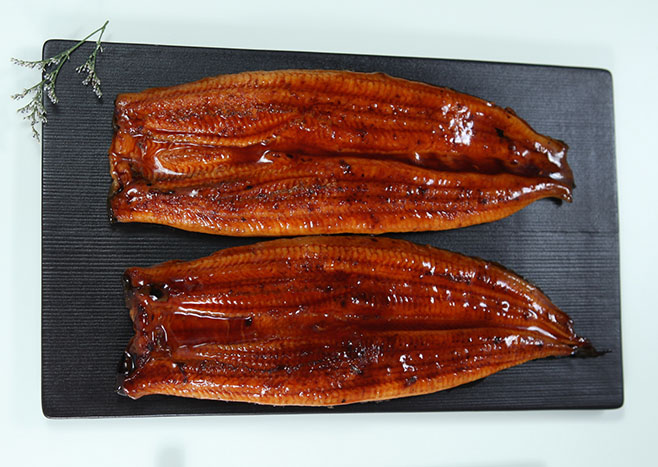
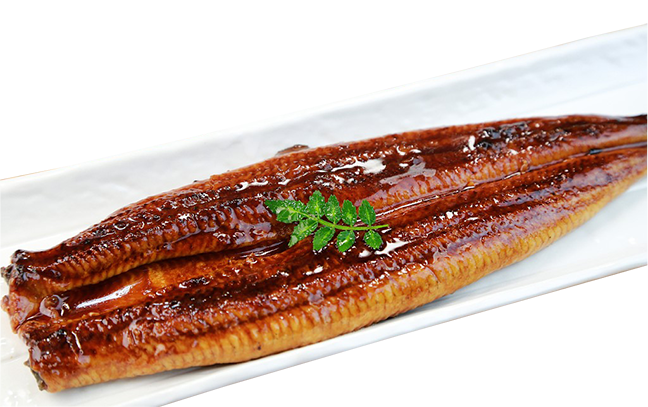
| Whole kabayaki fillet | Unagi don, teishoku sets, presentation plates | Fast — reheat and slice | Requires knife skill for even portions |
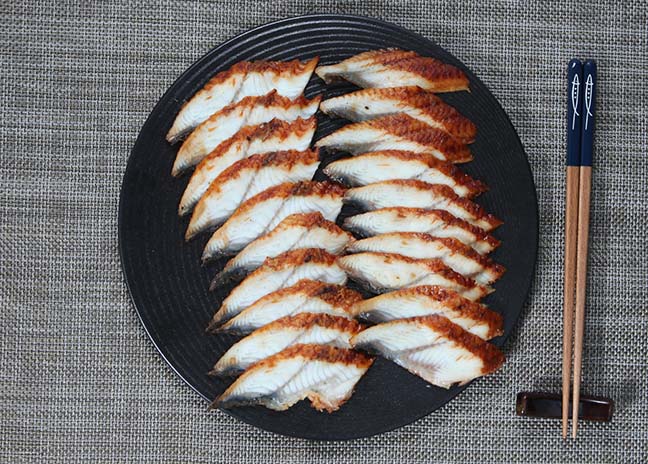
| Cut pieces | Bento boxes, buffet lines, portion-controlled menus | Fastest — no cutting needed | Less visual impact for tableside service |
| White-roasted skewers | Recipes needing custom sauce flavor | Moderate — requires final glazing step | Not ready-to-eat without sauce application |
If your kitchen relies on speed, cut pieces or a standard frozen unagi kabayaki fillet will outperform white-roasted skewers on labor cost. If you want control over sweetness and glaze depth, skewers paired with our eel sauce (unagi tare) give more flexibility — though they demand an extra glazing step before service.
The soy-sauce layering itself matters more than most recipes admit. A properly built glaze goes through several controlled coating passes, which is part of why the caramelized color and depth of flavor associated with the Maillard reaction develops evenly instead of turning patchy or burnt. If your current sauce tastes flat or overly one-note, it's worth reviewing our notes on kabayaki sauce composition before changing your reheating method.
Sourcing Considerations Before You Commit to a Supplier
For foodservice operators building a menu around this unagi recipe, the sourcing decision matters as much as the cooking technique. A few checks worth running before placing a bulk order:
- Certification match — confirm ISO 22000 and HACCP certification, plus HALAL status if your market requires it.
- Traceability — ask whether the supplier can trace product back to specific certified farming bases, not just a general region.
- Lab testing — check if the supplier runs veterinary drug residue and microbiological testing through an in-house laboratory rather than outsourcing every batch.
- Cold-chain capacity — a supplier with a 1,000-ton cold storage facility can hold consistent stock levels; smaller operations may run into gaps during peak season.
- Cut spec flexibility — confirm whether shredding, dicing, or 3-section cuts are available if your menu needs custom portions.
This matters because a good unagi recipe can't compensate for inconsistent raw material. Even the best thaw-to-serve technique fails if the fillet arrives with uneven glaze thickness or inconsistent fat content from batch to batch.
Quick Reference — A Buyer and Cook's Checklist
- Thaw in the refrigerator, never at room temperature or in a microwave.
- Target an internal temperature around 60–65°C before pulling the eel off heat.
- Glaze at the very end, not before or during the main reheating step.
- Match cut format (whole fillet, cut pieces, skewers) to your kitchen's speed needs.
- Verify certification, traceability, and lab testing before signing a supply contract.
For those exploring flavor pairings beyond the standard bowl, our guide on eel recipes for menus covers additional combinations worth menu-testing. And if broth-based dishes are more your kitchen's style, the eel noodle soup method uses a similar thaw-first logic.
Want to test this workflow with your own kitchen setup before committing to a bulk order? Request a sample or ask our team for a spec sheet covering cut options, cold-chain handling, and glaze standards.
 WhatsApp
 sales@chinaeels.com
 +8619937922411