





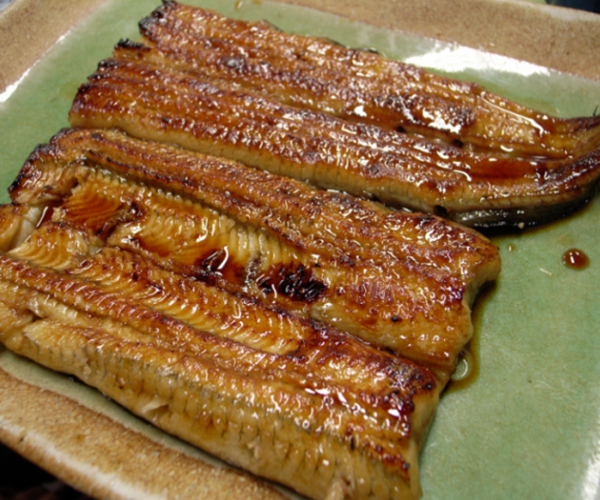
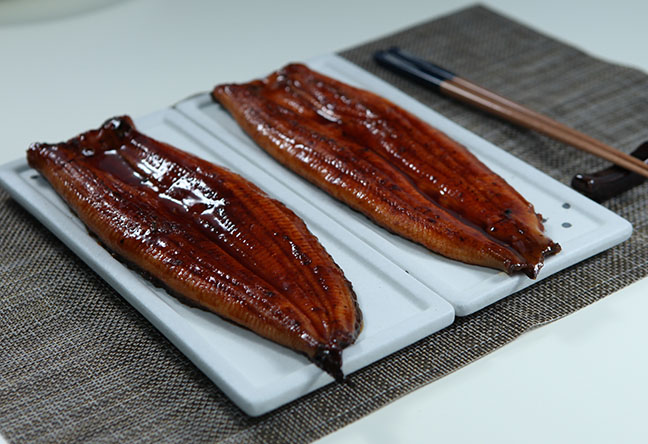
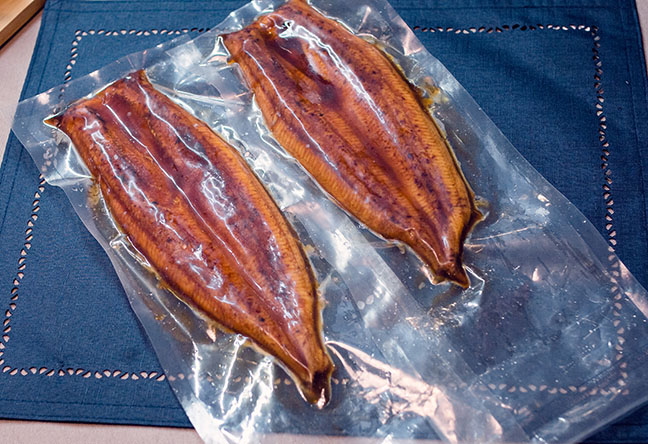
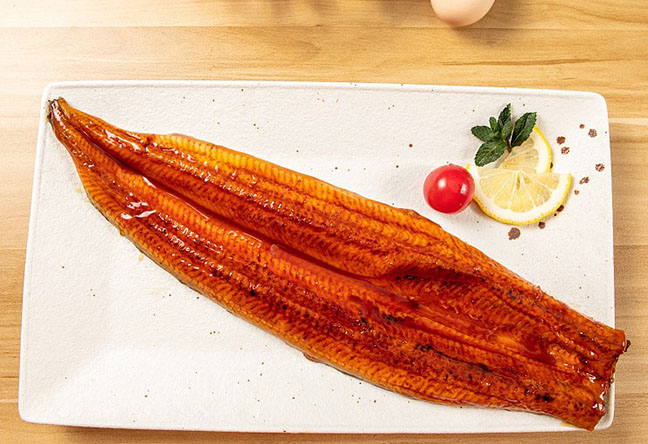
You pull a portion of kabayaki eel out of the microwave. The sauce looks glossy. But the first bite is chewy, dry at the edges. What went wrong? Most home cooks — and plenty of line cooks — get unagi how to cook wrong at exactly one step: they don't know when "warmed through" becomes "overcooked." The gap is a narrow temperature window, and once you cross it, no amount of extra sauce brings the moisture back.
Eel fat and collagen behave differently than lean fish. Below a certain core temperature, the fat hasn't softened enough and the fillet tastes flat, almost raw at the center. Push past a certain point, and the proteins tighten through protein denaturation, squeezing moisture out of the flesh. That's the boundary you're managing — not just "hot enough," but "hot enough without going further."
| Core Temperature | What's Happening | Serving Verdict |
|---|---|---|
| Below 50°C (122°F) | Fat still firm, sauce not glossy | Not ready — reheat further |
| 60–65°C (140–149°F) | Fat softened, collagen relaxed, sauce sheens | Ideal serving window |
| 68–72°C (154–162°F) | Safe margin, slight moisture loss at edges | Acceptable if plated immediately |
| Above 75°C (167°F) | Fat rendered out, skin toughens, fillet dries | Overheated — texture damage is not reversible |
Food-safety guidance for reheating previously cooked frozen foods generally calls for an internal temperature around 74°C (165°F). That's a safety minimum, not a texture target. Because unagi kabayaki fillets are thin, they cross from "warmed" to "dried out" in under a minute once they hit that upper range. The fix isn't ignoring the safety number — it's cutting the time the fillet spends above 65°C (149°F) to almost nothing, then plating right away. In our decade of HACCP audits across seafood processing lines, this exact reheating mistake shows up more often than any other quality complaint we hear from foodservice buyers.
Once you understand where the boundary sits, applying unagi how to cook at the plate level becomes a matter of timing, not guesswork.
For a broader walkthrough of prep before reheating, including how to portion frozen fillets, see this guide on easy methods and tips. If you're sourcing frozen unagi kabayaki for a restaurant menu rather than a single meal, the reheating window narrows further because you're often batch-cooking, which brings us to the mistakes below.
If you're buying in volume for a restaurant chain or import program, the raw material determines how forgiving your reheating window is. Fillets with inconsistent fat distribution overheat unevenly no matter how careful your kitchen is.
For sourcing details and specification options, the frozen eel supplier page lists cutting formats and packaging choices relevant to foodservice buyers.
What's the short answer to unagi how to cook without drying it out?
Bring the core to 60–65°C (140–149°F), then plate within 30 seconds. Anything reheated past 75°C (167°F) has already lost fat and moisture it won't get back.
Can I serve unagi cold, straight from the fridge?
You can, for dishes like cold soba toppings, but the fat won't have softened, so the texture reads firmer and less rich than a warmed portion. It's a stylistic choice, not a shortcut.
How do I fix a fillet that's already overheated and dry?
You mostly can't restore lost moisture. Brushing on extra eel sauce and serving over hot rice masks dryness somewhat, but the fix going forward is shortening your reheating time, not correcting after the fact.
Is microwave reheating ever acceptable?
Yes, for single portions, if you use medium power in short bursts and check at 20-second intervals. It's harder to control than steaming, which is why restaurants doing volume reheating tend to avoid it.
Does this temperature boundary apply to other eel preparations, like eel noodle soup?
Not exactly — dishes where the eel simmers in broth, such as eel noodle soup, rely on the broth temperature rather than a dry-heat reheating window, so the fillet behaves differently.
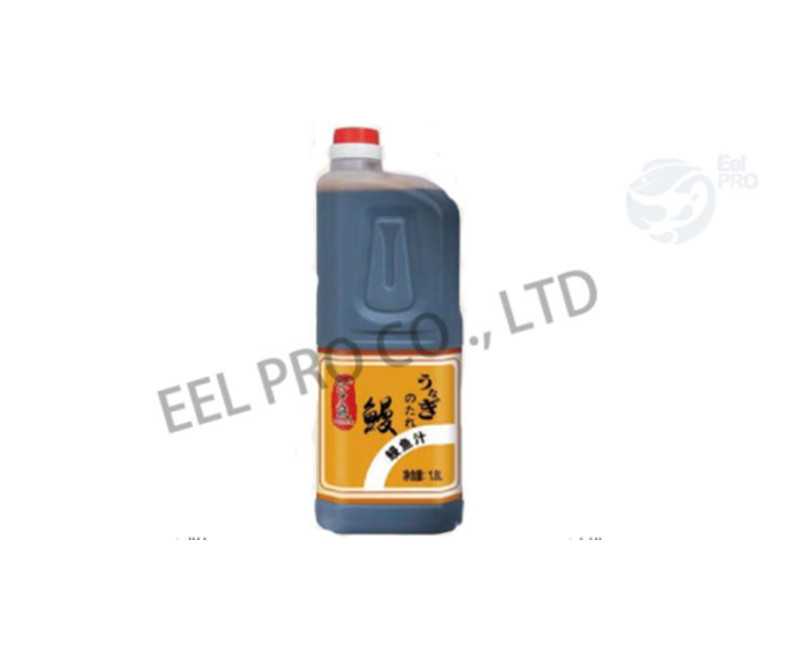
If you're finalizing a reheating protocol for a menu or foodservice program, it helps to test with the actual product first. Reach out for a sample of frozen unagi kabayaki or eel sauce and check how it holds up through your own kitchen's reheating line before committing to volume.

 WhatsApp
 sales@chinaeels.com
 +8619937922411