





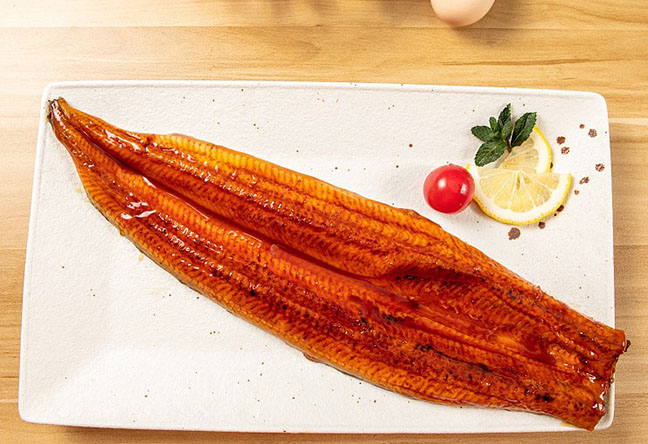
You lift a slice of glistening unagi kabayaki with your chopsticks. It falls apart under the slightest pressure, buttery and soft. The rice underneath catches the sweet-savory glaze. No crunch. No prickle. Nothing hard. Just melt. A question flickers: Wait — does this creature even have a spine? It slithered in the water, after all. Snakes don't have real spines, right? Wrong. Eels are not snakes. They are fish. And yes, eels absolutely have spines. In fact, their spine is one of the most intricate in the fish world.
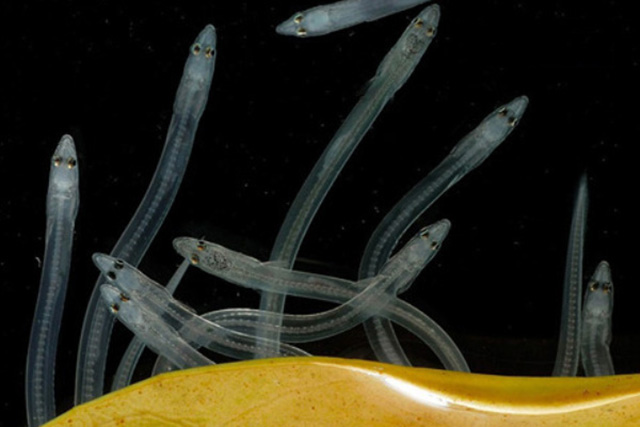
Let's kill the snake myth right away. An eel is a bony fish — it has a fully calcified skeleton, not cartilage like a shark. The backbone runs from just behind the head all the way to the tip of the tail. If you've ever handled a whole fresh eel, you know: that central column is tough. It's flexible, sure, but incredibly strong. Biologists classify eels under the order Anguilliformes. Every single one of those species — freshwater eel, saltwater eel, moray, conger — possesses a vertebral column. That column is made up of individual vertebrae, often numbering well over 100. More on that in a moment.
Sushi chefs in Japan spend years learning to remove this backbone in one clean pull. It's a skill. At Eelpro, the moment a freshwater eel is processed, the spine is extracted entirely. You'll never find a whole backbone in our frozen unagi kabayaki. That's standard. But what about the tiny bones? They're a different story — and honestly, they're why the meat feels so luxurious.
Here's where things get fascinating. An eel skeleton anatomy isn't just a central backbone and some ribs. It's a lattice of fine, hair-like bones that branch outward into the muscle. If you've ever eaten a whole grilled fish, you know the annoyance of picking out needle bones from between your teeth. Eels have those. But nature made them different.
An eel's vertebrae count varies by species. The Japanese unagi (Anguilla japonica) usually has between 112 and 119 vertebrae. Compare that to a trout, which might have 60. More vertebrae means more flexibility, which is how an eel wriggles through mud and narrow crevices. Each vertebra connects to a set of intermuscular bones — the so-called eel pin bones. These bones don't anchor to a rigid ribcage the way a cod's do. Instead, they float inside the flesh, suspended in thin layers of connective tissue.
When we process a 500-gram eel, our workers manually remove those pin bones that are detectable. But here's a secret: the very finest ones, thinner than a human hair, often stay behind. You've eaten them. You just didn't notice. Why? Because proper cooking — especially the slow steaming used in traditional kabayaki sauce preparation — softens them until they dissolve on the tongue.
“Pin bones” is a casual term. In anatomy, these are epipleural ribs or intermuscular ossifications. In the kitchen, they're the reason a fillet of eel feels completely different from a salmon steak. Salmon pin bones are thick, sharp, and often stick in a defined line. You pull them out with tweezers. Eel pin bones are spread chaotically through the upper half of the fillet. They fork at the ends like tiny twigs.
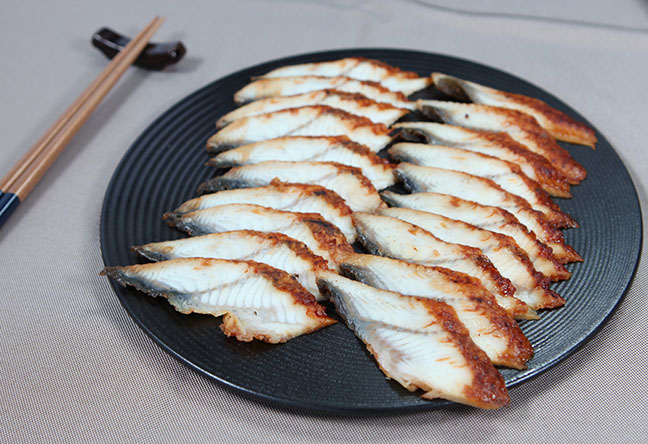
In an adult freshwater eel, these bones are soft and pliable even when raw. When we brush on eel sauce and broil the fillet three or four times — the classic Kabayaki method — the combination of heat, sugar, and moisture practically erases them. The bones break down into a kind of gel. They become part of the texture. Not a danger. Not a crunch. Just a whisper of structure that holds the flesh together.
However, if you were to cook a wild-caught eel over an open fire without the steaming step, pin bones could pose a problem. They'd remain slightly rigid. That's why Eelpro's production includes a carefully controlled pre-cooking stage. The internal temperature of the fish must reach at least 85°C for a specific duration to ensure collagen surrounding the bones turns to gelatin. Most good eel restaurants know this trick. Our frozen products deliver the same result to your kitchen.
The short answer: No. Not if the eel is processed with basic competence. The large backbone is always removed. The small pin bones, even if you encounter one, are flexible and unlikely to pierce your mouth or throat. I've eaten hundreds of unagi fillets — in Tokyo, in factory tests, at home — and I've never once been poked by a bone that hurt. The occasional firmer speck I feel? It's usually a tiny bit of fin ray, not a spine at all. For commercial products sold globally, like our frozen unagi kabayaki, safety inspection includes metal detection and manual pin bone checking. You get fillets that are virtually bone-free in terms of hard structure.
Still anxious? If you're preparing whole fresh eel at home, either butterfly-fillet it and scrape the flesh gently to reveal any obvious bone tips, or simply simmer it first. A 10-minute steam before grilling will render any residual pin bones harmless. This is exactly the principle behind shirayaki (grilled eel without sauce) — it's often steamed halfway through.
We know vertebrae number around 115. But what about total bones? That's a harder number to pin down. Unlike a fish with a simple skeleton map, an eel's skull alone has dozens of small bones. The gill arches contain tiny tooth-like branchial bones. The muscular segments have both dorsal and ventral intermuscular bones. In some studies counting bones in Anguilla anguilla, the European eel, researchers found over 400 discrete skeletal elements. Not all of those are "bones" in the cooking sense. Many are tiny ossicles less than 1 mm long.
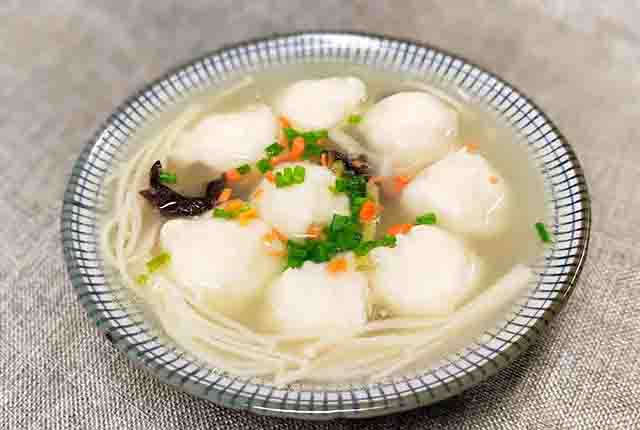
For a cook, the only number that matters is zero. Zero unpleasant bones in the fillet. And that's the standard we hold to. When you open a pack of Eelpro's unagi kabayaki, you won't need to check for bones. It's ready to heat and eat. You might want to use it in a quick eel noodle soup or over rice. The texture will be seamless.
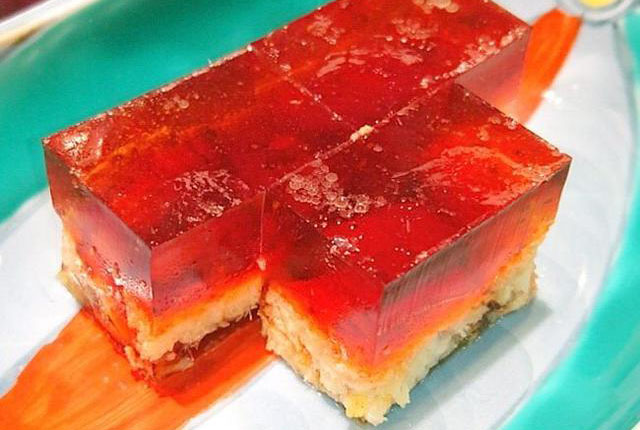
There's a piece of food science I find wonderful. Eel pin bones are not just soft — they're hollow-ish. Under a microscope, their cross-section looks spongy compared to the dense rods of a carp bone. That hollowness means they heat through quickly, and they absorb moisture. When you defrost our vacuum-sealed unagi, the pin bones have already been rehydrated by the natural juices. When you grill it, the sugar in the eel sauce caramelizes around them, locking them into a soft matrix. You don't bite through a bone; you bite through a tender thread that dissolves.
That's not a coincidence. It's evolution. Eels live in tight spaces. A brittle skeleton would snap during their endless twisting. So they evolved to have light, flexible reinforcement instead of rigid ribs. Nature's own engineering. Chefs just leveraged it.
Every culture handles the eel spine differently. In Japanese unagi, we've seen the technique — steam, grill, baste, repeat. In Cantonese cooking, fresh eel is often sliced across the grain into "chrysanthemum" cuts, exposing the backbone in tiny segments. These are then tossed in a hot wok, and the small bone pieces become crispy little crunch bombs. Delicious, but a completely different approach. In European eel recipes, like the Dutch smoked eel (gerookte paling), the spine is often left inside the hard-smoked fillet. Diners peel the flesh off with a fork, leaving the skeleton behind on the plate. It's a rustic experience.
At Eelpro, our focus is the Japanese style, precisely because it delivers a bone-free, sauce-drenched fillet that anyone can enjoy. You get the anatomy hidden away, and all you taste is the rich, fatty meat. If you're curious about how we make the sauce that blankets those fillets, read our article on why kabayaki sauce is the secret weapon in professional kitchens.
Absolutely. Eels are vertebrate fish with a pronounced backbone composed of over 100 individual vertebrae. When processed for fillets, this backbone is always removed.
No. The main spine is extracted before packaging. Any remaining pin bones are extremely fine and soften during cooking. Our unagi kabayaki is inspected to ensure no hard bone fragments remain.
A freshwater eel can have around 115 vertebrae plus hundreds of tiny intermuscular bones, adding up to over 400 skeletal elements. However, only the larger pin bones are detectable by touch, and those are mostly removed in professional processing.
Yes. If you ever encounter a softened pin bone in a properly prepared unagi fillet, it's edible and will likely disintegrate as you chew. It poses no choking hazard.
The sensation is usually from calcified tendon ends or fin rays, not true bone. In high-quality frozen unagi like ours, you'll rarely notice even that. Proper thawing and gentle reheating minimize any texture.
So, do eels have spines? Yes — a backbone, an intricate web of vertebrae, and the softest pin bones you'll ever encounter in a fish. That structure is exactly why eel meat can be so incredibly tender yet hold together under high heat. Without that skeleton blueprint, unagi kabayaki would just be a mushy mess. With it, the fat and collagen melt around a flexible support system, giving you that distinctive mouthfeel.
Ready to experience eel with zero worry about bones? Explore our frozen unagi kabayaki — prepared, sauced, and inspected so you can just heat and enjoy. Have a favorite way to cook eel, or a bone-related story? Drop a comment below. I read every one. And if you want more depth on sauces or recipes, the articles above are a great next stop.

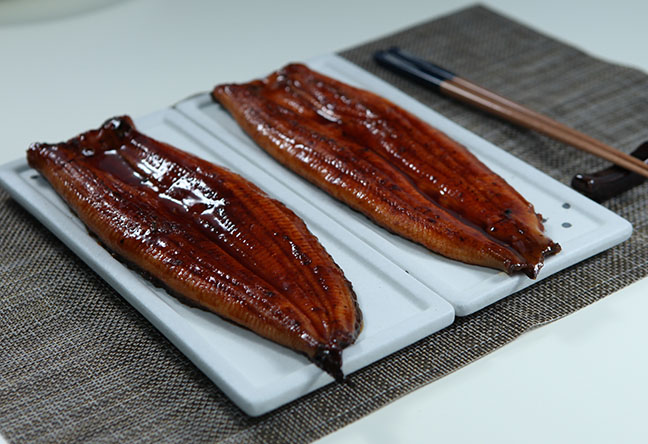

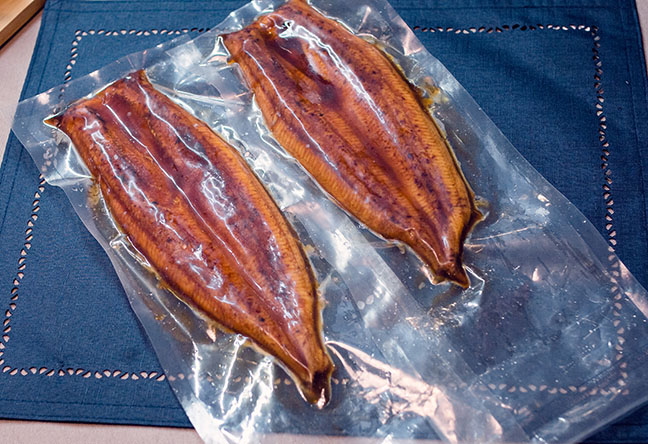

 WhatsApp
 sales@chinaeels.com
 +8619937922411