





You slice into a glossy piece of unagi and find it: a tiny, sharp bone tucked between the flakes. So, does an eel have bones? Yes. Eels have long, flexible bony skeletons, along with small pin bones that can catch an unprepared diner by surprise. With proper filleting and cooking, however, eel becomes a tender, enjoyable seafood for home kitchens, restaurants, and food manufacturers.

An eel may resemble a smooth ribbon in the water, but it is not boneless. Beneath the skin and muscle is a long chain of vertebrae. The head contains a skull, while the body includes a backbone, rib or rib-like structures, and smaller bones attached to the muscles.
This structure gives an eel enough support to swim in its distinctive winding motion. Unlike fish with deep, compact bodies, eels bend along nearly their entire length. Their skeleton needs to be strong enough to protect the spinal cord while remaining flexible enough to move through rivers, ponds, mud, and coastal waters.
Freshwater eels in the Anguilla group, including Japanese eel, have a long series of vertebrae. The exact number varies by species and individual, but an adult eel may have roughly 100 to 120 vertebrae. That helps explain why eel meat can contain more small bones than a thick fillet of salmon or cod.
The backbone extends from the skull toward the tail. Each vertebra is small and tightly arranged. Together, they create flexible central support rather than a rigid rod.
During filleting, the backbone is usually removed in one long piece. This gives the fillet a cleaner texture for eating. Removing the main backbone does not always eliminate every small bone, though. Some sit alongside the backbone or extend into the flesh.
An eel’s head has a typical fish skull, with bones around the brain, eyes, jaws, and gill area. Its narrow jaws are strong enough to grip prey, including small fish, shrimp, crabs, worms, and aquatic insects.
In commercial processing, the head is normally removed first. Eel heads are not included in standard boneless portions, although some traditional kitchens use the head and bones for stock. If you are preparing whole freshwater eels, work on a stable cutting board with a sharp, narrow knife. The skin can be very slippery.
Eels have a long dorsal fin and anal fin that connect with the tail fin. They do not have the prominent pelvic fins seen on many familiar fish. Their pectoral fins sit close to the head and help with steering.
Some fin supports contain softer material or cartilage-like tissue, but the central skeleton consists of true bone. This distinction matters because eel is sometimes described as being “full of cartilage.” It is not a cartilage-only animal. Eel is a bony fish.
Three terms are often mixed up in cooking conversations: true bones, pin bones, and cartilage. They are not the same thing.
True bones include the skull, vertebrae, backbone, rib structures, and many supports connected to the fins. These hard parts form the main frame of the body.
Eel pin bones are small, thin bones found in the flesh near the backbone. In some fish, cooks remove them with tweezers after taking out the central bone. With eel, their position and shape can vary because the body is so long and narrow.
Pin bones are easy to miss when a fillet is wet, dark-skinned, or coated in sauce. They can feel like a fine needle when you run a clean fingertip across the flesh. Careful producers inspect fillets after cutting, while home cooks can use kitchen tweezers for a final check.
Cartilage is softer and more flexible than bone. It may be found around certain joints, fin bases, and parts of the head. Soft connective tissue can also remain near the tail or belly after trimming.
Cartilage generally softens during cooking, but that does not always make it pleasant to chew. Diners may call a soft, flexible fragment a “bone,” even when it is cartilage or connective tissue. In practical seafood handling, both should be checked and removed when preparing a boneless portion.
Eel meat is rich and firm, with relatively high natural fat, especially in farmed Japanese eel prepared for unagi. Its muscles run along a long body instead of forming thick flakes. That makes eel satisfying to bite into, but it also means bones can run through a narrow, extended section of flesh.
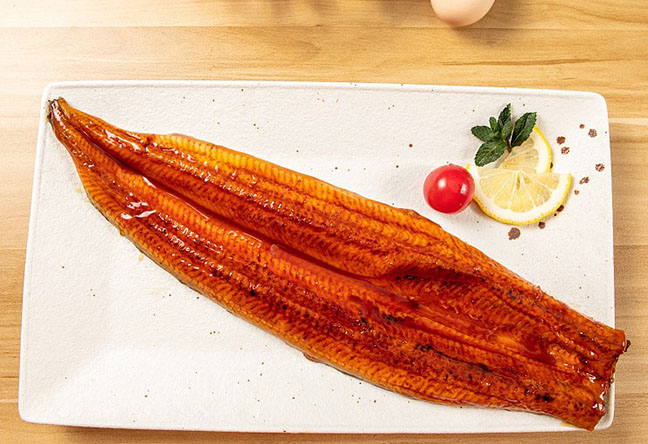
The skin is another defining feature. It is thick, smooth, and rich in gelatinous connective tissue. In Japanese cooking, eel is often filleted with the skin left on, then grilled, steamed, and brushed with a sweet soy-based sauce. Under high heat, the skin becomes tender with a lightly crisp finish.
In our experience, diners who usually avoid fish bones often enjoy eel when they choose a properly processed product. The key is not that eel lacks a skeleton. It is the quality of the filleting, inspection, cooking, and portion control.

So, how are bones removed from eel? The process depends on whether the eel is prepared whole, filleted for a restaurant, or processed into frozen unagi kabayaki.
A whole eel is first secured on a board. The head may be removed, and the eel is opened along the side or belly, depending on the local style. The knife then follows the backbone from head to tail. The aim is to separate the meat while keeping the flesh intact.
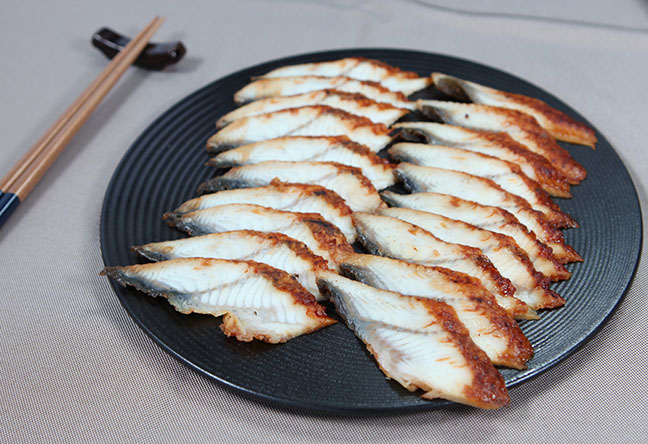
Once the main fillets are separated, the backbone is lifted away. The fillet is then checked by touch and sight. Small pin bones can be pulled with tweezers or trimmed out using a fine knife.
For export products, processing teams typically combine mechanical cutting with visual inspection and hand checking. The eel may be cleaned, filleted, washed, trimmed, heat-treated, sauced, packed, and frozen. Every stage affects the final eating experience.
For buyers handling fresh or frozen eel, these points deserve attention:
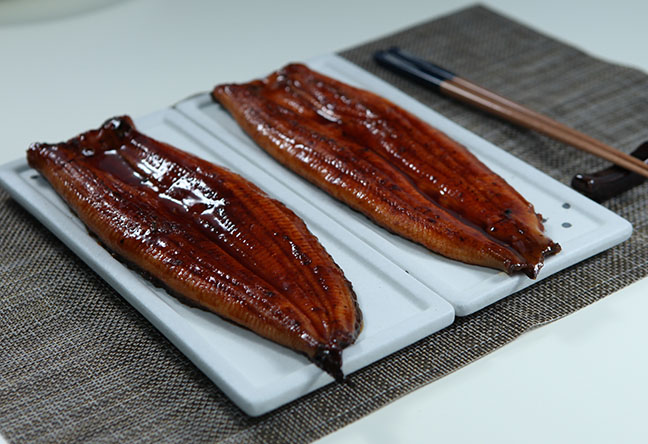
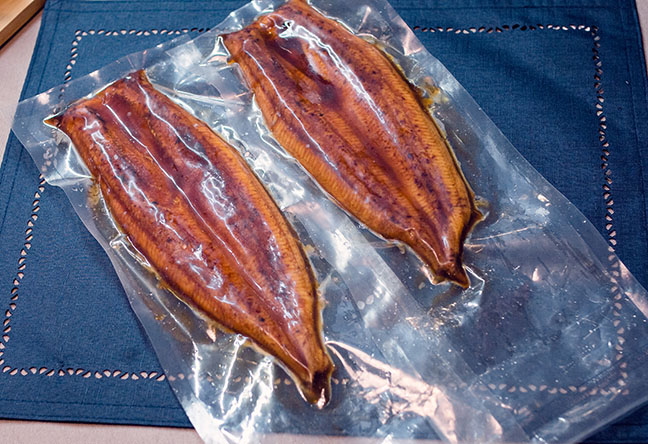
Frozen unagi kabayaki is usually prepared so customers can heat, portion, and serve it with fewer preparation steps. Still, no seafood processor should promise that a natural fish product carries absolutely zero chance of a small bone. Careful inspection greatly reduces the risk, but diners should still chew attentively.
The answer depends on the bone, the preparation, and the person eating it. Tiny bones that have been thoroughly softened during cooking may be swallowed in some traditional dishes. Eel bones are also sometimes deep-fried until crisp and served as a snack in Japanese cuisine.
That does not mean every eel bone is safe to swallow. A sharp or incompletely softened bone can scratch the mouth or throat and may cause choking. Children, older adults, and anyone with swallowing difficulties should receive carefully checked, boneless portions.
Do not rely on chewing alone to find bones. Inspect the fillet before serving, especially when using it in rice bowls, sushi-style dishes, noodle soup, or lunch boxes. If you feel a hard point, remove it rather than assuming heat will solve the problem.
For cooked kabayaki, reheat the product until the center reaches at least 74°C if it is being treated as a ready-to-eat cooked seafood item that has been chilled or frozen. Follow the supplier’s label and local food-safety rules. Sauce can conceal small bones, so check the flesh before adding it to rice.
Fresh eel gives chefs more control over trimming, skin treatment, portion size, and cooking style. It also requires more labor. A restaurant buying whole eel must account for head removal, filleting, bone inspection, yield loss, and cold-chain handling.
Frozen eel can simplify production. A standardized fillet supports portion control and reduces kitchen prep time. For a restaurant serving 150 rice bowls a day, that consistency can matter more than the small differences in trimming between individual fish.
When comparing suppliers, ask for a sample and cook it the way your customers will eat it. Grill one piece, steam another, and reheat a third with sauce. Check the texture, skin, oil release, sauce coverage, and any remaining bones after cooking.
Eelpro Co., LTD supplies eel sauce, frozen unagi kabayaki, freshwater eels, and other frozen seafood for overseas buyers. A sample evaluation can reveal much more than a product name alone. Portion size, glaze weight, thaw loss, and bone control all affect the real cost per serving.
Once the bones have been properly managed, eel is remarkably versatile.
For a warm bowl at home, our eel recipes offer a useful starting point. Heat the eel gently rather than boiling it hard. A long boil can break the fillet apart and make any remaining small bones more difficult to spot.
A sweet-savory glaze also deserves attention. Read our guide to kabayaki sauce to see how sauce balance shapes the final dish. A thick glaze works beautifully with rice, while a lighter brush may be better when you want the eel’s natural flavor to stand out.
After filleting, the backbone is not always discarded. In some Japanese food traditions, eel bones are washed, dried, and deep-fried until crisp. They may be served as a salty snack with beer. The bones must be prepared correctly; a raw or partly cooked bone is not the same as a crisp, fully fried one.
“Boneless” generally means the main bones have been removed. It does not change the fact that eel is a natural animal product. A small fragment may remain, particularly around the tail, belly edge, or pin-bone line.
For commercial buyers, include a simple receiving check. Thaw one sample according to the label, run a gloved hand over the flesh, and examine the cut surface under bright light. Record the result. This small step can help prevent complaints later.
An eel has a skull, a long chain of vertebrae, a backbone, rib structures, and bones or supports associated with its fins. It also has small intermuscular bones, commonly called pin bones, near the backbone. Some softer tissue around the fins and joints may be cartilage, but eel is a bony fish with a true internal skeleton.
Some eel bones can be made edible through thorough cooking or deep-frying until crisp. However, a sharp or partly softened bone can cause choking or injury. Children and people with swallowing problems should be served carefully inspected portions. When in doubt, remove the bone.
A processor opens the eel, follows the backbone with a knife, removes the central bone, and checks the fillet for pin bones. Small bones may be pulled with tweezers or cut away. Commercial products often receive additional trimming and inspection before freezing, cooking, or saucing.
Freezing does not remove bones. The difference comes from processing. A frozen fillet may have the backbone and most pin bones removed before packing, while a whole frozen eel still contains its original skeleton. Always confirm the cut style and bone-control specification with the supplier.
Yes, but serve a carefully checked portion. Remove the skin if the child prefers a softer texture, cut the eel into small pieces, and inspect every piece before serving. Do not assume sauce, steaming, or reheating has eliminated all small bones.
Yes, eels have bones. Their eel skeleton is long and flexible, with a backbone, vertebrae, skull, fin supports, and small eel pin bones. Cartilage may appear in some softer areas, but it does not replace the main bony frame.
For home cooks, the safest approach is simple: buy a well-processed portion, thaw it at 0–4°C, inspect the flesh, and cook it thoroughly. For importers, restaurants, and food distributors, ask about fillet style, inspection procedures, packing, storage, and yield before placing a large order.
Looking for consistent frozen unagi kabayaki, eel sauce, freshwater eels, or frozen seafood for your market? Contact Eelpro Co., LTD for product details and sample discussions. You can also share your favorite eel dish in the comments—or tell us whether you have ever found a pin bone in a kabayaki bowl.



 WhatsApp
 sales@chinaeels.com
 +8619937922411