





Eel fish have a body built for long journeys through rivers, estuaries, and the open ocean. Their narrow profile, continuous fins, flexible spine, protective skin, and efficient swimming style all support migration while giving eels their distinctive appearance.
For seafood buyers, a basic understanding of eel anatomy also makes product identification easier. It can help distinguish freshwater eels from other elongated fish and provide useful context when evaluating products such as frozen freshwater eels and prepared unagi kabayaki.

The word “eel” applies to several groups of long-bodied fish. True freshwater eels in the family Anguillidae include the Japanese eel (Anguilla japonica), European eel (Anguilla anguilla), and American eel (Anguilla rostrata). Moray eels and conger eels are also genuine eels, although they belong to different families and have distinct habitats and body features.
Electric eels, however, are not true eels. They are South American knifefish with a separate evolutionary history. The difference is important when discussing eel fish characteristics in seafood sourcing or biological contexts.
Several visible traits can help identify eel fish:
A long, cylindrical or slightly compressed body.
A relatively small head compared with total body length.
One continuous fin margin extending around the back and underside.
Small scales that are deeply embedded in the skin or hard to see.
A tapered tail and smooth, slippery skin covered with mucus.
Paired pectoral fins near the head in many true freshwater eels.
Freshwater eels are born in the ocean, spend much of their growth period in coastal waters, rivers, lakes, or estuaries, then return to the sea to reproduce. This pattern is known as catadromous migration. Routes and timing differ by species, but the same body plan must handle strong currents as well as narrow, complex waterways.
The eel body structure favors flexibility and endurance over short, explosive bursts of speed. An eel fish swims by creating waves along its body. Muscles on alternating sides contract in sequence, sending a traveling wave from the head toward the tail. The long fin edges help push against the water and keep the fish stable.
An eel has many vertebrae compared with a typical deep-bodied fish. These vertebrae let the body form repeated curves while the muscles maintain a steady swimming rhythm. This movement is called anguilliform locomotion.
Because nearly the entire body contributes to propulsion, eel fish can move forward, turn in tight spaces, and pass through vegetation or rocky channels. The same motion also works in reverse. An eel may back away from a shelter or reposition itself without needing to turn around.
The dorsal fin runs along the back, while the anal fin extends along the underside. Both join around the tail, forming a continuous fin margin. In many eel species, these fins are low in height but cover a large portion of the body.
This layout gives the eel fish controlled, steady movement during undulating swimming. It also eliminates the need for large, separate fins that might snag on roots, stones, or dense aquatic plants. Pectoral fins near the head help with turning, braking, and holding position.
Many freshwater eels have no obvious pelvic fins. Without paired fins near the rear half of the body, they maintain a smooth, narrow outline that helps them pass through small gaps.
The skin is one of the most recognizable features of eel anatomy. It produces a thick mucus layer that reduces friction and helps protect the surface from abrasion, parasites, and some microorganisms. Mucus does not make an eel invulnerable, but it is particularly useful when the fish moves through rough bottoms and thick vegetation.
Eel scales are small, thin, and embedded beneath the skin. Unlike the large, visible scales of carp and many marine fish, they are difficult to notice. This gives eels a smooth appearance and allows the body to bend repeatedly without exposed scales catching on the surroundings.
The skin also contributes to breathing to a limited extent. Eels still depend mainly on their gills, but cutaneous gas exchange can help under suitable conditions. That is one reason an eel can tolerate short periods out of water if its skin remains moist. It does not mean the fish can survive indefinitely without proper water and oxygen.
The gills extract dissolved oxygen as water passes over their surfaces. An eel fish has a long, narrow head and a mouth suited to taking in both water and food. During swimming, coordinated movements of the mouth and gill covers help maintain water flow across the gills.
Some eel species can cross wet ground for short distances. Their mucus-covered skin and ability to absorb some oxygen through the skin can help in damp conditions. For commercial handling, however, reliable temperature control, oxygen management, and hygienic storage remain essential.

Freshwater eel fish undergo major habitat changes during migration. A growing eel may move between saltwater and freshwater before eventually returning toward the ocean. Its internal physiology must regulate water and salts in both environments.
Fish in freshwater tend to gain water through their bodies and lose salts to the surrounding environment. Marine fish face the reverse challenge: they lose water and take in excess salt. Eel adaptations include changes in drinking behavior, kidney function, gill ion transport, and hormone activity as the fish shifts between these conditions.
Before ocean migration, a mature freshwater eel undergoes a process known as “silvering.” Its back often darkens, its sides become silvery, its eyes enlarge, and its pectoral fins may become more developed. The digestive system also changes as the fish prepares for a long migration and, in many anguillid species, stops feeding during the spawning journey.
Long migrations demand substantial stored energy. Mature eels build fat reserves during the feeding stage. Those reserves support swimming, physiological changes, and reproductive development during the oceanward journey.
The eel fish body is suited to sustained, economical movement. Rather than depending solely on quick bursts, it can maintain a wave-like swimming pattern for extended periods. Ocean currents may also assist migration, although the fish still needs its own swimming ability to orient and make progress.
Smell plays an important role in many fish, and eels have a well-developed olfactory system that helps them detect chemical signals in the water. Their lateral line system detects water movement and vibration. Together, these senses can support orientation in dark rivers, turbid estuaries, and deep marine water.
Researchers are still studying how different eel species orient across the open ocean. The life cycle of anguillid eels includes a remarkable transition from transparent larvae to glass eels, yellow eels, and silver eels. Each stage has its own body form and behavior.
Eel fish do not look the same throughout their lives. After hatching in the ocean, anguillid eels develop into leaf-shaped leptocephalus larvae. These larvae drift with ocean currents before transforming into transparent glass eels near continental or island coasts.
Glass eels enter estuaries and may continue into freshwater habitats. As they grow, they become yellow eels, named for the yellow-brown coloration that often appears along the sides and belly. During the silver eel stage, their bodies become adapted for ocean migration and reproduction.
Color varies with species, habitat, age, and water conditions, so it should not be the only identification method. Body shape, fin arrangement, head profile, skin texture, and source area offer more dependable information when assessing eel fish characteristics.
Biology helps explain why eel is handled and prepared in particular ways. Its long muscle structure creates a firm, rich texture, while the skin contains connective tissue that changes during cooking. Heat softens both flesh and skin, making eel well suited to grilling, steaming, braising, and rice dishes.
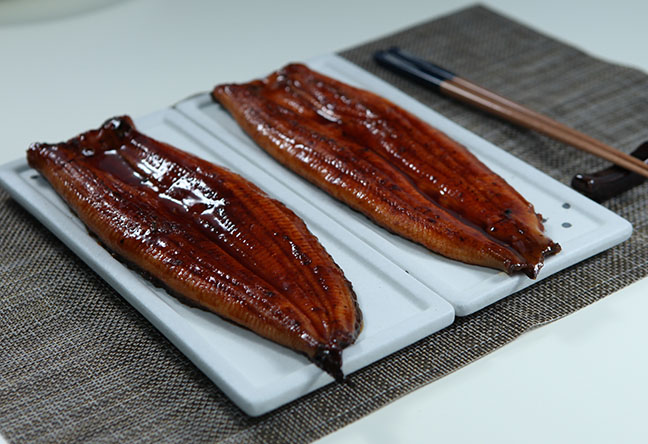
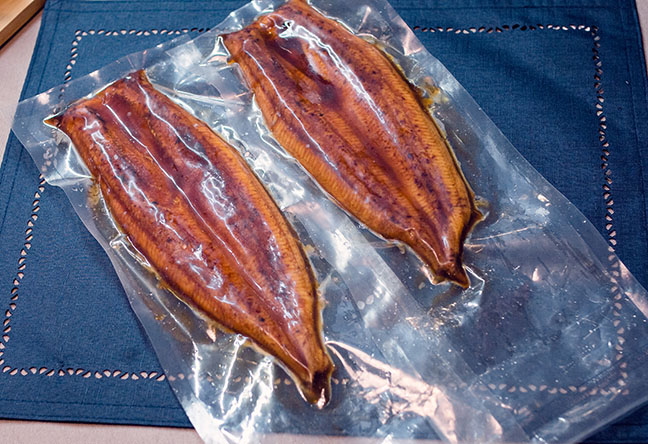
For foodservice and wholesale buyers, product specifications remain the priority: species, origin, size range, processing method, glaze, packaging, frozen storage, and documentation. At Eelpro Co., LTD, we supply frozen freshwater eels and prepared products for overseas customers who require consistent formats.
Our eel sauce works well with rice bowls, grilled eel, noodles, and other dishes that need a sweet-savory glaze. Buyers interested in the role of sauce in preparation can also read our guide to kabayaki sauce.
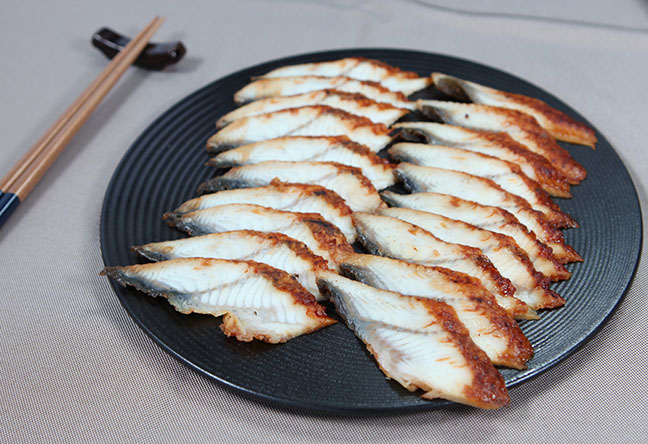
In practical cooking, eel is often filleted, steamed, grilled, and brushed with sauce several times. Japanese unagi don, unagi sushi, and eel noodle soup each showcase the fish differently. Our eel recipes provide one example for foodservice teams developing menus.
The eel fish body combines a flexible spine, continuous fins, mucus-covered skin, embedded scales, strong sensory systems, and changing salt-balance functions. Together, these features support movement through rivers and oceans across several life stages.
If you are sourcing frozen freshwater eels, unagi kabayaki, eel sauce, or other frozen seafood, contact Eelpro Co., LTD to discuss product specifications, packaging, and export supply.
Eel fish anatomy supports migration through a flexible backbone, long muscle bands, and continuous dorsal, caudal, and anal fins. This system produces efficient wave-like swimming. The skin, gills, kidneys, and gill ion transport systems also help the fish manage movement between freshwater, estuarine, and marine environments.
Important features include a narrow flexible body, protective mucus, embedded scales, strong sensory organs, and the ability to use both body waves and fins for movement. Eel adaptations also include physiological control of water and salts, stored body fat, and body changes before ocean migration.
Look for a long cylindrical or slightly compressed body, a small head, a tapered tail, small embedded scales, and a continuous fin margin around the back and underside. Freshwater eels commonly have pectoral fins near the head and lack obvious pelvic fins near the rear of the body.
No. Electric eels are knifefish, not true eels. They have an eel-like shape, but their anatomy and evolutionary classification differ from freshwater eels, moray eels, and conger eels.





 WhatsApp
 sales@chinaeels.com
 +8619937922411