





An eel rice bowl sells itself. That glossy, caramelised unagi draped over steamy rice — customers see it on a menu and order without hesitation. But serving fifty of them during a lunch rush? That's where things get real.
We've worked with restaurant groups across Southeast Asia and North America who all hit the same wall. The flavor is never the problem. Consistency, speed, and holding quality — those are the puzzles that need solving. So let's solve them.

A well-built eel rice bowl hits every note operators care about. High perceived value. Low component count. Ridiculous speed of assembly once prep is done. The protein comes pre-cooked and pre-sauced if you source right — which we'll get to. Your kitchen basically reheats, slices, and plates. That's a 90-second ticket time on a dish you can charge premium pricing for.
Compare that to a grilled salmon bowl where you're managing raw protein, marinade timing, and doneness checks per order. The labor math isn't even close.
And customers? They treat unagi as a special-occasion protein. It carries an indulgence factor that chicken or beef bowls simply don't. That means better margins and repeat orders from diners who can't get it at home.
We're biased, sure. But here's what kitchen managers tell us after trying fresh eel: it's a nightmare. Perishability, inconsistent sizing, and the labor of filleting and saucing from scratch chew up any margin advantage.
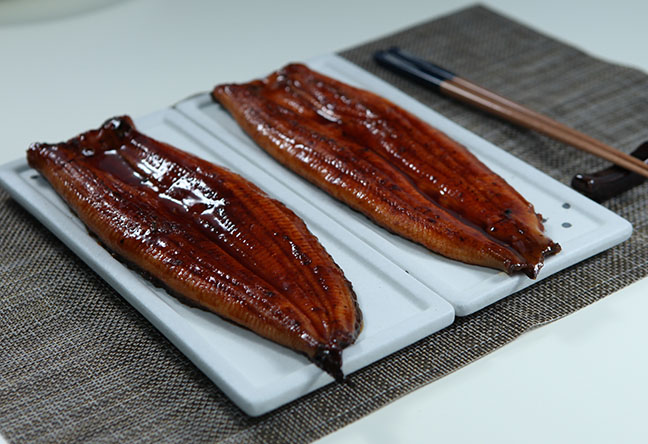
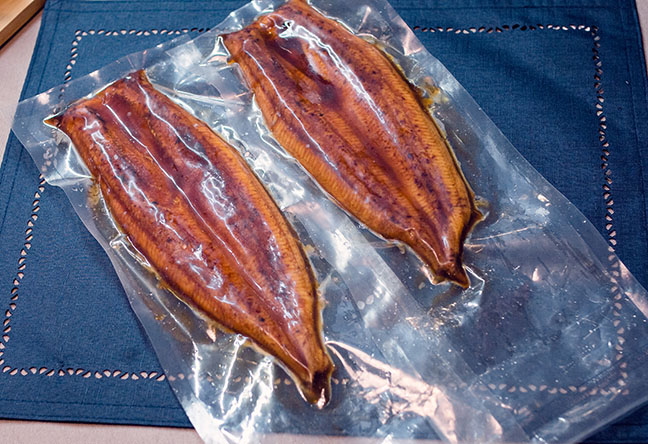
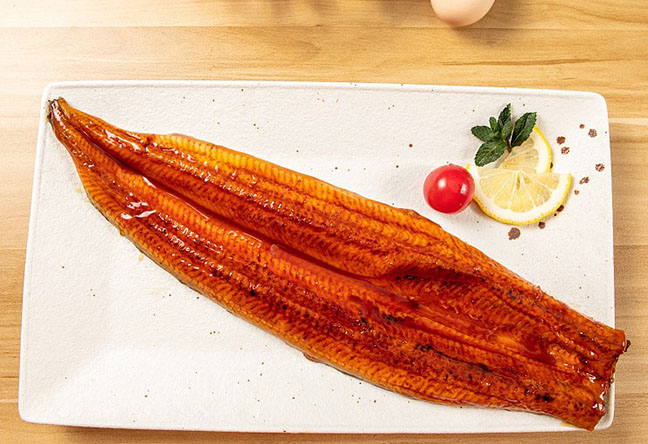
Frozen unagi kabayaki flips that equation. The eel arrives fully grilled, glazed with kabayaki sauce, and flash-frozen in individual vacuum packs. Each fillet is portion-controlled — typically 100g to 160g depending on the spec you order. Thaw, reheat, and it's ready. No filleting station. No sauce kettle bubbling all shift. No waste from spoilage.
Storage is straightforward: -18°C in sealed packaging gives you a 24-month shelf life. Pull what you need for the next service period and thaw overnight under refrigeration at 0–4°C. A cryovac-sealed fillet thaws cleanly with zero drip loss — the sauce stays on the eel where it belongs.
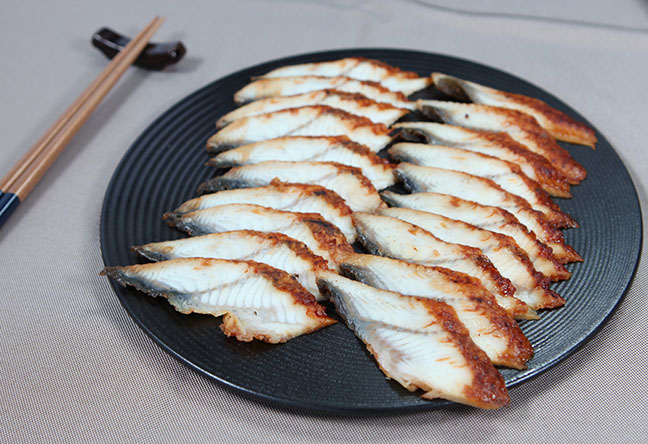
Reheating temperatures matter. We've tested this across combi ovens, salamanders, and even conveyor toasters. The sweet spot is 180°C for 4–5 minutes from thawed, or 8–10 minutes if going straight from frozen. You want the surface sugars in the kabayaki glaze to just start caramelising again — that's what gives you the signature sheen. Overshoot and the sauce burns into bitterness. Undershoot and the fat stays firm instead of rendering silky.
A dry eel rice bowl is a sad eel rice bowl. The unagi needs enough glaze to seep down into the rice, creating those bites where grain, fat, and sweet-savory sauce merge. If your fillets arrive pre-sauced, you still want extra tare on hand for finishing.
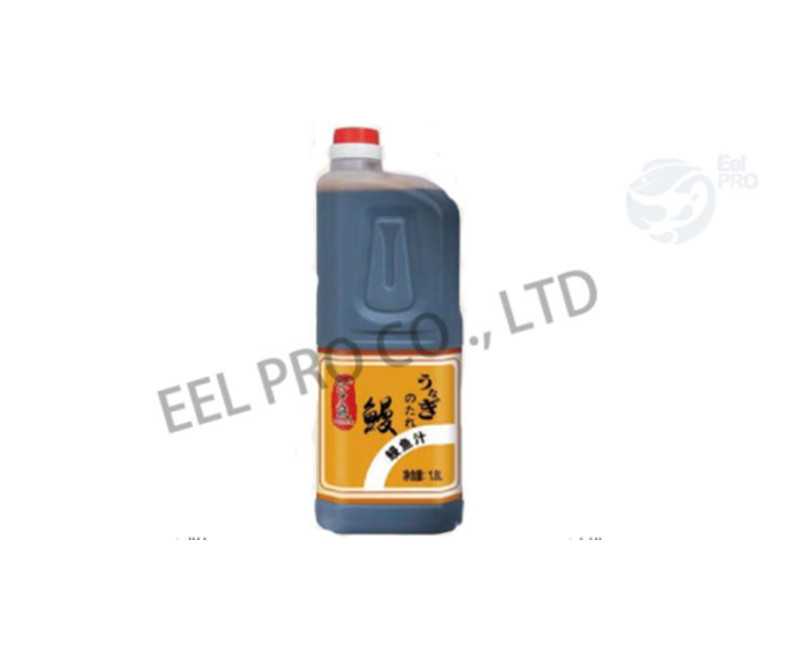
Our eel sauce is a reduction of soy sauce, mirin, sugar, and eel extract — no shortcuts like corn syrup or caramel coloring. It has a viscosity that clings rather than pools. For service, keep it warm in a squeeze bottle in a bain-marie at 55–60°C. A cold sauce hitting a hot bowl kills the aroma you want hitting the table.
We've written before about why the sauce is the backbone of any kabayaki dish — our kabayaki sauce deep-dive covers the production process if you're curious about what separates a mass-market tare from a proper one.
Here's the workflow we've seen work in kitchens doing 80–120 eel rice bowl covers per service.

The bottleneck is almost always the reheating step, not assembly. If you're running more than 4 fillets per reheat cycle, invest in a combi oven with multiple rack positions. A single-deck salamander caps you at about 30 bowls per hour. A full-size combi triples that.
Menu planning for any donburi program needs to account for demand curves. Tuesday lunch is not Friday dinner. Here's how operators we supply approach eel donburi meal planning.
Use a par-level system. Track actual consumption by daypart for four weeks. Set your thaw quantity to 110% of the trailing average for that day. The frozen shelf life means you aren't gambling — overages just stay frozen for the next cycle. No waste pressure.
Build a modular menu. A single unagi fillet can anchor three different bowls at three price points. The classic unagi don (fillet + tare + rice) is your premium SKU. An unagi-and-avocado bowl with spicy mayo hits a younger demo at a lower food cost by using a slightly smaller fillet offset by cheaper components. An unagi chazuke — where hot dashi is poured tableside over the bowl — becomes a winter special using the same core ingredient. Same prep, three menu lines.
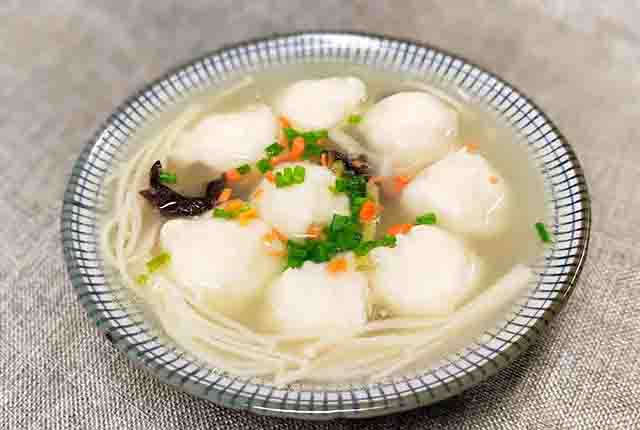
We also see smart kitchens repurposing the same frozen unagi into non-bowl formats. An unagi hand roll as a lunch add-on. Unagi fried rice as a special. If you're looking for other formats, our eel noodle soup recipe shows how the same fillet works in a broth-based dish — great for using trim pieces or slightly irregular fillets that don't photograph as cleanly in a bowl.
Delivery changes everything. A dine-in eel rice bowl arrives at the table with the fillet still sizzling at the edges. A delivery bowl sits in a container for 20–40 minutes, steaming itself. Different physics, different prep.
The biggest mistake kitchens make: assembling delivery bowls identically to dine-in bowls. Don't. Steam trapped in a sealed container turns the rice gummy and the eel's crisp edges soft. Accept that you're optimising for a different experience and adjust.
Rice goes in first, slightly under-portioned. 180g instead of 220g — the extra headroom in the container reduces steam saturation. Eel goes in a separate compartment or gets a vented lid insert. If your packaging doesn't support that, rest the fillet on a small sheet of parchment to create an air gap underneath. Sauce on the side. Always. No exceptions. A 30ml sauce cup lets the customer pour and control sauciness, and it prevents the bowl from arriving as a soggy puddle.
For packaging materials, polypropylene (PP) containers with a clear PET lid hold up best. They resist warping at the temperatures involved and the clarity shows off the eel. Black bases with clear lids are the standard for a reason — the eel's color pops against black.
冷知识 (a cool fact worth knowing): The reason unagi holds up better than most fish in delivery is the fat content. Farmed eel runs around 20–25% fat, which stays tender rather than drying out during the hold. Lean white fish like cod or tilapia turn chalky after 15 minutes in a container. Eel gets richer.
When a single location grows to three, or a cloud kitchen adds a second brand, eel bowl menu solutions need to scale without breaking the prep model.
The easiest lever is centralised thawing and portioning. A central commissary thaws exact counts, portions garnishes into sealed kits, and ships them to satellite kitchens cold (not frozen). Each location only handles the final reheat and assembly. This removes the "did they pull enough fillets?" panic from busy shifts.
Another lever: standardized bowl builds with photo specs. Every cook should have a laminated card showing the exact gram weights, drizzle pattern, and garnish placement. The visual consistency across locations is what builds a brand around a single dish. We've seen chains build their entire identity around a perfect eel rice bowl because nobody else in their market could execute it reliably.
For procurement, the math on a 10kg case of frozen unagi kabayaki works out to roughly 80–100 bowls depending on fillet weight. At two cases per week, that's a manageable inventory turn with a 24-month shelf life buffer. No rush orders, no stockouts, no weekend panic calls to suppliers.
The key is shifting labor to pre-service prep. Thaw fillets overnight in refrigeration, batch-cook rice to finish 30 minutes before opening, and pre-warm your eel sauce in squeeze bottles. During service, assembly takes under 90 seconds: portion rice, reheat the fillet at 180°C for 4–5 minutes, lay it over the rice, drizzle tare, and garnish. The reheating step is the bottleneck — a combi oven with multiple racks handles higher volume than a single-deck salamander. Track your throughput to size equipment correctly.
Use polypropylene containers with clear PET lids. Portion rice slightly under the dine-in weight (around 180g) to reduce steam buildup. Keep the eel fillet elevated — either via a compartment divider, a parchment sheet underneath, or a vented insert. Sauce must go in a separate 30ml cup. Black bases with clear lids are the industry standard because the eel's glazed surface shows well against the dark background. Avoid foam clamshells — they trap too much moisture and the eel's edges go limp.
Start with a four-week consumption log by daypart. Set thaw quantities at 110% of the trailing average for each day. Frozen unagi kabayaki has a 24-month shelf life at -18°C, so over-thawing carries no waste penalty — extras stay frozen. Use a modular menu approach: one fillet type anchors a classic unagi don, an unagi-avocado bowl, and a seasonal unagi chazuke, each at different price points and food costs. For multi-location operations, centralise thawing and kit portioning, and ship cold to satellite kitchens for final assembly.
The difference between an eel rice bowl that builds a following and one that disappoints isn't the recipe. It's the systems around it. Sourcing a consistent frozen product. Dialing in the reheat temp. Packaging smart for delivery. Training every cook to the same build spec.
We supply frozen unagi kabayaki and eel sauce to foodservice operators in over 15 countries. If you're evaluating unagi for your menu — whether it's a single location or a multi-outlet rollout — we can help with sampling, spec sheets, and production planning advice based on real kitchen workflows.
Browse our unagi kabayaki product details or reach out to discuss volume pricing. You focus on the bowls. We'll handle the eel.

 WhatsApp
 sales@chinaeels.com
 +8619937922411