





Pricing an eel sushi roll feels like walking a tightrope. Charge too little, and you give away one of your most luxurious ingredients. Charge too much, and the plate sits untouched. It's a balancing act that every sushi chef and restaurant owner faces. We’ve watched kitchens lose hundreds of dollars a month simply because they never really broke down the cost per plate. This guide is meant to change that.
We’ll walk through real numbers—portion sizes, ingredient yields, and the often-overlooked extras that eat into margins. No theory. Just what you need to price an unagi sushi roll with confidence. And because your choice of supplier makes a measurable difference, we’ll touch on how frozen unagi kabayaki from a consistent source like unagi kabayaki can keep your food cost predictable week after week.
Eel isn’t salmon. It isn’t tuna. The texture is rich, fatty, and distinct. That fat content means a little goes a long way in flavor, but it also means the cost per gram is higher. A single 8-piece eel maki roll can hold 15–25% of the total food cost of a combination platter if you aren’t careful. Yet it’s a menu magnet. People order it because it feels indulgent. If you underprice it, you’re leaving money on the table. If you overprice it, you risk losing the customer who might have otherwise ordered two more items.
In our experience, the most common mistake is treating the eel as just another protein line. It needs its own category in your cost tracking sheet. Let’s start with the main event: the fillet itself.
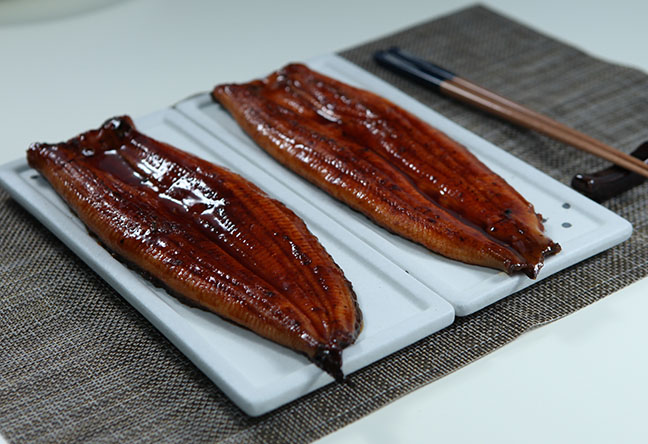
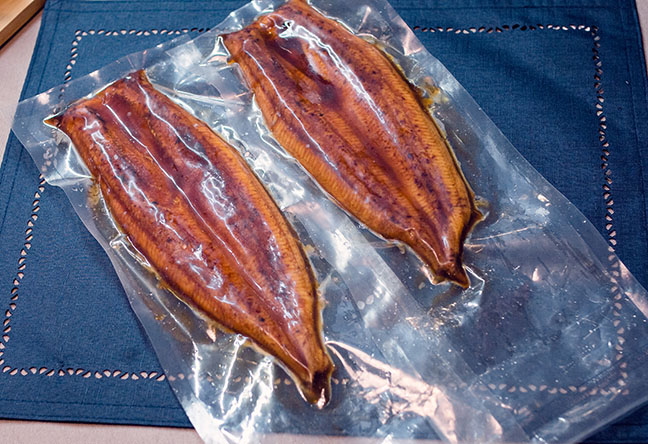
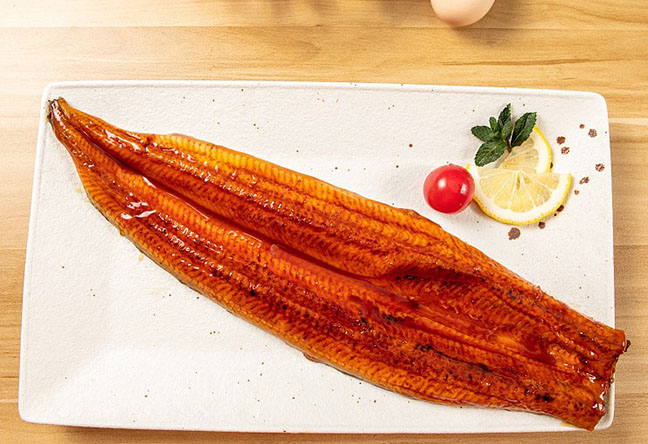
Most standard maki rolls use a strip of eel cut about 1.5–2 cm wide along the length of the fillet. A whole frozen unagi kabayaki fillet typically weighs between 200g and 260g after thawing, depending on the size grade you order from your supplier. After trimming the tail end and any overly thin edges, you’re left with roughly 180–230g of usable product.

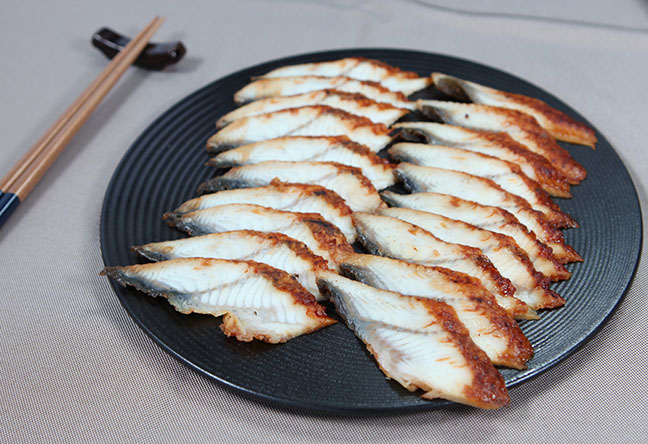
We’ve seen kitchens slice that into 8 to 10 strips for rolls. That means each strip—the core of an eel sushi roll—weighs between 20g and 28g. So per roll, your eel cost is simply the price per gram of the fillet multiplied by that portion weight. If your landed cost for a high-quality frozen unagi is, say, $0.032 per gram, then an average 25g portion lands at $0.80. If you use a bigger, thicker cut, it climbs closer to $1.00 or beyond.
Don’t ignore the bits you trim. Some chefs toss them. Smarter operations save the offcuts for eel fried rice, an eel donburi topping, or a mini unagi roll special. That recovers cost. Even so, for your main eel sushi roll line, assume 15% trim loss. Factor that into the per-gram price right away, not as an afterthought. A fillet that costs $6.80 per piece with 15% loss effectively costs $8.00 for what actually lands on the cutting board. Suddenly your $0.80 eel portion is more like $0.94.
An unagi sushi roll rarely travels alone. It’s often paired with cucumber, avocado, maybe cream cheese in some Western-style rolls. Those costs are small—often $0.10 to $0.20 per roll combined—but they add up across a busy shift. Then there’s sushi rice. A single roll uses about 90–110g of cooked rice, roughly $0.08 to $0.12 depending on your rice grade and seasoning. Nori is a few cents. All together, the non-eel ingredients typically sit between $0.20 and $0.35.
Eel sauce—unagi tare—is the gloss that makes the roll shine. A drizzle across the top, maybe an extra brush on the eel before rolling, can consume 5–8 ml per plate. If you’re making your own sauce from scratch, hidden costs like mirin, soy, and sugar might pinch. But many busy kitchens rely on a ready-made, balanced tare. Our eel sauce (unagi tare) is formulated to cling without being overly sweet, and a single liter can cover roughly 125–150 rolls. That’s about $0.07 to $0.10 per roll in sauce cost. Tiny, but when you calculate your sushi roll food cost to the decimal, every cent matters.
Let’s put a working plate together. Assume you’re building an 8-piece eel maki roll with avocado and cucumber, topped with sauce.
That’s your baseline. It can swing by 20% in either direction based on the size of your fillet, the grade of eel, and market prices. The math only works if you update it every month. We’ve seen operators run the same cost sheet for six months, only to realize wholesale eel prices had nudged up and they’d been quietly losing $0.15 on every roll sold. Small? Multiply that by 300 rolls a month and you’ve lost a meaningful chunk of profit.

Foodservice wisdom says your target food cost percentage should be around 25–32% of the menu price, depending on your concept. For a specialty item like an eel sushi roll—where the protein is premium—you might push closer to 30–35% because it brings customers in and they tend to add higher-margin items like beverages or appetizers.
Using a 30% food cost target, that $1.31 plate would need a menu price of $4.37. With a 28% target, it rises to $4.68. But this is just the ingredient math. Labor, packaging (for takeout), and the fact that eel is perceived as a luxury allow you to price higher. Many mid-range sushi restaurants in North America list a standard eel maki roll at $5.95 to $7.50. Premium locations can go higher. The gap between your $1.31 cost and that $6.50 menu price is where your rent, staff, and sauce brush get paid.
Don’t put your eel sushi roll right next to a California roll priced at $4.25. It looks expensive. Instead, pair it with a specialty roll or an unagi sushi roll combo that includes a small side of miso soup or sunomono. The perceived value jumps. You can also create a “deluxe” eel roll version using a thicker cut of unagi, a little extra sauce drizzle, and maybe toasted sesame seeds, priced $1.50 above the standard. That gives customers a choice and anchors the standard roll as the “reasonable” option.
One common trap is treating the eel sauce as an afterthought. A poorly balanced sauce can ruin the sweet-savory harmony that defines kabayaki. Too runny and it soaks into the rice, making the roll heavy. Too thick and it overwhelms. A ready-to-use tare, like the one we offer for wholesale, keeps consistency across shifts and eliminates the labor of reduction. Read more about how kabayaki sauce works as a secret weapon in both traditional and fusion dishes.
Another pitfall: not factoring in the cost of quality variance. A frozen unagi that’s been poorly frozen can dry out, lose its glaze, or crumble when sliced. You’ll end up with more waste and a worse-looking roll. Sourcing from a supplier that flash-freezes the kabayaki at peak freshness gives you predictable yields and a glossy finish that sells itself. That’s why we emphasize consistent sizing and glaze retention in every frozen unagi kabayaki shipment we send out.
Finally, don’t forget to revisit your eel roll menu pricing when your distributor raises rates. A $0.20 per pound increase at the dock can shift your per-roll cost by a few percentage points. Build a simple spreadsheet that recalculates based on the last invoice price. It’s five minutes a month that pays back in margin protection.
Start with the usable weight of eel per roll (after trim loss). Multiply that weight by the price per gram of your frozen unagi kabayaki. Add costs for rice, nori, vegetables, and eel sauce. Then divide that total by your target food cost percentage (e.g., 0.30) to get a suggested menu price.
A profitable price often falls between $5.50 and $7.50 for a standard 8-piece roll in a casual dine-in setting. This assumes a 25–30% food cost and accounts for the premium nature of unagi. Upscale venues can price higher, especially if they offer a larger eel cut or a specialty presentation.
Most sushi chefs use 20–28 grams of cooked unagi per roll, cut as a single strip from a glazed kabayaki fillet. The exact weight depends on the size of the fillet and how generous you want the roll to be. A 250g fillet typically yields 8–10 portions, including trimmed usable pieces.
An eel sushi roll can be one of the most reliable profit drivers on your menu—if you control the three big levers: portion size, ingredient quality, and accurate costing. By working with a dependable wholesale source, you remove the wild swings in trim yield and flavor consistency that kill margin. We supply frozen unagi kabayaki and unagi tare to restaurants and distributors worldwide, and we’ve seen firsthand how a small shift in supplier can ripple across the entire P&L.
Take your last four invoices, re-measure your average fillet yield, and recalculate today. You might find room for an extra $0.30 in profit on every roll. And if you’re looking for inspiration beyond sushi, explore other eel recipes that can make use of your trimmed eel ends. Every gram counts. We’d love to hear how you price your unagi sushi roll—share your approach or challenges in the comments below.



 WhatsApp
 sales@chinaeels.com
 +8619937922411