





An eel sushi roll adds rich, premium appeal to a menu without demanding a complicated sales strategy. For restaurant operators, the questions are straightforward: How much eel should go into each roll? What price makes sense? And how do you keep the item appealing while protecting margin?
The answer depends on your purchase cost, local price points, roll size, labor, packaging, and the role the item plays on the menu. A clear plan for portions and pricing makes it easier to sell unagi consistently across dine-in, takeaway, delivery, and foodservice channels.
Before setting a price, decide what the roll should accomplish. A restaurant may position an eel roll as:
A premium signature item that lifts the average check.
An approachable introduction for guests trying unagi for the first time.
A reliable option on a delivery or takeaway menu.
A component of combination platters with other sushi and sashimi.
Each role calls for a different approach to portions and pricing. A signature roll might feature more eel, avocado, cucumber, sesame, and a visible sauce finish. A value-focused roll may use a smaller eel portion and appear in a lunch set. Neither model is inherently better; the right choice depends on your customers and service format.
During unagi sushi roll menu planning, review three menu details together: the product name, description, and photograph. If the menu promises “premium grilled eel,” the portion should meet that expectation. If eel is described as one flavor among several fillings, a smaller, measured portion may be appropriate.
Ingredient cost involves more than the price of the eel. Create a recipe-costing sheet for one finished roll and include every item that changes with each sale.
| Cost item | What to record |
|---|---|
| Eel | Purchased price, usable weight, and portion weight |
| Rice | Cooked rice weight and cost per finished batch |
| Fillings | Cucumber, avocado, egg, sesame, and other ingredients |
| Sauce and garnish | Unagi tare, mayonnaise, spring onion, sesame, or other finishing items |
| Packaging | Boxes, trays, lids, chopsticks, napkins, and labels |
For frozen eel, calculate from the usable product cost rather than the carton price alone. If a pack contains 1,000 grams and the invoice cost is $18, the purchase cost is $0.018 per gram. A 35-gram eel portion carries an eel cost of $0.63 before handling or yield adjustments.
This is a calculation example, not a market quotation. Your actual cost will vary by grade, pack size, specification, freight, and contract terms.
Record the cooked or ready-to-serve yield used in your kitchen. If the product is portioned after thawing, measure usable weight at that stage. This gives the team a more accurate basis for eel sushi roll pricing.
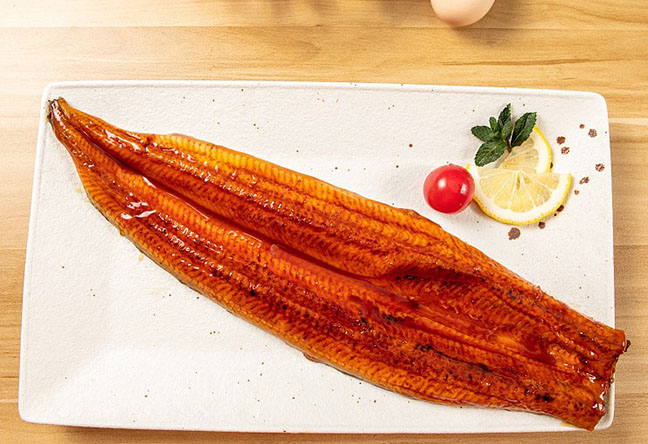
For product specifications, review Eelpro’s frozen unagi kabayaki range and compare available pack formats with your production needs. Sauce affects both flavor consistency and cost, too. Our eel sauce product page provides a useful reference for unagi tare purchasing.
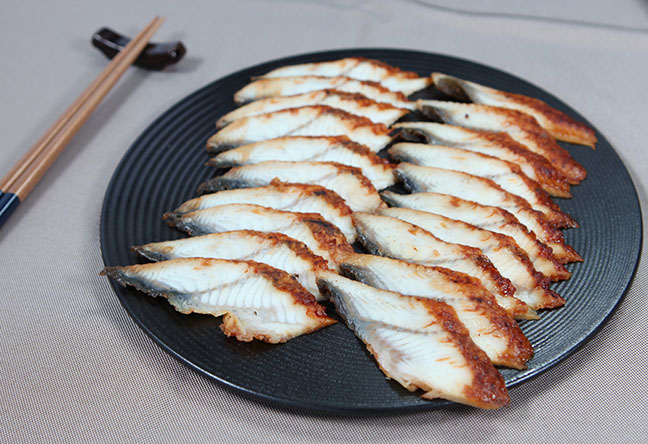
Portion size must balance guest perception and food cost. For a standard eight-piece roll, many operators test a measured eel portion of 30 to 45 grams per roll. This is not a universal rule. A large specialty roll, hand roll, or roll where eel is the only filling may need more. A mixed-filling roll may need less.
Consistency matters most. Weighing every roll during service is rarely practical, but the prep team can portion eel into marked containers or follow a fixed cutting guide. Record the target weight in grams and train staff to follow it.
A practical starting point is 30 to 45 grams of ready-to-use eel for an eight-piece roll, then adjust after testing appearance, customer response, and cost. Review the result from three angles:
Visual value: Can guests clearly identify the eel in the cut pieces?
Eating balance: Does the rice or another filling overwhelm the eel?
Cost control: Does the portion meet your target food-cost percentage?
Use the same standard for dine-in and takeaway unless packaging or product format requires a change. If a delivery roll receives extra sauce or garnish, add those items to the recipe card instead of treating them as free additions.
A basic menu pricing formula is:
Selling price = total variable cost ÷ target food-cost percentage
Suppose the total variable cost of one roll is $3.20 and the restaurant uses a 30% food-cost target. The calculated price is $10.67, which may be rounded to $10.95 or $10.99 depending on the menu’s pricing style.
Use this calculation as a starting point, not the final answer. A menu price must also suit the neighborhood, restaurant concept, portion size, competitor set, tax treatment, delivery commission, and guest expectations. A roll that works at $10.99 in a casual restaurant may need a different presentation and price in a premium sushi bar.
Use this five-step process:
Calculate the full variable cost per finished roll.
Select a food-cost target that fits your wider operation.
Check comparable rolls in your local market and service category.
Set a test price that reflects the visible portion and description.
Review sales, gross profit, discounts, waste, and customer feedback after launch.
For delivery, calculate margin after commission and promotional discounts. A roll with a healthy dine-in margin can lose money when sold through a platform at a reduced price. Consider a separate delivery menu, bundle, or minimum order instead of discounting every individual roll.
Sushi roll portion control works best when it is built into daily operations rather than left to memory. Add the following to your kitchen system:
A recipe card with eel weight, rice weight, fillings, sauce, and garnish.
A portioning tool or marked container for eel.
A weekly spot check of three to five finished rolls.
A waste log for damaged pieces, overproduction, and expired ingredients.
A review process whenever supplier cost or pack specifications change.
Track theoretical usage against actual usage. If the recipe calls for 35 grams per roll and the team sells 100 rolls, theoretical usage is 3,500 grams. If the inventory report shows substantially higher use, check trimming, staff meals, over-portioning, and production waste.
Small differences add up quickly. An extra 5 grams on 100 rolls means 500 grams of additional eel used. That may be acceptable if it supports a higher selling price, but it should be a deliberate decision.
Profit comes from the overall menu mix, not only the margin on one item. A restaurant can offer a classic eel roll, a premium version, and a combination set. Each option gives customers a different price point while using related ingredients.
For example:
Classic eel roll: measured eel, cucumber, sesame, and sauce.
Premium eel roll: a larger eel portion, avocado, and a stronger visual finish.
Combination set: eel roll paired with lower-cost vegetable or seafood items.
Use sales reports to compare contribution, not sales volume alone. An item that sells fewer units may generate more gross profit per order. Another may sell frequently but need a price adjustment if its cost has increased.
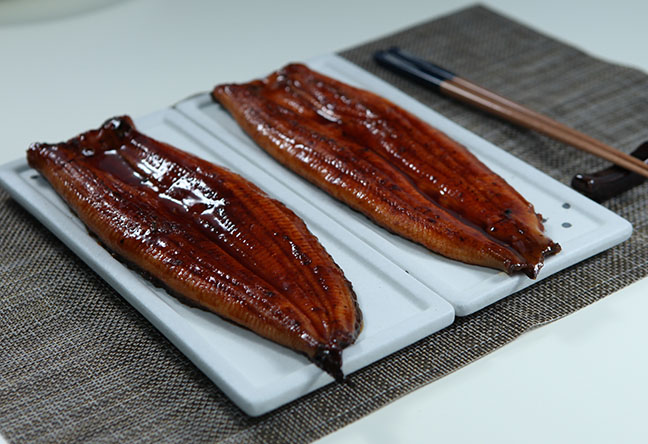
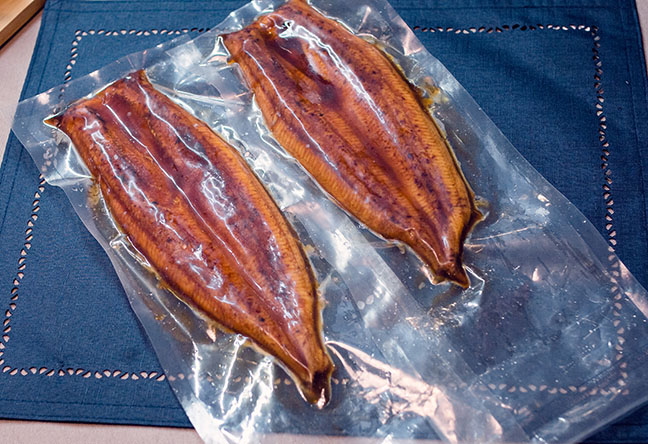
For unagi roll foodservice, the purchasing and service model may differ from a restaurant menu. Cafeterias, hotels, catering companies, and multi-unit operators often need consistent packs, clear case information, and predictable portion yields. A frozen unagi kabayaki product can support standardized menu calculations when its pack specification matches the planned portion.
Pair the roll with a consistent sauce program. The article on kabayaki sauce explains how sauce contributes to the familiar sweet-savory profile associated with kabayaki dishes. Keep sauce amounts measured; an uncontrolled pour changes both flavor and cost.
Foodservice buyers can improve profitability by connecting purchasing decisions to the actual menu recipe. Start with the target portion, then compare case price, usable yield, storage requirements, and pack format. The lowest invoice price is not always the lowest cost per finished roll if the product creates more waste or inconsistent portions.
Buyers should also:
Ask suppliers for product weight, pack count, glaze or sauce details, and storage conditions.
Compare cost per usable gram rather than cost per case only.
Set a reorder point based on sales history and freezer capacity.
Review sauce, packaging, and garnish costs at the same time as eel cost.
Share supplier changes with the chef and finance team before updating the menu.
The strongest results usually come from a short feedback loop between purchasing, kitchen management, and menu pricing. When an ingredient price changes, update the recipe-costing sheet promptly rather than waiting for a quarterly review.
If your operation also serves other eel dishes, related menu items can help maintain demand across different dayparts. Eelpro’s eel recipes offer another example of how freshwater eel can be used beyond sushi while purchasing teams keep product specifications consistent.
Calculate the complete variable cost per roll, divide it by your target food-cost percentage, and then compare the result with local menu prices. Adjust for dine-in, takeaway, delivery commissions, discounts, portion size, and the restaurant’s concept. Review the item after launch using both sales volume and gross profit per roll.
For an eight-piece roll, 30 to 45 grams of ready-to-use eel is a practical starting test. The final amount depends on the roll’s size, fillings, price point, and whether eel is the main ingredient. Weigh test portions and confirm that the finished pieces look generous enough for the menu description.
Measure cost per usable gram, standardize the eel portion, compare case specifications, control sauce and garnish, and monitor waste. Buyers should also review delivery packaging and commission costs when the product is sold through third-party platforms. A supplier conversation is more useful when it includes your target portion and expected monthly volume.
Not necessarily. A classic roll, premium specialty roll, hand roll, and combination platter may need different portions. Each version should have its own recipe card and price. Consistency within each menu item matters more than using one portion across the entire menu.
A profitable eel sushi roll menu relies on measured portions, complete cost records, sensible pricing, and regular review. Start with one or two clearly defined roll formats. Test the portion, calculate the margin, and adjust the menu description so it matches what guests receive.
Eelpro Co., LTD supplies frozen unagi kabayaki, eel sauce, frozen seafood, and freshwater eels for overseas foodservice buyers. Contact us to discuss product specifications and a supply format that fits your menu calculations.



 WhatsApp
 sales@chinaeels.com
 +8619937922411