





Grilled eel yield affects every plate, from the quantity you order to the price you list on the menu. For restaurants, caterers, and foodservice buyers, a dependable portion standard helps manage food costs while keeping every serving consistent.
With eel, the math is not always as simple as dividing purchase weight by the number of plates. Whole freshwater eels contain bones, while skin, trimming, and cooking all affect usable weight. Frozen unagi kabayaki is different: it has already been filleted, seasoned, and grilled before it reaches your kitchen.
This guide explains how to estimate usable yield, choose a practical grilled eel portion size, and calculate menu costs using figures your kitchen can confirm with a small receiving and cooking test.
Grilled eel yield is the amount of saleable cooked eel produced from the weight you purchase. It is usually expressed as a percentage:
Yield percentage = saleable cooked weight ÷ purchased weight × 100
Your starting product matters. A whole freshwater eel, a raw boneless fillet, and a frozen kabayaki fillet should not be costed using the same calculation.
Whole eel requires significant preparation. Removing the head, gutting, deboning, trimming, and cooking all reduce the weight available for service. The final result varies by eel size, cutting style, staff skill, and whether the skin remains on.
For a whole-eel purchase, record three weights:
This three-step record gives you a real kitchen yield instead of a theoretical estimate. It also helps pinpoint where loss occurs. If clean fillet weight is lower than expected, your purchasing specification or preparation method may need review. If cooked weight falls sharply, look at grilling temperature, holding time, and moisture control.
The eel fillet yield is the clean fillet weight divided by the raw product weight. This calculation is useful when you buy raw boneless fillets and cook them in-house. Fillets can lose moisture during grilling, and trimming may remove thin edges or damaged sections.
Do not assume a supplier’s raw fillet weight will equal the weight on the plate. Confirm whether the stated weight refers to net frozen weight, thawed weight, or a cooked specification. That distinction can materially change your food-cost calculation.
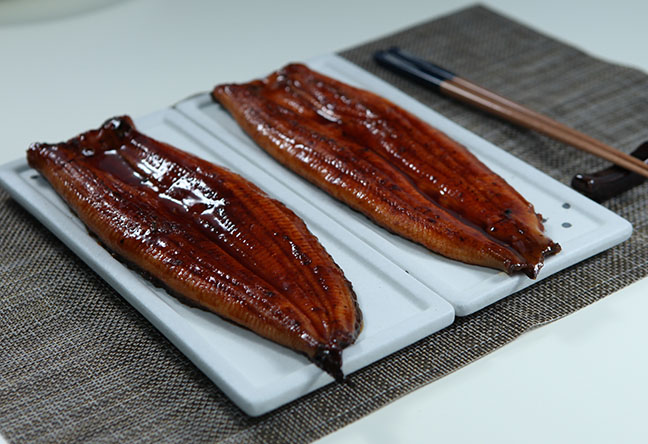
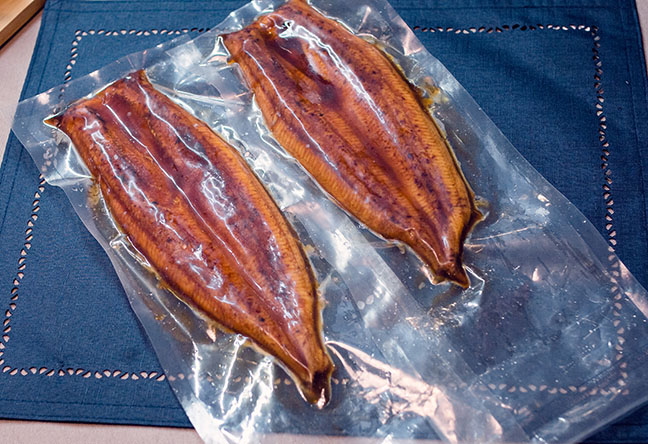
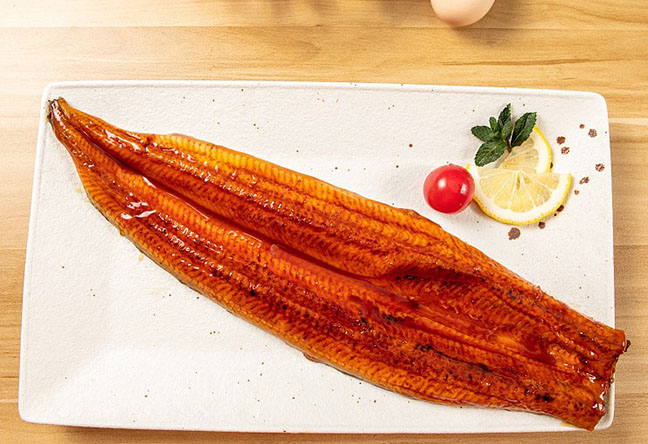
Frozen unagi kabayaki is generally easier to portion because the eel has already been processed, grilled, and coated with sauce. Your kitchen usually only needs to thaw or heat the product according to the supplier’s instructions, then cut it to the required serving weight.
Even so, pack weight and plated weight may differ slightly. Sauce, thawing drip loss, trimming, and small pieces left in the pan can all affect the final number. Weigh a sample after preparation before setting your permanent portion standard.
At Eelpro Co., LTD, buyers can discuss product format, packing weight, fillet size, and sauce requirements for their sales channel. Our unagi kabayaki range is suitable for rice bowls, sushi counters, bento meals, and other foodservice applications.
A practical grilled eel portion size depends on the dish, selling price, and other components on the plate. There is no single serving weight that works for every restaurant.
As a planning guide, a menu may use:
These are starting ranges, not universal specifications. Test each portion against the plate presentation and customer price point. A 90 g portion may work well in a rice bowl served with pickles and soup, while a 120 g portion may better suit an eel-focused set meal.
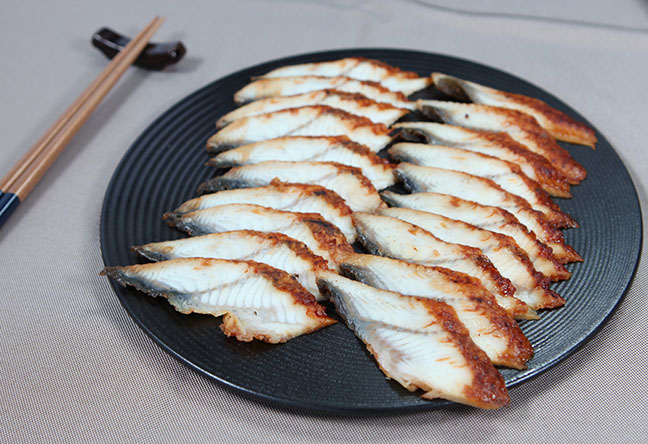
For most commercial rice bowls, one serving contains about 90–120 g of cooked eel as a planning range. A smaller topping portion may use 25–50 g, while a premium dish may call for 130 g or more.
Write the serving size on your recipe card as a cooked weight. “Half a fillet” is not precise enough, since fillet lengths and weights vary. A scale is more reliable than visual cutting, especially during staff changes or a busy service.
When buying pre-portioned products, compare the portion weight with the number of pieces per pack. For cut fillets, specify both a target weight and an acceptable range, such as 100 g with a tolerance agreed with the supplier. This makes receiving checks and kitchen control much easier.
Suppose you purchase 10 kg of raw fillets. After thawing, trimming, and grilling, your test produces 7.8 kg of saleable eel. Your measured cooked yield is:
7.8 kg ÷ 10 kg × 100 = 78%
At a 100 g cooked portion, the theoretical number of servings is:
7,800 g ÷ 100 g = 78 servings
In real service, you may produce fewer saleable portions because of breakage, over-portioning, staff meals, or pieces held beyond the approved service time. If your operation allows for 3% production loss, the usable planning quantity is:
78 servings × 97% = approximately 75 servings
This is only an example. Your own yield test should use the product and cooking process you plan to sell. Record at least three batches where possible, then use the average result—or a cautious lower figure—for purchasing and menu planning.
The simplest food-cost calculation is:
Portion cost = purchase cost per usable gram × plated grams
To find the usable cost per gram, divide the invoice cost by the saleable cooked weight, not the original purchase weight.
Assume a restaurant buys 10 kg of eel at $12 per kg. The purchase cost is:
10 kg × $12 = $120
After preparation and grilling, the kitchen obtains 7.8 kg of saleable eel. The usable cooked cost is:
$120 ÷ 7,800 g = $0.0154 per g
For a 100 g portion:
100 g × $0.0154 = $1.54 eel cost
This is the eel cost only. Add rice, garnish, packaging, labor allocation, sauce, delivery, and other ingredients when setting the full menu price. If the dish uses a separately purchased sauce, calculate its cost by the grams used per plate.
For frozen kabayaki, use the supplier’s net product cost and your measured prepared weight. If sauce is included in the product price, do not add it a second time. If your kitchen applies extra tare, record that amount separately.
Our eel sauce can be considered for rice bowls, grilled eel plates, sushi preparation, and finishing applications. For buyers comparing sauce options, our article on kabayaki sauce discusses how sauce use affects flavor and service preparation.
A costing sheet only works if the planned portion reaches the plate. Include the cooked target weight, cutting guide, and plating photo on the recipe card. Train staff to weigh portions during prep, then carry out occasional spot checks during service.
Useful controls include:
For buffet or catering work, portion planning needs extra attention. A 100 g plated portion does not necessarily mean 100 g per guest when eel is one item among several dishes. Estimate guest numbers, service format, and expected take rate, then add a measured operating allowance based on your own event records.
Rice bowls, sushi rolls, and noodle dishes also need different cutting patterns. A narrow strip may suit sushi, while larger pieces give a rice bowl a more generous look. If you use eel in soup or noodles, record the cooked grams per bowl in the recipe. Our eel recipes provide ideas for using eel beyond standard rice dishes.
Before placing a large order, ask the supplier for details that will support your yield test:
Temperature control also affects usable product. Thaw seafood under approved food-safety procedures, keep it refrigerated, and avoid repeated thawing and refreezing. Follow the product label and local regulations.
A short trial order is often more useful than relying on a catalogue number alone. Weigh the shipment, prepare it exactly as your kitchen would, and calculate the result. That test gives you a clearer view of unagi portion cost than purchase price alone.
A common planning range is 90–120 g of cooked eel for a standard rice bowl. Small toppings may use 25–50 g, while a larger premium dish may use 130–160 g. Define the serving by cooked weight and confirm it with your menu design and selling price.
First, measure the saleable cooked weight from a known purchase weight. Divide total purchase cost by that cooked weight to find cost per gram. Multiply the result by the cooked grams in one portion. Then add rice, sauce, garnish, packaging, labor, and other applicable costs.
The yield of an eel fillet is the saleable cooked weight divided by the raw or purchased fillet weight. The result varies with trimming, thawing, cooking temperature, holding time, and the supplier’s product specification. Run a batch test instead of using a general percentage.
Usually, yes, because the eel is already filleted and cooked. You still need to check thawing loss, trimming, sauce treatment, and the actual prepared weight. Use the supplier’s net weight and your own portion test for the most dependable calculation.
Reliable grilled eel costing begins with a clear product specification and a measured kitchen yield. Set the serving weight, record preparation loss, and review actual portions regularly. Eelpro Co., LTD supplies frozen unagi kabayaki, eel sauce, frozen seafood, and freshwater eels for overseas foodservice buyers. Contact us to discuss product format, packing, and your target portion size.



 WhatsApp
 sales@chinaeels.com
 +8619937922411