





Picture a thin, ribbon-like fish drifting through black ocean water. Then its mouth opens wider than its head. How long is a gulper eel? Most are under 1 meter long, but their strange proportions can make them appear much larger than the measurement suggests.

“How long is a gulper eel?” refers to the body length of the pelican eel, a deep-sea fish scientifically known as Eurypharynx pelecanoides. It belongs to the family Eurypharyngidae and is not the same animal as the freshwater eels used for unagi kabayaki.
The name “pelican eel” comes from its enormous, loose lower jaw. When the mouth expands, it resembles a pelican’s throat pouch. Behind that oversized mouth is an exceptionally slender body with a long tail and a relatively small head.
Most observed gulper eels measure roughly 60 to 75 centimeters long. Specimen records and published reports generally place the upper limit at about 1 meter, although maximum-size figures can vary depending on the source and the condition of the fish.
For a simple comparison, a gulper eel is often about as long as a kitchen ruler or slightly longer—not a giant sea serpent. Its mouth is what creates the dramatic impression.
There is no precise global average because gulper eels are rarely observed alive. Scientists rely on deep-sea sightings, trawl specimens, and footage from remotely operated vehicles. A practical estimate for an adult gulper eel is approximately 0.6 to 0.8 meters.
Some fish are shorter, especially immature individuals. Larger specimens may reach 90 centimeters to 1 meter. These figures refer to the fish’s total extended body length, measured from the front of the head to the tip of the tail.
Preserved specimens can curl, contract, or shrink slightly after collection. As a result, a recorded measurement may differ from the length of a living eel swimming in a straight line. Researchers therefore note whether a size estimate comes from live footage, a relaxed specimen, or a preserved sample.
Measuring a long, flexible fish sounds straightforward, but it is not always easy in practice. Researchers generally use one of three methods:
The tail matters particularly because gulper eels have long, narrow tails that can be damaged or difficult to see in deep-sea footage. For that reason, a report stating “about 70 centimeters” may be more useful than a misleadingly exact figure down to the millimeter.
The main reason people overestimate gulper eel size is its mouth. Its jaw can open dramatically, allowing the animal to engulf prey larger than its narrow body would suggest. When fully expanded, the mouth may appear several times wider than the body.
That is where the visual illusion begins. A typical eel has a long body and a head that is proportionate to its width. The gulper eel has a threadlike trunk, a small-looking head in profile, and a huge elastic mouth. In photographs, the open jaw can dominate the frame and make the entire fish seem enormous.
The mouth is not a hard, fixed bag or rigid container. It is made of flexible tissue that can expand. The fish likely uses it to capture small fish, crustaceans, squid, and other drifting prey in an environment where food may be scarce.
Deep-sea fact: A gulper eel’s tail may have a glowing organ near its tip. This bioluminescence could help attract prey or confuse predators in the dark, though its exact function is still being studied.
Gulper eels live far below the surface, often at depths of approximately 500 to 3,000 meters. Records vary by location and life stage, but the fish is strongly associated with the mesopelagic and bathypelagic zones.
At these depths, sunlight is absent or extremely weak. The water is cold, pressure is intense, and meals may be infrequent. A narrow body requires less energy to maintain than a thick, muscular one, while the oversized mouth helps the fish make the most of rare feeding opportunities.
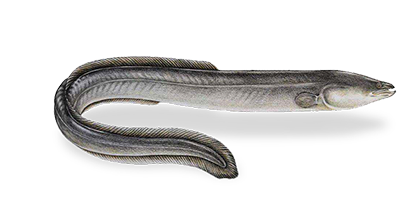
Length alone does not tell the whole story. Gulper eels are lightweight for their length because their bodies are thin and lightly built. Two eels measuring 75 centimeters could have very different body masses if one were a commercial freshwater species and the other a gulper eel.
Useful deep-sea eel dimensions include:
These features explain why footage of a 70-centimeter fish can look like a much larger animal. Deep-sea cameras can also distort scale because there are few familiar objects nearby for comparison.
The best-supported answer is that a gulper eel can grow to around 1 meter in total length, although most individuals appear smaller. Claims of much longer fish should be viewed carefully unless they include a specimen record, reliable scale reference, or clear scientific documentation.
Gulper eel growth is difficult to track because these fish are not raised in ordinary aquaculture facilities and are rarely observed throughout their life cycle. Researchers cannot easily measure the same fish every few months, as they might with farmed fish or aquarium species.
Scientists infer growth patterns from collected specimens, size distributions, reproductive studies, and related deep-sea species. Determining age can also be difficult. The hard ear structures used to age some fish do not always provide a clear answer for every eel-like species.
Several practical challenges limit the available data:
For those reasons, responsible size descriptions use a range instead of suggesting that every adult reaches the same length. Saying “up to about 1 meter” is more accurate than presenting a single record as the normal size.
| Eel or eel-like fish | Typical length | Key size impression |
|---|---|---|
| Gulper eel | About 60–80 cm; reports near 1 m | Very slender body with an enormous expandable mouth |
| Japanese eel, Anguilla japonica | Often 40–100 cm in commercial supply | Thicker, muscular body suited to cooking and filleting |
| European eel, Anguilla anguilla | Commonly 40–80 cm; larger individuals occur | Long-bodied freshwater and coastal eel with a normal-sized mouth |
| Conger eel | Often 1–2 m or more | Much heavier and longer than a gulper eel |
| Moray eel | Roughly 30 cm to over 1.5 m, depending on species | Thick, muscular body and prominent jaws |
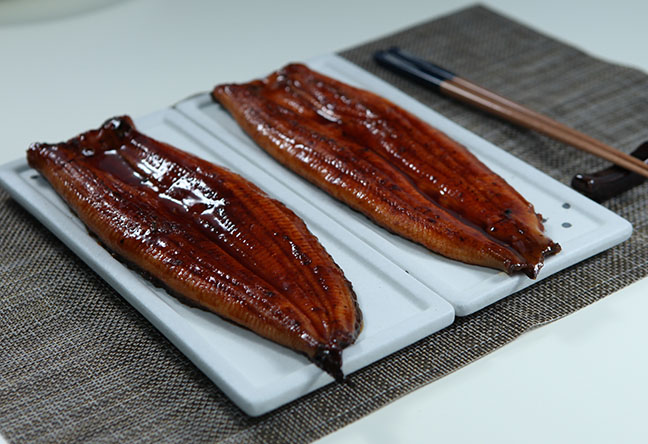
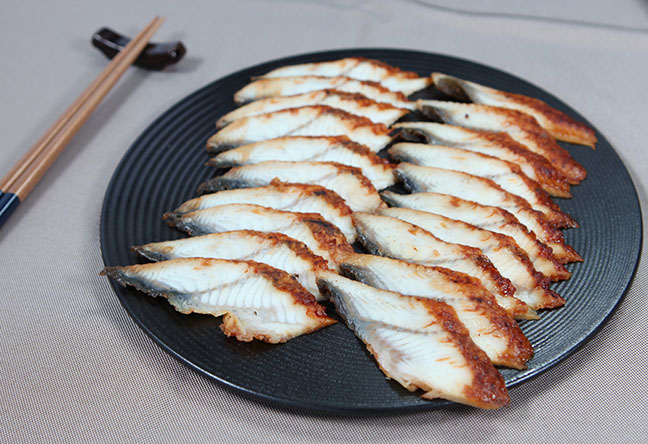
A commercial Japanese eel may be similar in length to a gulper eel, but the two feel entirely different in the hand. Japanese eel has a fuller body, better fillet yield, and a texture suited to grilling, steaming, and rice bowls.
Gulper eels are not a substitute for freshwater eels in a restaurant supply chain. They are deep-sea research subjects, not standard raw material for unagi menus. Buyers seeking portion-controlled eel should review our unagi kabayaki eel range instead.
It is easy to see a striking gulper eel image online and assume it belongs to the same product category as unagi. That is a common misunderstanding. The species, habitat, body structure, handling requirements, and culinary uses are entirely different.
For home cooks and foodservice buyers, practical eel selection begins with the intended dish:
Eelpro Co., LTD supplies unagi kabayaki manufacturing and frozen eel supply for international buyers. Product discussions should cover cut size, sauce application, packaging, minimum order quantity, and shipment temperature rather than deep-sea species identification.
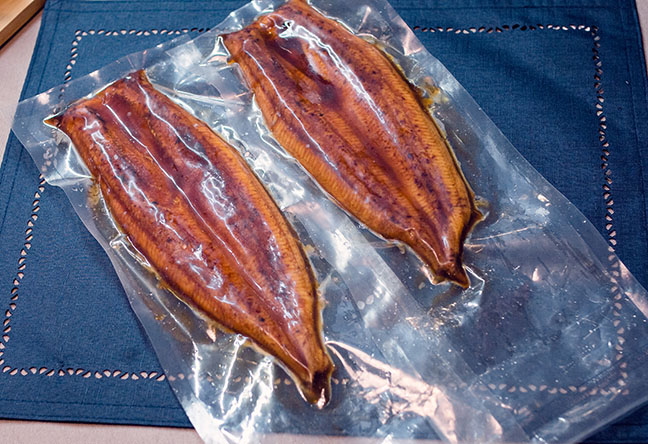
For a typical frozen unagi product, buyers may compare fillet sizes such as 8–10 oz, 10–12 oz, or smaller foodservice portions. Exact grades vary by supplier, so confirm the product specification sheet before placing an order.
Deep-sea images often lack a reliable sense of scale. A camera operator may film the fish close to the lens while the background fades into darkness. The result can create a powerful size illusion.
The open mouth adds another layer of distortion. If the jaw expands to a width of 20 centimeters while the body remains only a few centimeters thick, the animal’s silhouette looks far more dramatic than its total length would suggest.
When checking an online image, look for a laser scale, submersible camera dimensions, a human hand, or another known object. Without one of these references, avoid estimating size by eye alone.
Avoid this trap: Do not compare the mouth opening with the full body length as though they were separate sections to add together. The mouth is part of the head and does not make the fish twice as long.
The gulper eel’s proportions are closely linked to its feeding strategy. A narrow body may reduce energy demands, while the large mouth gives the fish a chance to capture prey that a small-jawed animal could not easily swallow.
Its deep habitat also explains why the fish is rarely part of everyday seafood culture. Most people encounter gulper eels through marine biology programs, museum displays, or underwater footage—not in a supermarket freezer.
By contrast, freshwater eels are managed through farming, processing, cold-chain logistics, and portion planning. At Eelpro Co., LTD, buyers can learn more about our unagi eel farm and how farmed eel enters an export supply chain.
A gulper eel can reportedly reach about 1 meter in total length, but that is near the upper end rather than the everyday norm. Most documented examples are closer to 60–80 centimeters.
A reasonable general estimate is around 60–75 centimeters, with variation caused by age, sex, measurement method, and specimen condition. Because the species is difficult to study, scientists usually provide a range rather than one fixed average.
Its length overlaps with Japanese eel and European eel, but its body is much thinner. Conger eels are usually far longer and heavier. The gulper eel looks unusually large mainly because of its expandable mouth and long tail.
No. Gulper eels are deep-sea marine fish, while “unagi” generally refers to freshwater eels in the genus Anguilla, especially Japanese eel in many commercial products. They differ in species, habitat, body structure, and culinary use.
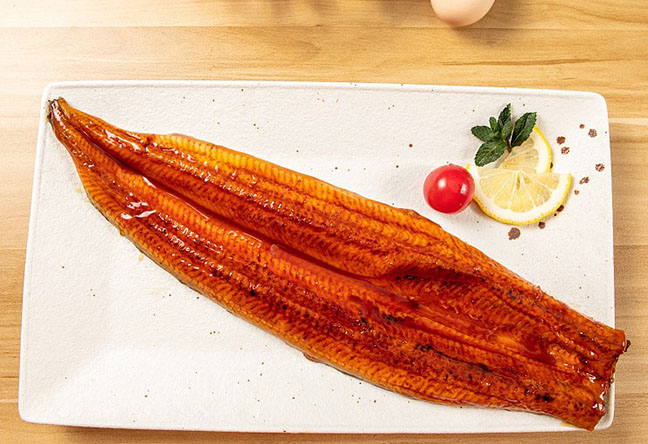
They are not a normal commercial choice for kabayaki. Unagi kabayaki is typically made from freshwater eel that is prepared, grilled, and glazed for a tender texture. For cooking ideas, see our guide to eel recipes or explore eel sauce and unagi tare for rice bowls and grilled dishes.
So, how long is a gulper eel? Most are approximately 60–80 centimeters long, while the largest reported individuals approach 1 meter. Its giant-looking mouth, slender trunk, long tail, and dark-ocean setting make it seem larger than its measured body length.
If your interest is culinary rather than biological, explore Eelpro Co., LTD’s frozen unagi kabayaki, eel sauce, freshwater eel, and frozen seafood products. Request a specification sheet, packaging details, and an export quotation for your market. Did the gulper eel look larger or smaller than you expected?






 WhatsApp
 sales@chinaeels.com