





How to Choose Broiled Eel Fillets That Actually Perform in Foodservice Kitchens
Most eel import problems don't surface at customs. They show up three weeks later, when a kitchen manager opens a case of broiled eel and finds fillets that don't match the sample, glaze that flakes off during reheating, or portions too small for the menu photo. By then the PO is paid and the container is empty. The fixes left on the table are expensive ones — reworking the menu, discounting the dish, or eating the cost on a reorder.
This guide covers what to check before you sign, not after the pallets arrive.
What "Broiled Eel" Actually Means on a Spec Sheet
Buyers often assume "kabayaki" is a single grade. It isn't. Roasted eel varies by fat content, coating layers, and cut method, and each variable changes cook time, plating, and shelf behavior.
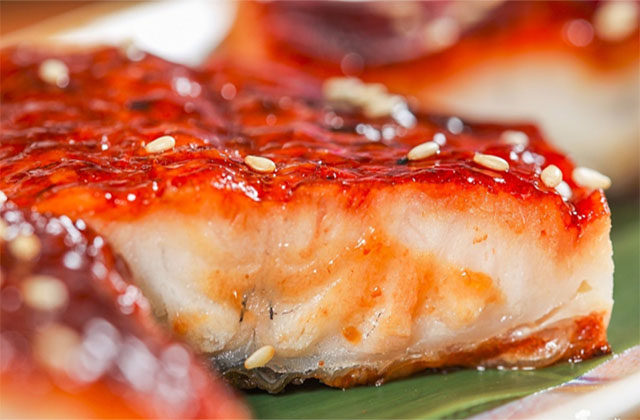
Export-grade production typically applies a 4-layer soy-sauce coating process, with temperature-controlled steps between each pass. This is what separates a fillet with even, glossy color from one that looks patchy after reheating. Facilities that document a "white-roasted color" standard alongside numbered soy-sauce coating stages (1st through 4th coat) give buyers a repeatable reference — meaning your reorder six months from now should still match the first sample.
If a supplier can't describe their coating stages or fat-reduction method, ask before ordering. Low-fat roasting and deodorizing processes (patented in some facilities) directly affect how the fillet performs under a broiler or salamander — greasy fillets scorch unevenly and lose glaze faster.
Match Fillet Size, Glaze Level, Vacuum Packaging, and Thaw-to-Serve Requirements to Your Operation
The single biggest sourcing mistake is buying one spec for three different service styles. Sushi counters, rice-bowl (donburi) programs, and full-service catering each need different fillet behavior — and the reasoning behind each choice matters more than the spec number itself.
| Operation Type | Fillet Size | Glaze Level | Packaging | Why It Matters |
|---|---|---|---|---|
| Sushi / Sashimi Counter | Thin, uniform slices (sushi-cut) | Light glaze | Skin-packaging, small format | Heavy glaze masks knife-cut precision and bleeds into rice; thin cuts need consistent thickness or nigiri portions look uneven |
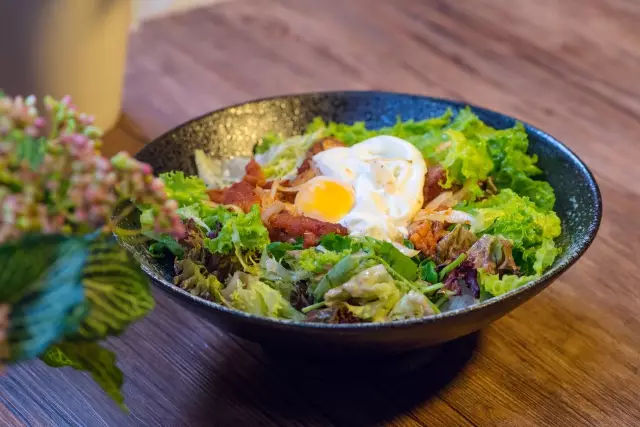
| Rice-Bowl / Donburi | Medium chunk or half-fillet | Medium-heavy glaze | Vacuum-sealed, portioned per bowl | Diners expect visible sauce and a firmer bite; under-glazed fillets read as "dry" on a rice bowl even if fresh |
| Catering / Banquet | Full fillet or 3-section cut | Heavy glaze, double-coated | Bulk vacuum pack, gift-box optional | Batch reheating in steam trays dries product faster; heavier glaze protects moisture over a longer holding time |
Thaw-to-serve requirements follow the same logic. Sushi operations generally need a slow, controlled thaw to preserve slice integrity, while catering kitchens working from bulk packs need a spec that tolerates faster thawing without the glaze separating. Ask your supplier for the recommended thaw window in writing — not a verbal estimate — and test it against your actual walk-in or blast-chiller conditions before committing to volume.
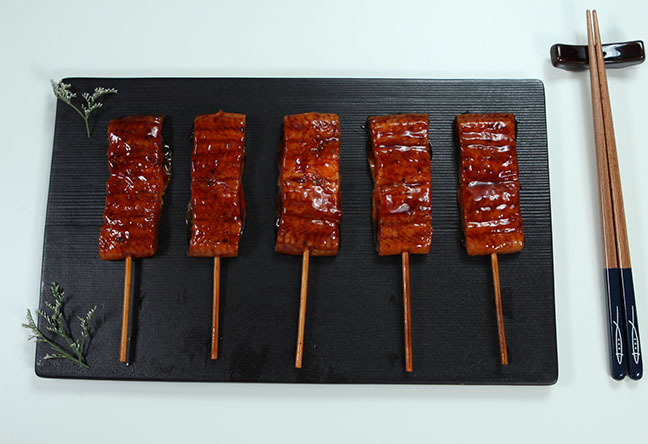
This is also where frozen unagi kabayaki cut specifications come into play — shredding, dicing, strip-cutting, chunk-cutting, and sushi slices each exist because one cut does not serve every menu format.
Common Mistakes Foodservice Buyers Make When Sourcing Eel
- Ordering by photo alone. Glaze color photographs differently under studio lighting than under kitchen fluorescents. Request a physical sample, not just images.
- Ignoring MOQ mismatches. A catering-chain MOQ and an export-trader MOQ are rarely the same. Confirm your tier before requesting a quote, since specification and packaging format both affect minimum order volume.
- Skipping the thaw test. A fillet that looks fine frozen can separate from its glaze once thawed under real kitchen conditions.
- Not asking about veterinary drug residue testing. Products intended for Japan, US, or EU markets must meet those regions' specific residue and microbiological limits — standards set under frameworks like EU food safety regulations — and not every exporter tests to all three simultaneously.
- Overlooking cold-chain capacity. A supplier without adequate cold storage may ship in smaller, inconsistent batches, which complicates your inventory planning.
A Buyer's Checklist Before You Send the RFQ
Run through this before requesting pricing, not after:
- Confirm the coating standard — ask specifically how many soy-sauce layers are applied and whether temperature is controlled at each step.
- Request documentation of ISO 22000:2018 and HACCP certification, plus HALAL certification if your market requires it.
- Ask whether the supplier's in-house laboratory tests for veterinary drug residues against Japan, US, or EU thresholds — whichever applies to your destination market.
- Verify traceability back to the farming base. Suppliers working with certified farming bases can usually trace a batch from pond to shipment, which matters if a residue flag ever comes up post-clearance.
- Match the cut spec and glaze level to your actual menu — not a generic "kabayaki" listing.
- Confirm cold storage capacity and standard lead time. A regular order typically runs about 30 days from confirmation to shipment, though this shifts with spec complexity and order volume.
Why Traceability and Lab Testing Change the Risk Calculation
Foodservice buyers importing into Japan, the US, Germany, Poland, or other EU markets carry the compliance burden even when the defect originated at the farm level. A supplier working from roughly 20 customs-registered farming bases covering over 2,150 mu, with full-chain tracking from farm registration through targeted sampling, gives buyers a paper trail if a customs inspector or auditor asks questions later.
Metal detectors at critical control points and an in-house lab aren't just certifications on a wall — they're the difference between catching a problem before a container ships and discovering it after a restaurant chain has already plated the dish. This is also where kabayaki sauce consistency ties back to process control — sauce viscosity and salt content shift batch to batch if production isn't monitored closely.
Packaging Formats and What They Signal About the Supplier
Skin-packaging and gift-box formats aren't just retail dressing — they tell you something about production discipline. Skin-packaging requires tighter portion control and usually indicates the supplier is set up for foodservice-grade consistency rather than bulk commodity output. Gift-box formats, by contrast, often serve retail or gifting channels and may not reflect the cut precision a sushi program needs.
If you're comparing a frozen eel supplier against a generic frozen seafood distributor, ask both for their vacuum-sealing method and shelf-life claim under continuous freezing. A 1,000-ton cold storage facility with dedicated cold-chain logistics tends to hold product quality more consistently across a full production run than a distributor reselling mixed-origin stock.
Pairing Broiled Eel With Sauce and Menu Applications
Sourcing the fillet is half the decision. The other half is sauce compatibility — eel sauce (unagi tare) viscosity affects how it clings to a rice bowl versus a sushi roll. Buyers scaling a donburi program should test the eel sauce against their specific fillet glaze level, since a heavily glazed fillet paired with a thick tare can oversaturate the dish. For teams building out menu R&D, our eel recipes for menus reference covers pairing combinations worth testing before finalizing a spec.
Before placing your next order, request a spec sheet and a physical sample batch — comparing glaze, cut, and thaw behavior side by side is the fastest way to confirm the product matches your menu, not just the photo.
 WhatsApp
 sales@chinaeels.com
 +8619937922411