





Unagi wholesale purchasing involves far more than comparing the price per kilogram. Before placing a commercial order, buyers need to review eel species, product format, glaze, packaging, food-safety documents, minimum order quantity, and delivery conditions.
For restaurants, food distributors, and importers, the best sourcing choice depends on how the eel will be sold or served. A sushi restaurant may need uniform pre-grilled kabayaki portions. A seafood wholesaler may prefer frozen freshwater eels in larger packs. A central kitchen might choose bulk unagi with sauce included to cut preparation time and keep service consistent.
This guide covers the main buying options and the questions worth asking an eel supplier before committing to a shipment. Whether you supply Japanese eel for sushi bars or stock product for a broader eel cuisine menu, the same checks apply.
Wholesale eel is commonly available in four forms: live, fresh, frozen raw, and pre-grilled kabayaki. Each option has different implications for labor, storage, shelf life, shipping, and menu consistency.
Live eel may suit processors or traditional restaurants that have suitable holding tanks and trained staff. It gives you control over cleaning, filleting, seasoning, and cooking. At the same time, live shipments demand careful oxygenation, temperature management, handling procedures, and prompt processing after arrival.
This format also brings more operational work. Yield can vary depending on eel size and trimming skill, while mortality during transport can create a direct financial loss. Before choosing live product, ask the supplier about packing density, expected transit time, water conditions, and arrival procedures.
Fresh eel is intended for short delivery windows and rapid processing. It can work well for nearby buyers or factories that can receive and use the product without delay. In overseas trade, however, the available shelf life may be much shorter than the time required for customs clearance, inland transport, and distribution.
Confirm the production date, use-by date, storage temperature, and required transport conditions. The word “fresh” is not a substitute for documented temperature control.
Frozen raw eel gives processors more flexibility. It can be thawed, cleaned, filleted, and cooked according to your own recipe or production method. This format is often a practical choice for manufacturers, foodservice suppliers, and buyers with their own processing line.
Before buying, confirm whether the product is whole, gutted, filleted, skin-on, or skinless. Check the freezing method, glazing percentage, net weight, and storage temperature as well. A shipment sold by gross weight may contain more ice glaze than expected, so compare net product weight carefully when reviewing quotations.
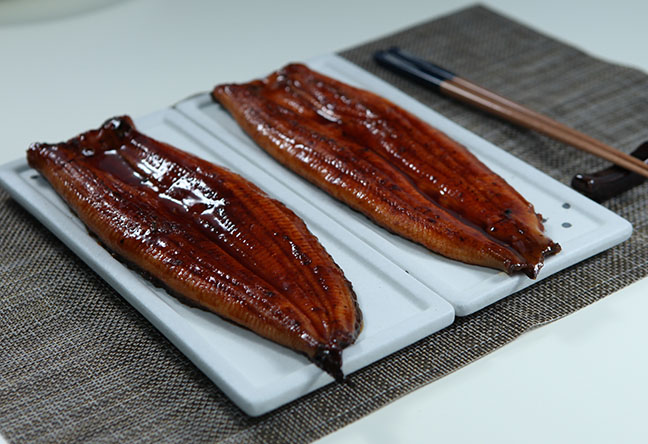
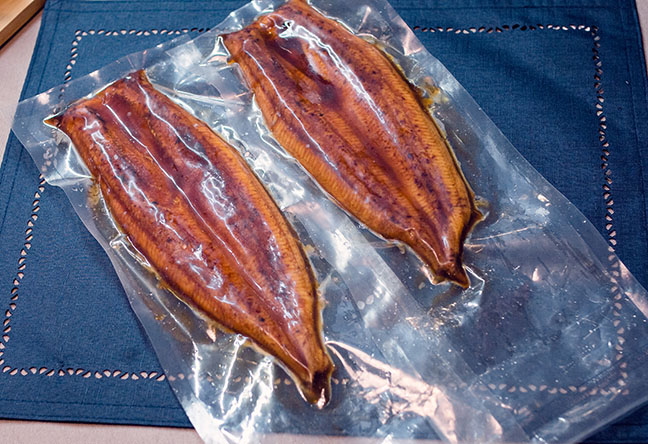
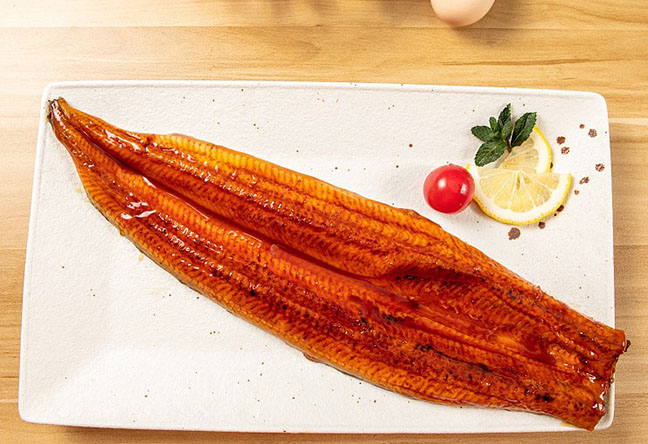
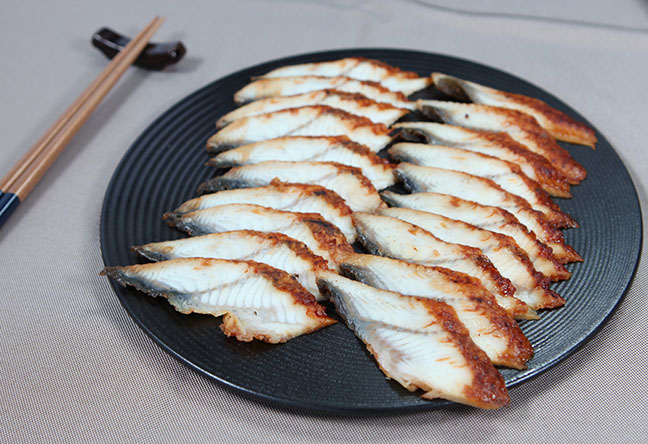
Frozen unagi kabayaki is already filleted, seasoned, grilled, and usually packed with sauce. It is a practical option for restaurants that need quick service and dependable portions. Staff can thaw or heat the product according to the supplier’s instructions, then serve it over rice, in sushi rolls, in donburi, or with noodles.
Portion size is important. Commercial specifications may be listed by weight per piece, pieces per pack, or pieces per carton. Request a product specification sheet rather than relying on a photograph. The sheet should state eel size, fillet dimensions, piece count, sauce ratio, cooking method, glazing, and net weight.
Our unagi kabayaki product information can help you compare the details commonly used when purchasing pre-grilled eel.
There is no single global grading system for all unagi products. Suppliers may classify eel by weight, length, fillet size, species, condition, or processing yield. As a result, two quotations using the same product name may refer to quite different items.
For a restaurant menu, consistent portioning can matter more than the lowest purchase price. If a rice bowl uses one 100-gram fillet, a mixed carton with broad size variation can affect both food cost and presentation. For a distributor, several size options may be useful because customers often have different menu and pricing requirements.
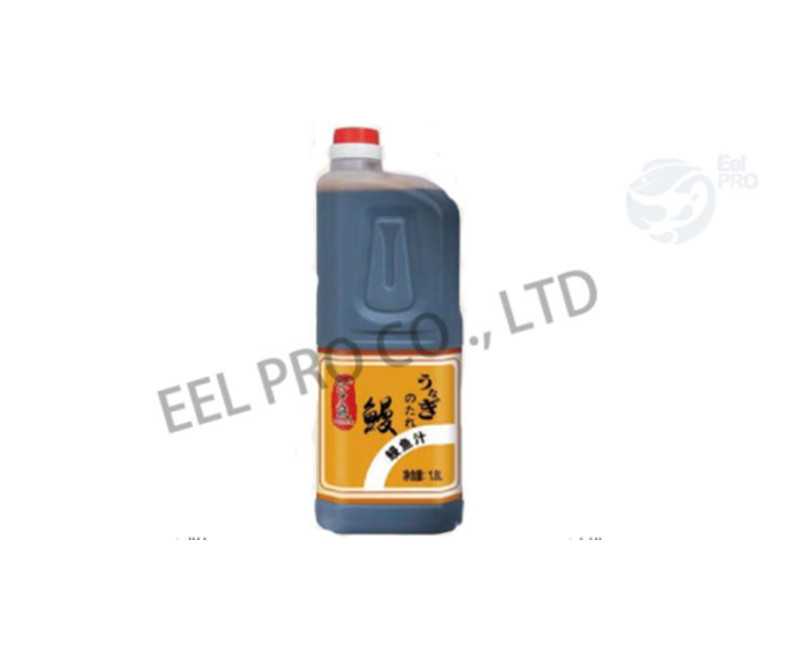
Kabayaki is commonly associated with a sweet-savory sauce made with ingredients such as soy sauce, sugar, mirin, or similar seasonings. Recipes vary by market and factory. Some products contain wheat or soy, while some buyers need a specific sodium level, sugar profile, or ingredient declaration.
Ask for a sauce specification and a sample before approving a large order. Check the color, thickness, sweetness, saltiness, smoke notes, and how the sauce performs after reheating. A sauce that tastes balanced when hot may become too intense after reduction or repeated heating.
For menu development, our article on kabayaki sauce offers useful context on the role of seasoning in a finished eel dish. You may also want to decide whether sauce should be packed with the eel or supplied separately. Separate eel sauce gives some foodservice operators greater control over serving size and recipe use.
Review food-safety documentation before the first commercial shipment, not after the goods are already in transit. Requirements differ by destination, product type, and local authority.
Ask the factory which food-safety system it operates and request current supporting documents. HACCP is a preventive food-safety system based on identifying hazards and controlling them at relevant points in production. BRCGS Food Safety is a certification standard used by many retailers, foodservice groups, and importers. Do not assume a supplier holds either certification simply because the terms appear in a sales message.
Request documents such as:
Ask whether the certificates cover the actual production site and the product you intend to purchase. Check the certificate number, scope, issuing body, validity dates, and factory address. Your customs broker or importing authority can confirm which documents are mandatory for your market.
MOQ means minimum order quantity. A small restaurant group may need a lower MOQ to test demand, while an eel distributor may order a full container or several mixed sizes. The quoted MOQ may apply per flavor, size, packaging design, or shipment rather than to the full order.
Ask the supplier to state the MOQ in clear units: cartons, kilograms, pieces, or pallets. Also confirm whether different specifications can be combined in one shipment.
Private-label orders usually require artwork approval, barcode information, print lead time, and a packaging MOQ. Review the final proof closely. The product name, allergens, storage instructions, country of origin, and net quantity must match the approved specification and destination-market rules.
Frozen eel generally requires a cold chain that is maintained at the supplier, during loading, in transit, at the port, and through final delivery. Your logistics plan should allow for production time, booking, port congestion, customs clearance, inspection, and inland transport.
Discuss the following with your supplier and freight forwarder:
Do not calculate landed cost from the factory price alone. Include ocean freight, insurance, customs duties, broker fees, port charges, inland delivery, cold storage, and possible inspection costs. A lower unit quotation may no longer be lower once those charges are added.
A reliable eel supplier should be able to answer technical questions directly and provide specific details. Start with a written product brief that includes your target size, format, sauce preference, packing method, destination, forecast volume, and required documents.
Then request samples matching the specification you may purchase. Evaluate thaw loss, appearance, bone content, odor, texture, sauce coverage, reheating performance, and portion accuracy. Keep a written sample assessment so suppliers can be compared on the same basis.
Ask for factory photos or a video call, but do not treat images as an audit. If the volume and market requirements justify it, use a qualified third-party inspection company or arrange an on-site audit. Check whether the supplier can provide batch traceability from incoming eel through processing, packing, and shipment.
Communication is part of supplier risk management. Confirm who approves specifications, who handles quality claims, and how quickly replacement or credit decisions are made. Put the final specification, tolerances, packaging, delivery terms, and payment schedule into the sales contract.
Importers searching for an eel supplier China should compare production capability and export experience, not only the factory’s location. Ask whether the supplier regularly ships to your country and understands your labeling, documentation, and cold-chain requirements.
Eelpro Co., LTD supplies frozen unagi kabayaki, eel sauce, frozen seafood, and freshwater eels for overseas buyers. We can discuss product format, portion size, packaging, sauce requirements, and shipment planning based on your market. Availability and specifications should be confirmed for each order.
If you operate as an eel distributor, ask about carton formats and product ranges that allow you to serve restaurants, retailers, and foodservice customers. If you run a restaurant group, focus on consistent portioning, reheating instructions, and supply continuity.
Small details can have a real effect on margin. A difference of 10 grams per serving, a higher-than-expected glaze percentage, or inconsistent piece sizes can change your food-cost calculation across hundreds of meals.
Start by defining the format, species, portion size, sauce profile, packaging, destination, target volume, and required certificates. Request a specification sheet, sample, quotation, and export-document list from several suppliers. Compare landed cost and product performance, then place a trial order before moving to regular purchasing.
Ask for the factory address, processing scope, product specification, current food-safety certificates, test reports, traceability information, MOQ, lead time, Incoterms, and shipment history to your market. Confirm that the documents cover the actual factory and product. A sample should match the specification used in the quotation.
Kabayaki wholesale may include pre-grilled frozen eel, sauce, export packaging, and cartons packed to a stated piece count or net weight. Exact contents vary by supplier. Confirm whether sauce is included, whether the eel is boneless, how it is packed, and whether the quoted weight refers to the eel alone or the complete packed product.
Frozen kabayaki is often more practical when you need fast service, consistent portions, and lower kitchen labor. Live eel may suit a restaurant with holding tanks, trained staff, and a menu built around in-house preparation. Compare labor, equipment, yield, storage, and delivery risk before deciding.
Follow the supplier’s stated frozen-storage instructions and your local food-safety rules. Keep cartons in a suitable commercial freezer, protect them from temperature fluctuation, and rotate stock by lot or date. Do not refreeze product that has fully thawed unless your food-safety procedures and local regulations specifically allow it.
Choosing unagi wholesale begins with a clear specification and a supplier that can support the full order process. Compare format, grading, sauce, packaging, documentation, MOQ, and landed logistics before approving a purchase.
Contact Eelpro Co., LTD to discuss frozen unagi kabayaki, eel sauce, frozen seafood, and freshwater eels for your restaurant, distribution, or import business. If you are developing a menu, our eel recipes can also provide serving ideas for product testing.


 WhatsApp
 sales@chinaeels.com
 +8619937922411