

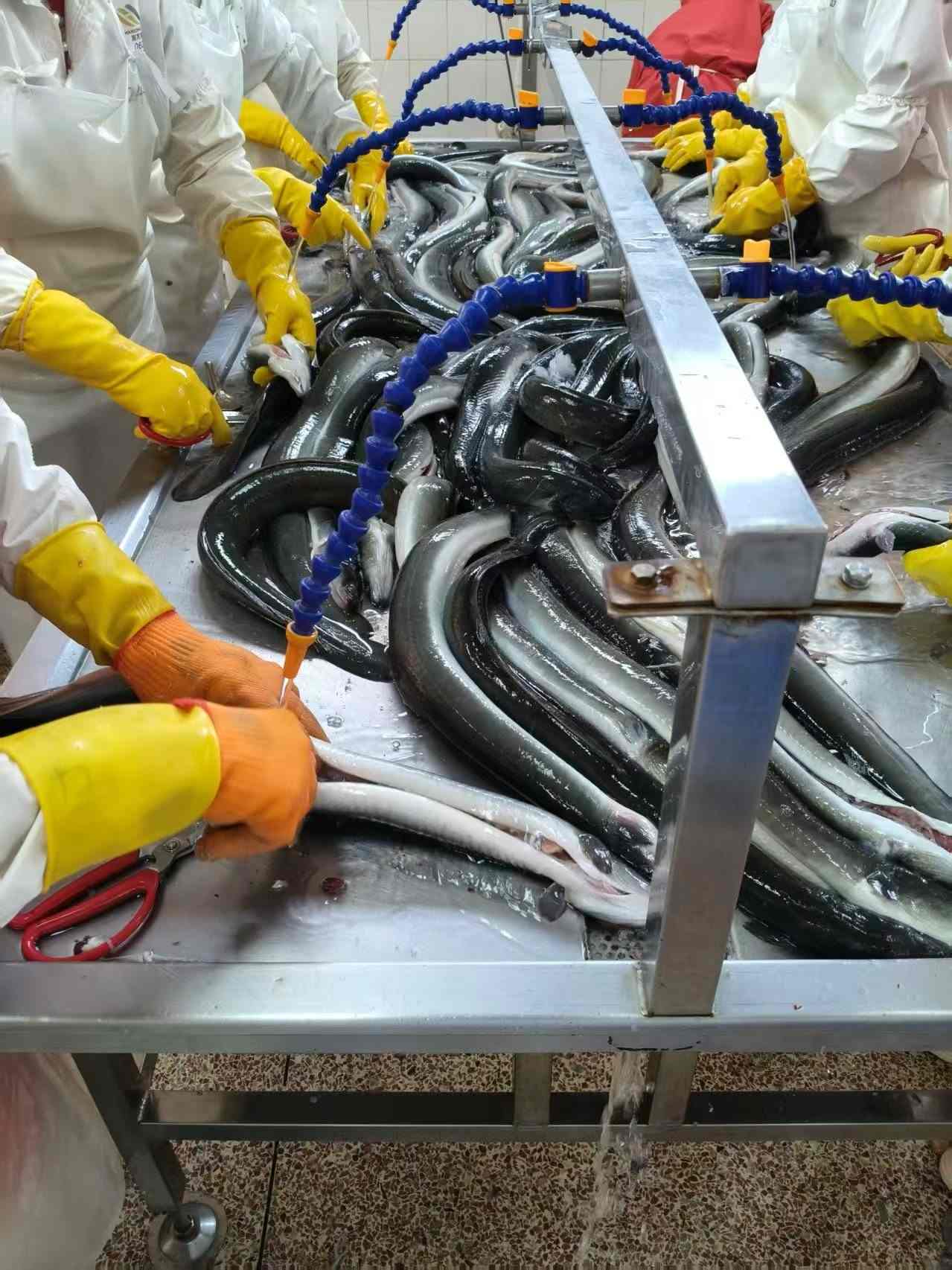
Eel Fish in Global Cuisine Tells a Story of Trade, Geography, and Taste
Picture a smoky grill stall in Tokyo, the smell of caramelized soy sauce drifting over the street. Now picture a quiet English pub, a plate of jellied eel sitting next to a pint. Same fish. Two entirely different worlds. Eel fish has traveled through more cultures, kitchens, and centuries than almost any other seafood — and most people only know one version of it.
At Eelpro, we've spent years sourcing and processing freshwater eels for kitchens across Asia, Europe, and North America. That work gave us a front-row seat to something bigger than product specs: eel fish culture is genuinely global, and it didn't happen by accident. Trade routes, river geography, and local food traditions all pushed this fish onto plates in ways few people connect back to a single species.
Where Eel Fish Traditions Actually Began
Eel has been eaten for thousands of years, long before refrigeration or global shipping existed. Freshwater eels migrate between rivers and the ocean, which meant they showed up naturally in the diets of river-adjacent communities — from the Yangtze basin to the Thames estuary to Japan's inland waterways.
- East Asia: Eel appears in Chinese culinary records dating back over 2,000 years, often prepared in broths or braises long before the kabayaki style became standard in Japan.
- Japan: Unagi kabayaki — grilled eel basted in a sweet soy glaze — became a summer staple, tied to the belief that eating eel builds stamina in hot weather.
- Europe: Ancient Romans farmed eels in artificial ponds called vivaria; centuries later, London's working class turned eel into cheap, filling meals like jellied eel and eel pie.
- North America: Indigenous communities along the Atlantic coast fished American eel long before European settlers arrived, using smoking and drying to preserve it through winter.
What ties these regions together isn't shared recipes — it's shared geography. Wherever rivers met the sea, eel fish traditions took root independently.
How Eel Culinary History Shaped Modern Global Eel Cuisine
The eel you eat today at a sushi counter or a European brasserie carries centuries of technique behind it. Understanding that history actually helps you cook and buy better eel now.
Japan: The Kabayaki Standard
Japanese kabayaki technique — butterflying the eel, skewering it, and grilling it in stages while brushing on eel sauce — became the global benchmark for prepared eel. The sauce itself, a reduction of soy, mirin, and sugar, is arguably as important as the fish. We've written before about why kabayaki sauce matters to the final flavor — get the glaze wrong, and even premium eel fish tastes flat.
China: Braising and Regional Variety
Chinese eel dishes lean toward braising with ginger, scallion, and rice wine, often served over rice or noodles. This tradition is less about glaze and more about depth of broth — a completely different approach to the same raw material.
Europe: Smoking and Preservation
Dutch, German, and British eel traditions favor smoking. Smoked eel became a delicacy in the Netherlands, sold at markets whole and eaten cold. If you want to try this at home, our smoked eel recipe guide walks through the process using frozen unagi as a base.
This is where global eel cuisine gets interesting: three regions, three techniques, zero overlap — yet all built around the same fish family.
The Unique Differentiator: Farmed vs. Wild-Caught Eel Sourcing
Here's what most buyers never ask, but should: is the eel farmed or wild-caught, and does that even matter for flavor and safety? It does — a lot.
| Factor | Farmed Freshwater Eel | Wild-Caught Eel |
|---|---|---|
| Supply consistency | Stable year-round, predictable sizing | Seasonal, size varies by catch |
| Traceability | Controlled feeding and water conditions, easier to document | Harder to verify origin waters |
| Fat content | Generally higher, better for grilling (kabayaki) | Leaner, varies by season and diet |
| Price stability | More predictable for B2B contracts | Fluctuates with wild population and regulation |
| Sustainability concerns | Lower pressure on wild stocks | Many wild eel species face conservation restrictions |
For B2B buyers — restaurants, distributors, importers — this table isn't academic. It's the difference between a menu you can plan around and one you're constantly adjusting. Farmed eel from a controlled operation like our own eel farm gives buyers the consistency needed for long-term supply contracts, something wild-caught volumes simply can't guarantee.
A Buyer's Decision Checklist Before Ordering Frozen Eel Fish
If you're sourcing frozen unagi kabayaki or raw eel fish for a menu, don't skip these checks:
- Confirm the species — Japanese eel (Anguilla japonica) and other Anguilla species differ in fat content and texture.
- Ask about freezing method — flash-frozen product preserves texture far better than slow-frozen batches.
- Check the sauce separately — some suppliers pre-glaze; others ship sauce separately, which gives kitchens more control. See our notes on fixing common kabayaki sauce mistakes.
- Request lab or QC documentation — our eel lab handles quality checks before export.
- Compare unit pricing against portion yield — a cheaper case with more bone or trim waste often costs more per usable portion.
Common Mistakes Buyers Make With Eel Fish Sourcing
- Assuming all "unagi" labeling is equivalent — grading and sizing vary widely between suppliers.
- Ignoring thaw instructions — improper thawing breaks down texture; frozen kabayaki should be thawed under refrigeration, not at room temperature.
- Overlooking sauce quality — a mediocre glaze can ruin premium fish. Read our full eel sauce storage guide before committing to a supplier's house sauce.
- Underestimating regional palate differences — a European buyer expecting a smoky, savory profile might find standard Japanese kabayaki too sweet, and vice versa.
A Worked Example: Building an Eel Menu for a Western Restaurant
Say a mid-size restaurant in Germany wants to add eel to its menu but has no prior sourcing experience. Here's a realistic path:
- Start with frozen unagi kabayaki for a low-risk entry — it's pre-cooked and glazed, requiring only reheating.
- Pair it with a rice bowl format, borrowing from Japanese donburi traditions — our donburi topping ideas article covers seven variations.
- Once demand is proven, introduce a European-style smoked eel appetizer to bridge local palate expectations with the new product.
- Track waste and reorder cadence over 60 days before committing to bulk freezer stock.
This kind of staged rollout mirrors how eel fish traditions actually spread historically — one dish proving itself before a wider cultural adoption follows.
FAQ: The Questions Buyers and Food Lovers Actually Ask
How has eel fish shaped global cuisine?
Eel fish pushed cooks toward preservation techniques — smoking in Europe, braising in China, glazing in Japan — because the fish spoils quickly and migrates seasonally. Those techniques then became cultural signatures on their own.
Where is eel fish traditionally eaten?
Traditionally strongest in Japan (kabayaki, unadon), China (braised eel dishes), the United Kingdom and Netherlands (jellied and smoked eel), and parts of the U.S. East Coast among Indigenous and colonial-era coastal communities.
What cultures are known for eel fish dishes?
Japan is the most globally recognized today through sushi and kabayaki, but China, Korea, the Netherlands, Germany, and the UK all maintain distinct eel culinary history worth exploring, especially through regional recipes like those in our Asian and European eel recipe guide.
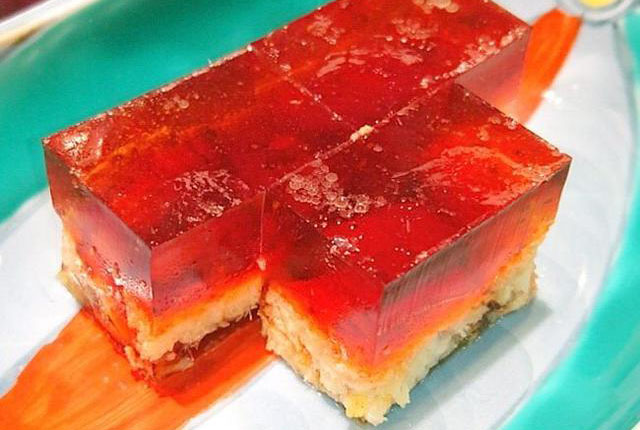
Sourcing Eel Fish for Export: What Matters Most
For importers and distributors, the cultural story matters less than consistency, documentation, and shelf life. Eelpro supplies frozen unagi and eel products built around three priorities: stable farmed supply, lab-checked quality, and sauce formulated to match traditional kabayaki flavor profiles. Whether you're stocking a sushi program or building a fusion menu, understanding where your eel fish traditions come from helps you communicate value to your own customers — not just sell a frozen product.
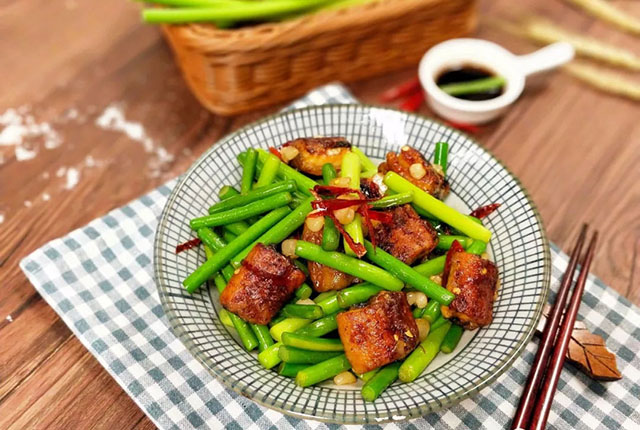
Have a favorite regional eel dish, or questions about sourcing for your own menu? Drop your thoughts in the comments — and check our eel noodle soup recipe if you want a quick way to test eel on a new menu this week.