





The dinner rush is minutes away, rice is steaming, and three unagi donburi orders hit the ticket rail at once. Then someone asks, “Do we have enough eel for the whole service?” Smart frozen unagi portion planning keeps that question from becoming a problem. It protects food cost, reduces waste, and helps every bowl arrive looking generous.
For restaurants, caterers, sushi counters, and central kitchens, eel is more than a premium ingredient. It is a menu item with a measurable yield. One fillet can become a rice bowl, sushi topping, bento portion, noodle garnish, or shared appetizer, depending on how it is cut. A solid plan starts with pack specifications, usable weight, target serving size, and the dishes you expect to sell.
Unagi has a rich, buttery texture and a sweet-savory kabayaki glaze. That richness is one reason guests enjoy it, but it also means the plate does not need an oversized serving. A well-composed menu can make a 60-gram portion feel substantial when it is paired with 180 to 220 grams of cooked rice, pickles, shredded nori, and a light brush of extra sauce.
Without a portion standard, two cooks can send out noticeably different plates. One may serve 55 grams while another uses 90 grams. It sounds minor until it happens across 80 orders. At a 35-gram variance per order, the kitchen can go through nearly 2.8 kilograms more product in a single service.
Clear standards support:
Consistent guest presentation
Accurate recipe costing
Reliable purchasing forecasts
Faster prep during busy periods
Better control of thawed product and kitchen waste
Foodservice buyers should look beyond the carton price. Check individual fillet weight, net weight, glaze percentage, packing style, skin and bone status, and pieces per case. Each detail affects the number of saleable portions a kitchen can produce.
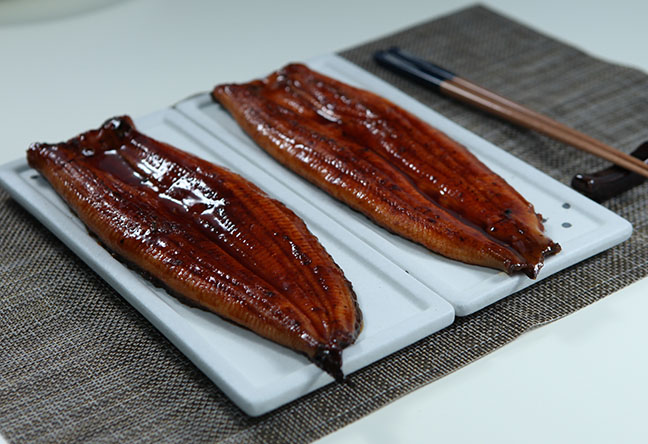
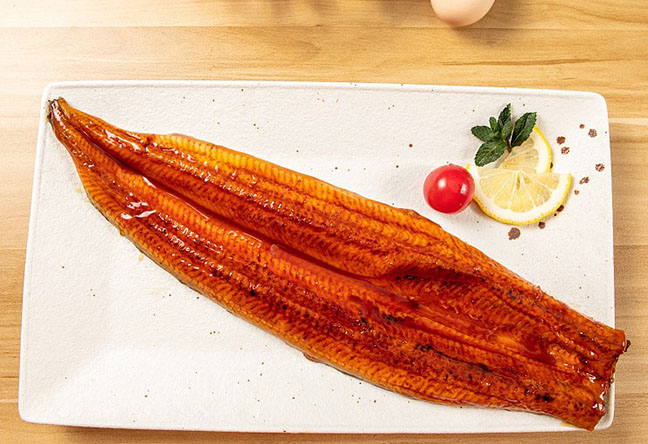
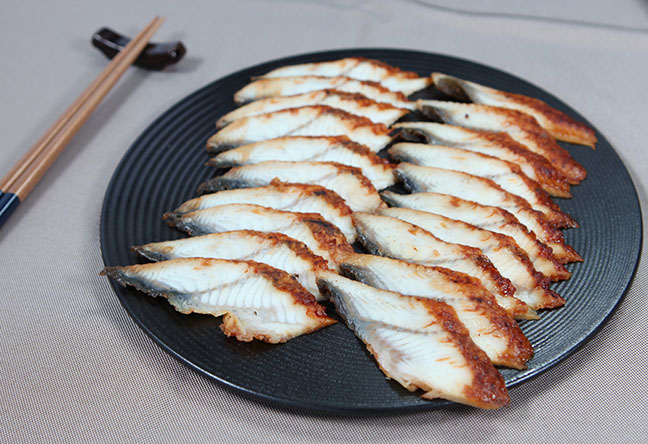
Whole kabayaki fillets suit restaurants that need flexible menu portions. A chef can cut a fillet into larger donburi pieces, smaller sushi strips, or bento servings. This format also creates a more natural presentation, with the distinctive dark skin and glossy sauce visible across the fillet.
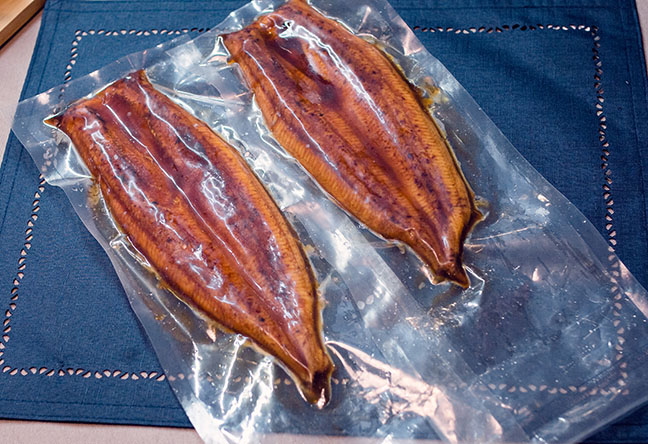
Pre-cut pieces save labor and simplify production for chains, caterers, and high-volume sushi operations. They can reduce variation at the cutting board, but buyers should confirm whether the stated piece weight is measured before or after glazing. A “50-gram piece” may not contain 50 grams of eel flesh if sauce weight is included in the commercial specification.
Net product weight per bag and per case
Average fillet or piece weight
Glaze or sauce percentage
Whether bones have been removed
Storage temperature and shelf-life information
Carton dimensions and case quantity
Cooking or reheating instructions
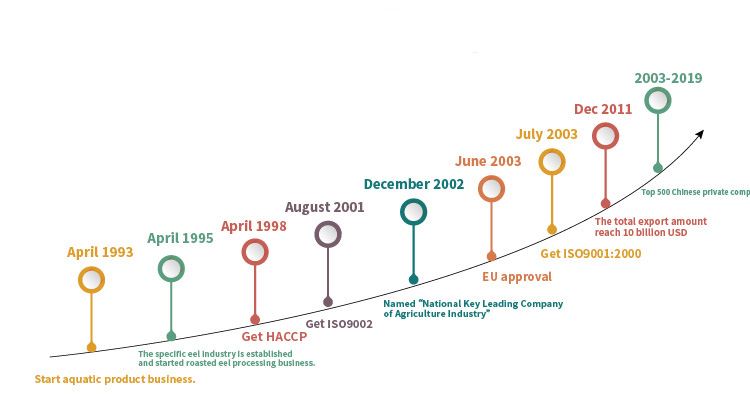
Eelpro Co., LTD supplies unagi kabayaki for overseas foodservice buyers, with formats suited to different menu styles. Buyers seeking a broader product selection can also review our unagi kabayaki manufacturer and frozen eel supplier information.
Usable yield is the amount of product that reaches the guest’s plate after thawing, trimming, cutting, and unavoidable handling loss. Cooked, deboned kabayaki fillets can deliver a high yield, but operators should not automatically calculate them at 100 percent.
Common sources of loss include:
Ice or surface moisture released during thawing
Uneven ends trimmed for presentation
Small pieces left on a cutting board
Extra sauce or glaze removed during handling
Damaged pieces that cannot meet the menu standard
For planning, a foodservice operator may begin with a practical yield factor of 95 percent for clean, boneless fillets. Then test an actual case in the kitchen. Weigh the product while frozen, after controlled thawing, and again after final trimming. Your own records will be more useful than a generic assumption.
Usable yield = purchase weight × yield percentage
For example, a 10-kilogram case with a 95 percent usable yield gives:
10 kg × 0.95 = 9.5 kg usable eel
If your restaurant serves 70 grams per bowl:
9,500 g ÷ 70 g = 135.7 portions
In practice, plan for 135 full portions, not 135.7. The remaining weight can become a sushi topping, staff meal, tasting sample, or small add-on rather than another standard bowl.
This is the basis of unagi foodservice yield. It links the case you purchase directly to the number of dishes you can sell.
There is no single correct unagi serving size. The right amount depends on the dish, selling price, accompanying ingredients, and the role eel plays on the plate.
| Menu application | Suggested eel portion | Typical use |
|---|---|---|
| Sushi topping or unakyu roll | 20–35 g | Small strips or batons with rice and cucumber |
| Lunch bento | 45–65 g | One or two cut pieces with rice and side dishes |
| Standard unagi donburi | 60–90 g | Fillet pieces over rice with tare |
| Premium unaju | 90–120 g | Larger fillet presentation in a lacquered box |
| Ramen, noodle soup, or appetizer | 25–50 g | One or several bite-size pieces |
These ranges are starting points, not fixed rules. A 50-gram bento portion may be enough alongside tamagoyaki, edamame, vegetables, and seasoned rice. On the other hand, a 70-gram rice bowl can appear undersized in a wide, shallow bowl. Serving ware matters.
A useful test is to photograph every standard portion on the actual plate or bowl. A 70-gram piece spread across the center of a bowl can look more generous than the same weight stacked in one thick section.
Effective eel menu planning starts with a small set of repeatable portion standards. Instead of creating a different weight for every dish, build a practical portion family.
Small: 30 grams for sushi rolls, ramen, and side dishes
Medium: 60 grams for bento and lunch sets
Large: 90 grams for donburi and premium rice boxes
With three standards, the same case can support several menu categories without creating confusion at the prep station. A kitchen manager can label thawed packs by intended use and issue them according to the day’s sales forecast.
For menu variety, consider:
Unagi donburi with steamed rice and sansho pepper
Unaju with pickles, clear soup, and a second brush of tare
Unagi sushi rolls with cucumber and sesame
Unagi ramen with scallions, soft egg, and nori
Unagi teriyaki plates with seasonal vegetables
Small eel bites for banquet or cocktail service
For recipe inspiration, see this guide to unagi ramen and Japanese eel noodle soup. If your menu needs a bolder sauce profile, Eelpro’s eel sauce can be specified alongside the kabayaki product.
Start with expected sales rather than case size. Suppose a restaurant forecasts the following for a Saturday:
70 standard donburi at 70 grams each
30 bento meals at 55 grams each
20 sushi orders at 30 grams each
Required eel weight:
(70 × 70 g) + (30 × 55 g) + (20 × 30 g) = 6,850 g
Now allow for 5 percent handling loss and a 10 percent sales buffer:
6,850 g ÷ 0.95 × 1.10 = approximately 7,932 g
The kitchen should prepare about 7.9 kilograms of net eel for this forecast. If the case contains 10 kilograms and the tested usable yield is 95 percent, one case provides about 9.5 kilograms of usable product. That leaves roughly 1.6 kilograms for extra sales, staff tasting, or the next production cycle, depending on storage conditions and local food-safety procedures.
This approach is far more reliable than ordering “two cases for the weekend” without checking the expected menu mix.
Portion accuracy begins before the knife touches the product. Thaw sealed packages under refrigeration at 0–4°C. Avoid leaving eel at room temperature for extended periods, particularly during summer catering preparation.
Once thawed, separate pieces gently. Pat away excess surface moisture if the cooking instructions require it, but do not squeeze the fillet. Squeezing can damage the soft flesh and strip away sauce.
For service, common reheating methods include:
Oven or salamander for a lightly caramelized surface
Steamer for a softer texture
Microwave for fast individual orders
Grill or broiler for a fresh aroma before plating
Follow the product specification and local food-safety rules. For hot holding, record the required internal temperature under your local regulations; many operations use 74°C as a reheating target for cooked foods. Do not repeatedly thaw and refreeze product. A simple label showing the thaw date, pack weight, and intended menu use can prevent costly errors.
Do not cut every thawed fillet into portions before you know the day’s orders. Keep some pieces intact for premium dishes, then cut smaller portions as demand develops. If every fillet is portioned into 60-gram pieces at 10 a.m., the kitchen may struggle to serve a 100-gram premium order at 7 p.m.
It is a simple habit, but it saves product.
Cold fact: The glossy surface of kabayaki is not only decorative. The sauce carries aroma and adds sweetness, salt, and umami to the rice beneath it. That is why a modest eel portion can still taste complete and satisfying when the rice, garnish, and tare are balanced.
Avoid-the-pitfall tip: Never compare suppliers using carton price alone. Ask whether the price is based on gross weight, net weight, or net weight after glazing. A lower-priced carton with heavier glaze may yield fewer sellable grams of eel. Request a specification sheet and run a small kitchen yield test before placing a large order.
For operators who want to prepare freshwater eel from a raw state, the production process differs greatly from using cooked kabayaki. Eelpro also provides information about our unagi eel farm and eel lab, where buyers can learn more about sourcing and product quality management.
The answer depends on case weight, usable yield, and the target portion size. As a quick reference, a 10-kilogram case at 95 percent yield provides 9,500 usable grams:
30-gram portions: about 316 portions
50-gram portions: 190 portions
60-gram portions: about 158 portions
70-gram portions: about 135 portions
90-gram portions: about 105 portions
120-gram portions: about 79 portions
These figures assume the entire usable weight is assigned to one portion type. A mixed menu will produce a different result. Keep a simple production spreadsheet with columns for product weight, yield, portion size, menu item, and actual portions sold.
A 10-kilogram case with a 95 percent usable yield provides approximately 9,500 grams of eel. That equals about 135 portions at 70 grams, 158 portions at 60 grams, or 79 portions at 120 grams. Actual results depend on trimming, glaze weight, and the number of pieces rejected for presentation.
For a standard donburi, 60–90 grams is a practical starting range. Use about 20–35 grams for sushi rolls or ramen garnish, 45–65 grams for bento, and 90–120 grams for a premium unaju. Test the portion on the final plate and adjust it for rice quantity, toppings, price point, and guest expectations.
Multiply the purchase weight by the tested usable-yield percentage, then divide by the portion weight. For example: 10,000 g × 0.95 ÷ 70 g = 135 portions. Add a sales buffer when ordering, but keep it separate from recipe yield so the food-cost calculation remains accurate.
Whole fillets provide greater flexibility for mixed menus and premium presentation. Pre-cut pieces can reduce labor and portion variation in high-volume operations. Compare labor savings with the price difference, and confirm the net weight and glaze specification before making a decision.
Keep the product frozen according to the supplier’s instructions. Thaw sealed packs under refrigeration at 0–4°C, use clean utensils, and avoid repeated thawing and refreezing. Record thaw dates and follow local food-safety requirements for reheating and holding.
Frozen eel can fill a surprising number of menu roles when portions are planned carefully. Start with your sales forecast, measure your kitchen’s real yield, set three or four standard weights, and train the team to plate by grams rather than guesswork.
Eelpro Co., LTD supports overseas restaurants, distributors, caterers, and food manufacturers with frozen unagi kabayaki, eel sauce, frozen seafood, and freshwater eel products. Review our unagi kabayaki eel range and contact us for product specifications, case details, and foodservice purchasing guidance. Which unagi dish sells best on your menu—donburi, sushi, bento, or ramen? Share your portion standard with your team, and explore more eel recipes and menu flavor pairings for your next special.



 WhatsApp
 sales@chinaeels.com
 +8619937922411